Our inaugural writing contest is closed and was a wild success!
This video message is to personally thank all our amazing participants and to let everyone know when and where to expect our announcement of the winners.
I also ask viewers, what are your biggest writing challenges? Please let me know so I can cover them in this blog and in upcoming masterclasses on LGP.
My mission for Let’s Get Published is to end the plight of the struggling writer. I want to make pursuing the dream of becoming a successful author achievable and fun.
I was recently asked by my good friend and writing buddy, “What do you do when you have a glint of a story idea but no story around it.” (I know she’s reading this. Thank you for all the post ideas you give me!)
This cannot be an uncommon issue. I collect pages of glints as I go about living life , especially when I travel. Sometimes it’s a sense of place, a what-if question, or an interaction with a stranger.
They don’t feel like they have the potential to develop into a story, but there is some reason the mind takes note of these details. Don’t ignore them.
Here are a few things you can do to develop these bits and pieces into full stories.
Write down as many possible storylines and outcomes as you can imagine. Nothing is too boring or too crazy. The act of doing this alone will set dominos of ideas into motion. Choose the one that clicks with you and run with it.
Combine two or more glints together. I did this with my story Manifesto. I wanted to make the cut for the Sirens’ Call Women in Horror Month and had no ideas. I pulled out my notes and combined two glints—a sense of place with a vague premise. Once I put them together, it set off sparks, and the dynamics of the story crackled into life.
Start writing.Do I have to say it again? Yep. You will be surprised to find your mind has already been laying the groundwork. I’ve done this with several stories. SICK Part I was a glimpse of a scene I experienced in a nightmare. I couldn’t get it out of my head, so I started writing from the atmosphere and the emotional impression. The story materialized as I wrote. Once it was all out from beginning to end, I was able to discern what it was really about and fine tune it from there.
As with most things in writing, the most important thing is to not overthink it.
“Don’t bend; don’t water it down; don’t try to make it logical; don’t edit your own soul according to the fashion. Rather, follow your most intense obsessions mercilessly.”
— Franz Kafka
It’s tempting to go with the tide and try to mimic whatever is trending at the moment, but remember why you started writing.
It wasn’t to imitate others.
It was to make your own voice heard.
Shut out the noise and write about the things that excite you, the thoughts that keep you awake at night, the dreams that obsess your soul.
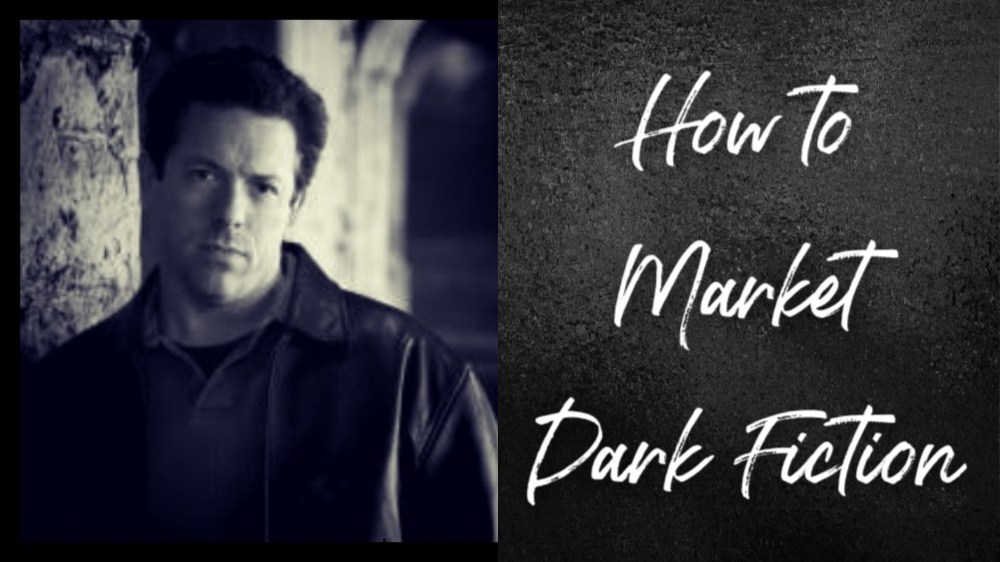
When I went seeking advice on making a name as a writer, the first person who came to mind was Richard Thomas whose Contemporary Dark Fiction course I’m taking this fall.
This post is geared toward dark fiction, but the information applies to all writers seeking to get their foot in the door. Just insert your genre where needed.
Richard Thomas is the author of seven books and has published over 140 stories. He’s been nominated for the Bram Stoker, Shirley Jackson, and Thriller awards. His list accomplishments is so long, I won’t post it here. Just visit his bio to learn more. Here is advice straight from the master. Save this list or print it out.
8 Marketing and Promotional Tips for Contemporary Dark Fiction with Richard Thomas
1. FIND YOUR PEOPLE. There are going to be plenty of people who enjoy exactly what you do. Whether you write fantasy, science fiction, horror, thrillers, or transgressive fiction, seek out your audience. They are in groups on Facebook, they will follow you on Twitter, just be yourself, and lean into what you’re creating. Those that don’t dig your genre, you’re probably not going to sway them. Connect with your people online, and in real life. They are the ones that will support, and purchase, your work.
2. SEEK OUT QUALITY COVER ART: Whether you are self-publishing, working with small presses, or the big boys, make sure the quality of art attached to your projects is good. I can’t tell you have many horrible, cliché, violent, misogynistic covers I’ve seen for books, anthologies, and magazines. Obviously, if you write splatterpunk, or extreme horror, that might be the case for what you’re doing. But there is still a way to do it well. Bad illustrations are bad no matter what the genre. No, you may not always have a say, but you can at least pre-screen the artists and presses. Working with people like Luke Spooner, Daniele Serra, and Glenn Chadbourne (who has done a lot of illustrations for Stephen King) only elevates my prose.
3. WORK WITH THE TOP PUBLISHERS: Likewise, try to publish with the best in the industry. I know, it goes without saying, but as you develop, as you get better, and start to break through, don’t be so eager to publish with just ANYONE. Seek out those that are exclusive, that pay well (pro rates), have great artists (see #2), and a wide circulation. I don’t just work with Cemetery Dance (pro rates, circulation of 10,000) but also plenty of small presses. Crystal Lake and Written Backwards were relatively unknown a few years ago, but now they are winning Bram Stoker awards, and getting stories into The Best Horror of the Year anthologies.
4. BE UNIQUE IN MANY WAYS: So not only do you need to work hard to write innovative, fresh, original fiction that avoids clichés, tropes, and expectation, but you need to be a part of projects that do the same. You can write an amazing story, but if you publish alongside other stories that are too obvious, in projects that have been done to death, your work will suffer. Choose wisely. You don’t have to submit to every contest, anthology, or magazine out there. Early in your career you need to try and find your voice—the genre/s you want to write, the POV, the tone. But as you develop, you will want to take more chances, push hard to innovate, and try to do something different within the various genres, as well as with the standard monsters, perspectives, settings, etc.
5. ELEVATE YOUR PROSE: One of the things I took away from my MFA program was how literary authors approach their stories. If you can add that extra depth in emotion, intellect, thought, character, and plot then you can stand out in a crowd. There is nothing wrong with a standard, classic horror story. It’s like going to McDonald’s—who doesn’t enjoy a Big Mac now and then? And while I do enjoy hitting my favorite fast food haunts, I can’t say that diet is GOOD for me. So find a way to make the trip worth the price of admission. I just wrote two clown horror stories—and they were very different from each other. In “Clown Face,” (Grease Paint and 45s) I explored the idea of what might lurk beneath the standard clown outfit, taking away the makeup, going deeper, showing something monstrous. In “The Caged Bird Sings in a Darkness of Its Own Creation” (Shallow Creek) I really took some chances—four act story, with the second one shifting POV to a Creator, to give the origin story; starting off showing Krinkles as an old man alone in the woods, his hut filled with all kinds of horrifying items; then later moving to his past, giving you some of that familiar clown story from his youth and prime; and finishing in a much different location, with an ambiguous ending. Understand the tropes and expectations, and fulfill them, while striving to do something truly original, and personal.
6. SHADES OF GRAY: If you write horror, look at all of the different types of stories and try to expand your palette, scope, and voice. There is classic horror, psychological horror, extreme horror, supernatural horror, quiet horror, gothic horror, etc. Show some range. You never know where a story might end up. I’ve seen stories in The Best Horror of the Year that were originally published in Cemetery Dance, Conjunctions, Tor, Black Static, Nightmare, F&SF, The Dark and a number of collections and anthologies. Horror (just naming this one genre, for example) comes in many forms, flavors, tones, and shapes. Play around with it, and see what happens.
7. BLURBS: Whether you are editing an anthology or publishing a novel, seek out the blurbs of those authors that will help to establish, explain, and elevate your project. When I wrote Transubstantiate, my first novel, I sent out blurb requests to a number of my idols, and got rejected by most. Luckily Stephen Graham Jones and Craig Clevenger saw something in that book they liked. For my second novel, Disintegration, I went back to some of those authors, and most said yes—Irvine Welsh, Chuck Wendig, Brian Evenson, Benjamin Percy, Paul Tremblay, Laird Barron, and Donald Ray Pollack. I mean, I was practically in tears when they sent in their kind words. They were all similar voices, and that not only helped sell books, but testified to the quality of my writing. It meant a lot to me.
8. PSEUDONYM: If you are worried that your boss, your mother, your friends will frown on what you’re writing—whether it’s violent horror or erotic stories—maybe consider a pseudonym. I know a lot of authors who do this, and there is nothing wrong with it. It’ll allow you to market and promote without worrying about any pushback. Also, if you write (for example) in two very different genres, such as YA and horror, or cozies and erotica, then it also might make sense. Craig Davidson, for example, is also Nick Cutter.
Best of luck, and remember—it’s important to read widely, not just within your genre/s, but outside as well. You need to know what has worked in the past (classic examples) as well as what’s being published now (the current zeitgeist). You don’t want to repeat and regurgitate, and it’s hard to innovate if you don’t know what’s come before you.
Thanks so much to Richard Thomas for his sage advice. Please leave your questions and comments below and good luck to all you writers out there.
Funny, I’ve only just begun reading books specifically on writing. This is one of my first.
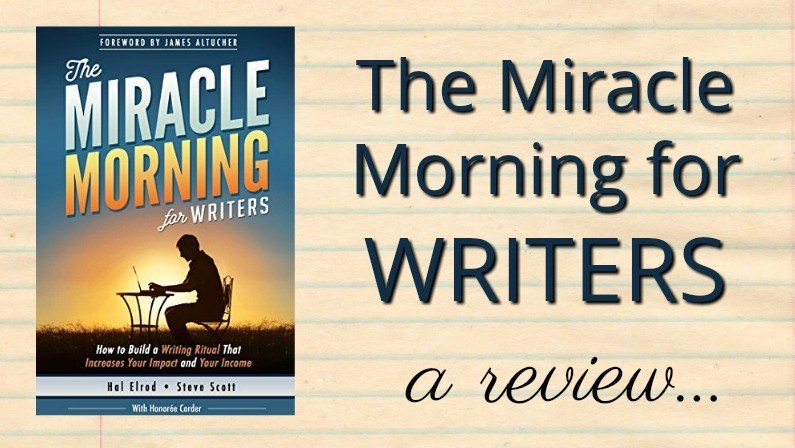
The Miracle Morning for Writers (Hal Elrod, Steve Scott, Honoree Corder) is a spin off of The Miracle Morning. I downloaded both books after hearing author Hal Elrod’s interview on my client’s personal development podcast.
I read The Miracle Morning first, implemented its routines, and noticed results immediately. It helped me take action on plans that I had been stalling on for years and gave me the clarity to focus on tasks that really matter to my future. I credit the Miracle Morning for getting me the point point where I am brave enough to start the Writers’ Online Mastermind!
I was eager to see what The Miracle Morning for Writers was all about, especially because the blurb mentioned step-by-step formulas to the business side of writing for both fiction and non-fiction books.
Selling books is the big mystery for most writers. Who doesn’t want to sell more books?
The Miracle Morning for Writers Review
The first 25%-30% of The Miracle Morning for Writers outlines the S.A.V.E.R.S. [Silence (as in Meditation), Affirmations, Visualization, Exercise, Reading, Scribing (as in Journaling)]. If you’ve read The Miracle Morning first, this will be a rehash of what you’ve already learned with added insights as how these habits can be retooled for writing goals.
These 6 habits done everyday lead to greater wellbeing, better productivity, and help you to take steps every single day to meet your writing goals. I can vouch for this. I have written more in the past few weeks than in the previous months combined.
The focus is on specificity, routine, and commitment. A writer has to make a specific goal, design a routine for writing every day, and stick to that routine to achieve the goal. Then they will learn how to publish and market all the writing they’ve accomplished.
The Miracle Morning for Writers is an easy read with a good mix of science and practical knowledge. It includes plenty of tips for overcoming self-doubt, writers’ block, and procrastination. It’s about treating writing like a job. If you wait for inspiration, free time, or extra energy, you might wait forever.
The last part of the book is the business side. For someone who’s worked in the book world for over 6 years, I was already familiar with most of the information on choosing publishing options, networking, and building an author platform. There won’t be anything earth-shattering for experienced published authors and marketers. However, excellent resources are listed within and it’s a great handbook to keep all the information handy.
The power of The Miracle Morning for Writers is in showing you how to grow into the person you need to be to become the writer you want to be.
This is the perfect book for someone who is thinking about becoming a serious writer and wants a comprehensive overview of what being a writer today entails.
It’s also a good book for the seasoned writer who wants to foster their creativity, discipline themselves, and write more than they’ve ever written before.
The Let’s Get Published website and upcoming online mastermind for writers are all about taking action and actually getting published.
It took me years to have the guts to submit my work, and I regret having wasted so much time beginning to establish my name.
Once I finally began submitting, guess what happened?
I got published!
Within the last year, I had one flash fiction, two short stories, one essay, an interview, and a book review accepted for publication.
Becoming a writer is hard, but not as hard as we make it for ourselves.
I’d like to share with you and amazing resource called Authors Publish. It’s a weekly email that lists the best publishers of books, magazines, ezines, and more. They cover fiction, non-fiction, and poetry!
If you are ready to submit, this list is a huge timesaver. If you are not ready to submit, it’s a great way to explore what publishers are seeking and where you can fit in.