
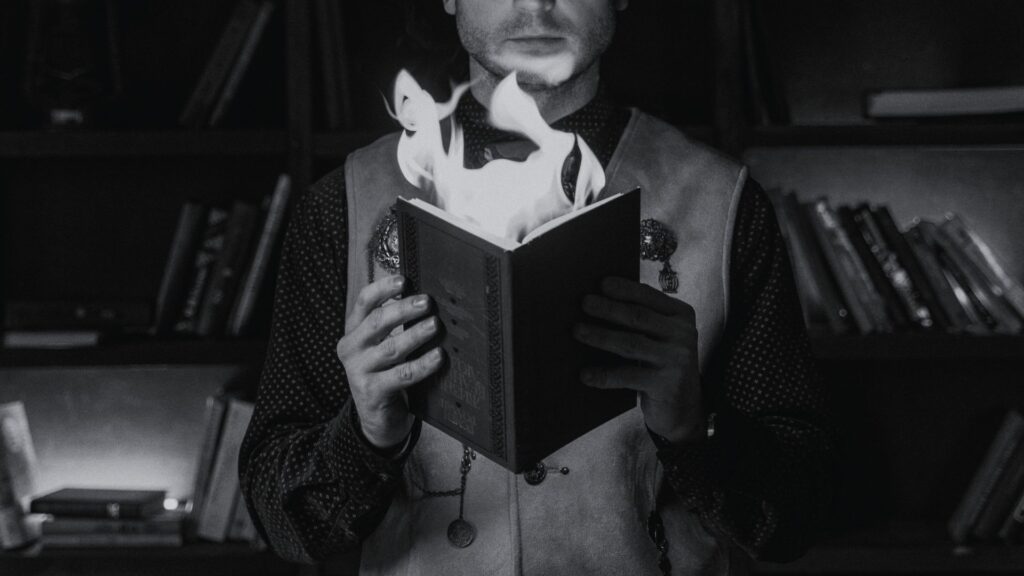
The 2006 Christopher Nolan film The Prestige, based on the novel by Christopher Priest, has a lot to tell us about how to write compelling stories.
Though there are many things to learn from the way it presents us with a story of two rival magicians, perhaps the most important learning point is the concept embodied in the title itself.
For those who don’t know, “The Prestige” is the third act of any magician’s trick, in which what they previously destroyed, or made to disappear, returns – to the delight and adulation of the crowd. As Michael Caine’s character, Cutter, observes, “It’s not enough to make something disappear. You have to bring it back.”
“It’s not enough to make something disappear. You have to bring it back.”
Our mythologies and religions are full to bursting with gods and human beings who return from death. From the wounded King Arthur, who will one day come again from beyond the veils of Avalon, to the crucified Jesus who lay three days dead in the tomb yet rose, to the dismembered god Osiris, who was reforged from scattered body parts by his wife, Isis, the list goes on and on.
The recurrence of this image throughout history and across innumerable cultures is evidence that the idea of a “prestige” is hardwired into our deepest psyche. We yearn for what was lost to return to us. The concept has filtered through into modern-day popular culture too: The Return of the King, The Return of the Jedi, even Superman Returns. There is a sense that true heroes, true saviours, come back to us when we need them the most.
Of course, sometimes this deep human need is exploited for quick cash grabs, as in the “endless sequel” effect in which our favourite characters just keep coming back time and time again. In these instances, often it is the case that the story begins to lose all meaning, because there are no real stakes; the heroes are invulnerable, and even if they seem to die, they always come back without a scratch.
However, when this mythic principle is handled with sincerity and integrity, it can produce some of the most startling and moving moments in cinema, prose, poetry, indeed, any medium. The initial disappearance of the figure who is going to return need not even be via death; it can be just that: a disappearance.
Consider how Gandalf leaving Helm’s Deep in the second Lord of the Rings movie shapes the narrative. He leaves the story for some time, long enough we almost forget where he’s gone off to, but at the critical moment, when all hope seems lost, he returns to save the day (bringing with him the “lost” Rohirrim) in a sublime eucatastrophe.
I often hear writers talking about how they have “written themselves into a corner” by disposing of an artefact, character, or even a place. Many of these issues can be fixed by building the concept of a “prestige” into your fiction from the get go.
And on that subject, I always admire a writer who has the guts to kill their characters, and sometimes a character simply has to die, and die forever, for a story to end, for it to have any meaning. But whilst the bitter fruit of death, or loss, is sometimes what is needed to round out a tale, the far sweeter fruit of return also has its place. This is more true of horror, not less.
In Nolan’s 2010 film Inception, he remarked that “Positive emotion trumps negative every time”, and I also happen to agree with him on this front. A sad death at the end of a book can be devastating. But a “prestige,” a triumphant return, is infinitely more powerful; it shakes to the bone. Death, after all, is merely existential.
A return is transcendental.
In fact, it’s magic.
A sad death at the end of a book can be devastating. But a “prestige”, a triumphant return, is infinitely more powerful; it shakes to the bone.
Joseph Sale
Joseph is the author of more than 30 books, including The Book of Thrice Dead, Virtue’s End, Dark Hilarity, and The Claw of Craving. He is drawn to the baroque, the spiritual, and the mythic like a moth to flame.
He lives in the south of England with his wonderful family, where he obsesses over table-top RPGs, trading card games, book bindery, esoteric Christianity, and anime.
Website
themindflayer.com
Books
Explore film, myth, and more on Baroque.
Have You Discovered Your Writer Archetype?
Unlock your very own special brand of magic.
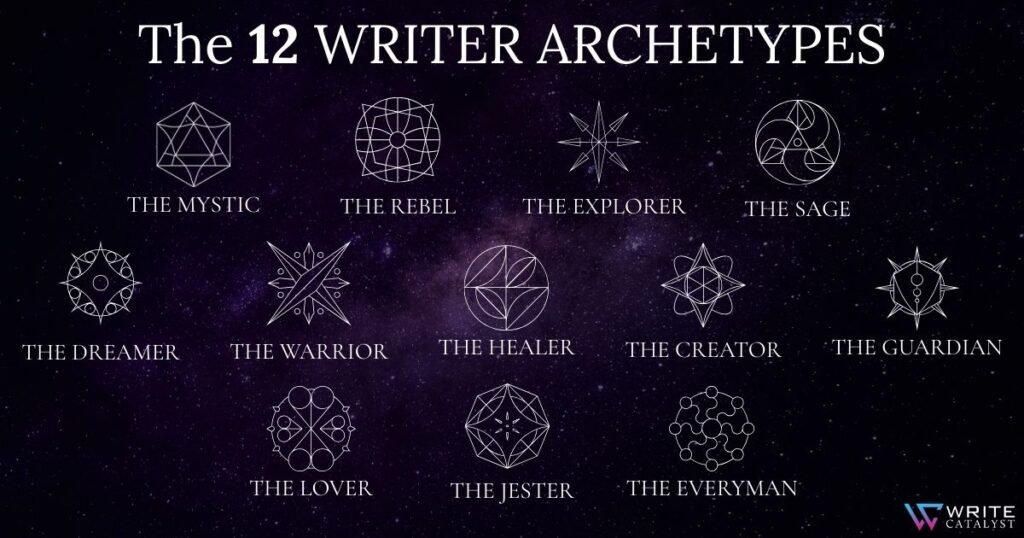
Take the [Writer Archetype Quiz →] in just 3 minutes.
You’ll instantly receive:
- Your primary Writer Archetype
- Your unique archetype symbol
- Your creative strengths and shadow challenges
- A personalized 5-part email series to optimize your writing process