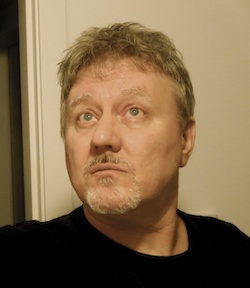
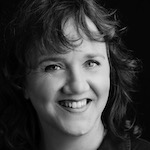
Richard Thomas spent twenty years in advertising before coming back to writing. Since then he’s been an author, editor, teacher, and publisher. He’s the award-winning author of three novels, three short story collections, two novellas, and over 150 short stories.
In addition to teaching at the Storyville, he’s also taught at the University of Iowa, LitReactor.com, and Story Studio Chicago.
He’s been a panelist, teacher and/or guest speaker at Stokercon (Los Angeles), Oklahoma Writers’ Federation, Inc. (Oklahoma City), The Horror Writers’ Workshop (Transylvania), Columbia College (Chicago), University of Wisconsin (Baraboo), Mystery Writers of America (Chicago), Off Campus Writers’ Workshop (Winnetka), University of California-Riverside (Palm Desert), Writers Retreat Workshop (San Antonio), Lakefly Writer’s Conference (Oshkosh), Novel-in-Progress Bookcamp (West Bend), and FOCUS on the Arts (Highland Park High School).
He was the Editor-in-Chief and Gamut magazine and Dark House Press, and has been a member of the Horror Writers Association since 2012.
His story “Golden Sun” co-authored with Kristi DeMeester, Damien Angelica Walters, and Michael Wehunt will be included in The Best Horror of the Year, Volume Eleven. He’s been nominated for the Bram Stoker, Shirley Jackson, and Thriller awards, won contests at ChiZine and One Buck Horror, and has received five Pushcart nominations to date.
About Storyville
“We believe in the power of story. We believe in the capacity of dark storytelling to bring light to the world. Narratives grip us, thrill us, and lift us to new heights. A good story can transform us, giving us a roadmap to navigate the world, and the courage to face the challenges that greet us.
The road to publication can be a hard one. Storyville grew out of a desire to share and give back to authors making their journey. We want to encourage strong voices, to lift them up so they can lift others. We focus on a balance of real world, contemporary examples and authors, as well as classic methods of writing and expression, a mix of genre and literary fiction, craft books and academia, personal struggles and successes.
Our goal is to help you grow, evolve, and find your voice—the one that is unique to only you. We want to help you write the stories you want to tell, in the ways that you find exciting and fulfilling.
We have a wide variety of classes and programs to choose from, so whether you’re just beginning, or you’ve been writing for a while, we have a place for you. Come, find a community of writers to support you through your journey, and learn the skills to take you where you want to go.
This is a great time to be a writer.”
Online Writing Classes by Richard Thomas
Short Story Mechanics (LitReactor) Beginner (or At Your Own Pace, offered here)
Contemporary Dark Fiction Intermediate
Advanced Creative Writing Workshop Advanced
Novel Workshop 365 Advanced
Flash Fiction (LitReactor) Intermediate/Niche
Day of Reckoning–Day of Reckoning is a one-day Skype session that takes place on the second Saturday of each month. Composed of seven classes that run from 9-12 AM and then 1-5 PM CST, each month brings a different mix of instructors and classes. Richard Thomas will be moderating.
Testimonial
Richard Thomas’s Contemporary Dark Fiction class was the best investment I’ve made in my writing. The reading assignments opened me up to a whole new world of dark literature. His taste is impeccable and eclectic, giving students a huge pool of examples of what can be done in dark fiction across genres. The assignments were challenging, forcing me to stretch my talent and create work I didn’t know I was capable of. The weekly class meetings and live Q&As with featured authors made the class a fun and engaging, and workshopping each other’s stories was extremely enlightening and helpful, providing a wide array of insights on how to improve my work. Richard Thomas is the kindest and most generous of teachers. He is passionate, knowledgeable, honest, and unbiased. He critiques every piece turned in for the class and is always available to help. His feedback and advice were what I needed to level up as a writer. I’ve produced more short fiction during the four months of this class than I have since I began writing, and with my new knowledge, I feel confident and excited about the quality of work I will be submitting and publishing. I call Richard Thomas the Mr. Miyagi of writing. I will be taking every class he offers! Christa Wojciechowski
Here are 7 ways to have fun with your writing. Explore the reaches of your creativity and never suffer from writer’s block again.
7 habits that cultivate creativity
1. Plan artist dates
The Artist’s Way by Julia Cameron is like a 12 Step program for creatively traumatized and repressed artists. Part of her plan is to book an artist date once a week with yourself. It doesn’t have to be anything to do with writing. In fact, it’s better if it isn’t related.
Go out and do something you’ve never done before. And outdoor adventure, a cooking class, a window-shopping trip, or a performance. Let your subconscious absorb and play with new sensations, experiences, and ideas.
2. Explore different genres
Writing outside of your genre can help you get out of a writing rut. Since it’s not what you’re supposed to be good at, you can detach from your expectations and feel free to experiment. Take it as far as you want to go. Get as silly, raunchy, gutsy, or gross as you can. You may be surprised to discover tools and techniques you can apply to your usual genre that you never knew existed within you.
3. Read and watch funny stuff
When was the last time you laughed out loud? I’m talking about unbridled laughter with your belly burning and tears streaming down your cheeks. Laughter is not only good for the soul, but it’s also great for creativity and productivity too. A sense of play is the key to high performance. When we turn writing into a game, it becomes fun instead of tedious. It’s soil for new ideas. We tend to be less critical and balky and more receptive and innovative. Get stupid, really stupid. Let loose and then go back to your work. See if you shook something loose.
4. Process, not outcome
If we’re perpetually focused on the end result, all the steps between us and our goals will seem overwhelming, if not impossible. Don’t obsess over the four novels you want to write or the twenty short stories you want to publish or the agent you need to win over, or the readership you need to build to get to the bestsellers list. What’s the next small step you can take today? How can you enjoy that step?
5. Invest in others
Self-centeredness makes our struggles seem bigger. Once good way to flip your switch from worry-mode is to shift your attention to others. Who is doing some great writing? What have your friends been working on? How can you support another struggling writer? Share someone’s book with your following. Post encouraging comments on other writers’ social media. Leave a thoughtful review for a book you really admired.
6. Give yourself permission
How often do you allow yourself to have fun creatively? Is it all word counts and structure? Performing personality analyses of your characters? Is it striving for perfection and not accepting anything less from yourself than the next Pulitzer Prize winner?
Remember, again, when you were a kid hanging out with your imaginary friends. Get back to creating for the sake of creating. Relax and let your intuition take over. Genius is birthed serendipitously. Let go of what you think you should do and just be a curious child open to the possibilities.
7. Chat with other writers and creatives
I used to think I was anti-social, but it turns out, I just wasn’t inspired by the people I was around—a default combination acquaintances, spouse’s friends, and people from work. They were wonderful people, but not creative people. That is why I founded the Writers’ Mastermind. I formed my own coven of writers where we have amazing discussions that light us up. Our meetings create a synergy that inspires, comforts, and informs our lives and our writing.
Do you have a circle of writing friends? Is there a local writing group you could join? If not, create one, or join on online community like The Writers’ Mastermind. There is nothing more fun and restorative to your creativity than having conversations that matter with people who care about writing as much as you do.
Remember when you were a kid and being an artist was fun? Finger paints and imaginary friends. Silly costumes and play-acting.
We didn’t think about whether or not our creations and performances would sell or receive a good review on a trendy site. The reward was the simple act of creation, to make something that didn’t exists before.
“Every child is an artist. The problem is how to remain an artist once we grow up.” — Pablo Picasso
As we grow from the limitless imagination and wonderment of a child into adulthood, that sense of creative abandon is diluted. We are caged by rules. We become overly self-conscious, losing our own individual spark in our desire to fit in or be on top of the next big thing.
Before we know it, writing becomes a chore. What was a wild refuge where we could run free is now a cramped and stuffy cubicle. It happens slowly, like aging itself, when we wake up one day to look in the mirror and wonder, who the hell is this person?
Not only does our work suffer, it branches out into everything. If we can’t have fun with writing, we can’t have fun with publishing. Nor can we have fun with book publicity and marketing. It becomes contrived, rigid, cliché, or boring. We lose the passion that used to inflame us, and it all seems like work.
7 habits that kill creativity
1. Judging yourself too harshly
We writers worship our greats. We aspire to be like them, and maybe one day we will. One of the reasons I haven’t published the series I’ve been working on for eight years is because I thought it wasn’t good enough. It didn’t compare to the masterpieces of my writing gods, Dostoevsky and Tolstoy. Really? Did I think I was going to be the next Tolstoy? On my first book?
Perfect is the enemy of good. Don’t stall on a good story, waiting for it to become perfect. Our definition of perfection changes all the time So do the best you can, and then let it go.
2. Comparing yourself to others
So-and-so is a bestseller and you’re not. A writer who just got out of high school is getting nominated for a prestigious award while you have none. A comparative author has double the amount of followers you have. Either you feel like scrambling to catch up with them, or you become discouraged and depressed that you are so far behind.
This is a recipe for misery. You are your only competition. And you don’t know what those writers had to do to get where they are. Furthermore, their life may not even be as great as it appears online.
3. Trying too hard to make it happen
In trying to hard to make it happen, we rush, we get sloppy, we create self-imposed deadlines that stress us out. We forget the joy of writing when we are pushing too hard, and we can sound like simpering sycophants, braggadocios, drowning readers in purple prose. Don’t overthink it. Don’t pander. Just get into your natural flow. Trust your you-ness.
4. Setting unrealistic expectations
Goals are important, but so is their achievability. If you set a goal to write four novels in a year while working a full-time job and being a parent, you are setting yourself up for failure. Not meeting these goals will make you feel like giving up. You will feel stressed and frustrated. Make realistic expectations for yourself. Give yourself room to live life while you pursue them.
5. Rushing for success
If you’re aiming for success, great. We all want to become successful authors. But, contrary to popular belief, success doesn’t happen overnight. Most of the most popular authors slogged for years before getting recognition. If you’ve made up your mind to be miserable until you are a success, you could be miserable for a long time.
Learn to enjoy your ride. One day you might be ridiculously famous and look longingly back on these quiet days when there weren’t so many deadlines and life was less demanding.
6. Not learning anything new
One of my biggest setbacks was that I kept writing without ever having taken one class. Even if your talented, you need guidance and feedback to optimize your skills.
I finally took my first class in Sept. 2019 with amazing writer and human being, Richard Thomas. It was the catalyst for everything that is happening for me right now. Not only has it opened new pathways, but I also feel more confident in my abilities and know what I have to offer and who to offer it to.
Most of us are flying blind, but when you are aware of your weak points you can improve them. Learning keeps you growing. It keeps your writing fresh. It’s incredible how much more capable you feel when you own your gifts and know how to use them. Evolving as an artist is one of the most satisfying parts of being a writer. Get involved in this process.
7. Taking yourself too seriously
Do you dwell on mistakes? Lose hope after a failure? Maybe you got a rejection. Or your book launch flopped. Has a snarky reviewer ripped you to shreds? Yes. It sucks. There’s no denying that. You can allow yourself a half a day to mope around.
Then be realistic about it. Your work won’t get accepted one hundred percent of the time. Your latest book might not be the one that skyrockets you to stardom. Not every reviewer is going to get what you were trying to do with your story. Laugh it off and ask yourself, what can I learn from this, and more importantly, what’s next?
Amazing things have been going down at Let’s Get Published.
We had our Mixer Parties and finally had a chance to speak with those writers we’ve been texting, commenting, and emailing for years.
It’s truly remarkable to see all the faces and hear the voices of writers and bloggers we’ve been following for so long. It’s been especially important to connect over something we love in these times of pandemic and quarantine.
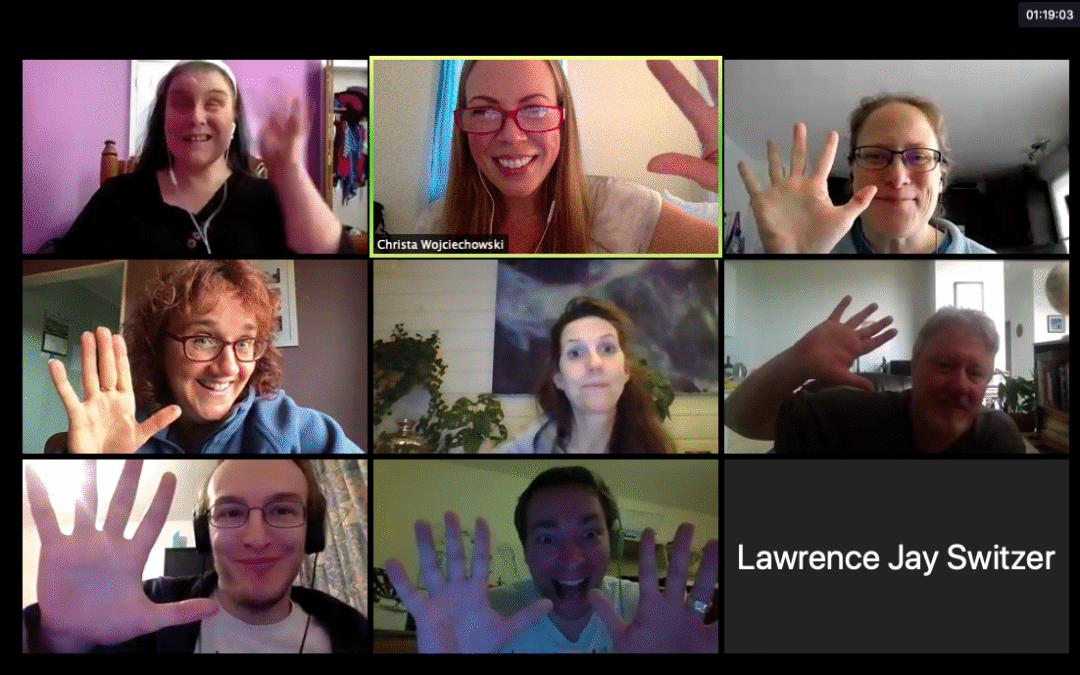
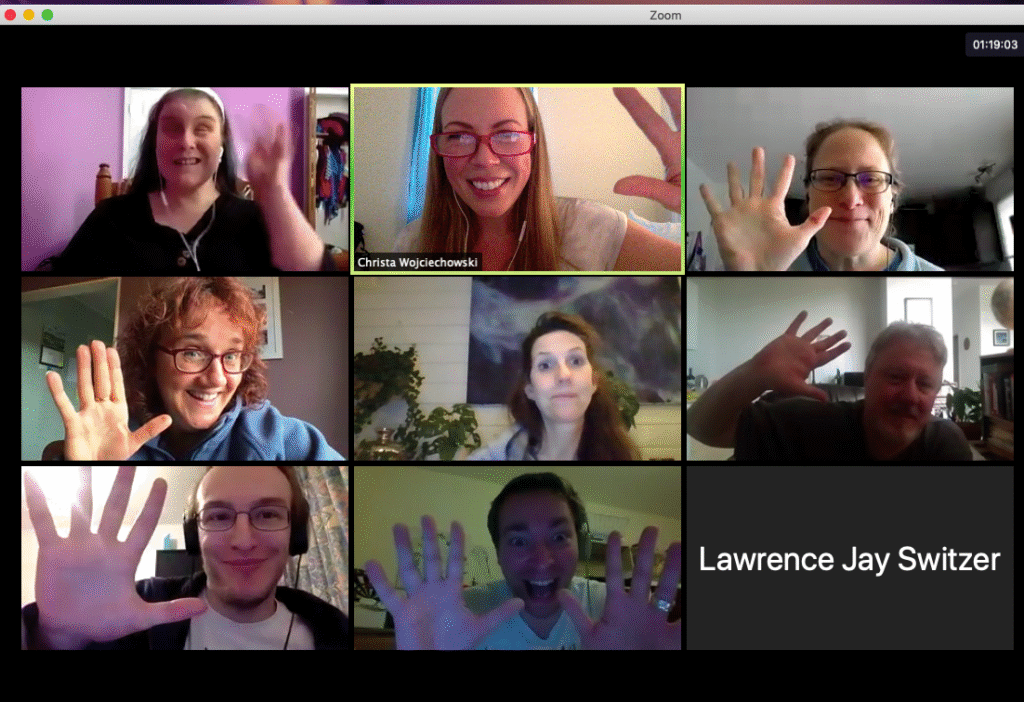
We also had two pre-launch Writers’ Mastermind chats, where wait list members joined on Zoom to discuss Turning Fear into Fiction and Having Fun with Writing Again. Something magical happens when we put our minds together and combine our ideas.
It’s time to support your fellow writers
We’re proud to say that our writers are making things happen. Stories are being published, books are being released, writing wisdom is being offered, submissions are opening. Have a look below and see what piques your interest. There is something for everyone.
David Antrobus’s “Vacation” is published by Storgy Literary Magazine
Vacation by David Antrobus – “The moment he throws the first jab, he’s conscious of a songbird out in the yard. As he feels the jarring impact and at least one of his knuckles coming apart, he imagines the bird trawling the very latticework of spring for a mate, indifferent to this uncoupling of some other kind of couple….” Read the full story on Storgy
Joe Sale comes out in Burnt Fur anthology, offers Epic Bootcamp to writers
Burnt Fur: Twisted Tails of Horror
Sit. Roll over. PLAY DEAD…
There are no good boys in this anthology, only twisted, deviant, and burnt encounters with animals, humans, and creatures that blur the line between the two.
The Epic Bootcamp is a course to help you tell bigger and better stories. Like Virgil once guided Dante through the circles of Hell, Joseph Sale will be your guide through the pitfalls of storytelling on a grand scale. With over 20+ books published (fiction under his name, and many ghost-written books), and years of academic and editing experience, you could wish for no better guide.
Mr. Sale will teach you how to:
create epic protagonists your audience root for
scale-up your stories and add depth to them
create visions of hell and lead your hero through the
and most importantly, how to end your stories in a way that will haunt your readers forever.
Ross Jeffery’s “Tethered” Available for Preorder, “Juniper” Nominated for Award
Available for Preorder
Tethered explores the fractured relationship of a father and son. Each story is told with unflinching and honest prose that is both hard hitting and heartrending. These stories delve into themes of toxic masculinity, love, hope, despair, domestic violence, sexuality, weakness and overcoming oppression. Tethered also asks the bigger question of ‘do we ever escape the harm our parents do to us; or do we go through life marred and influenced from our upbringing.
Tia Wojciechowski Signs with The Writing Collective for Hectrossippy
My Zoom co-host and sister, Tia Wojciechowski (aka Bia Bella Baker), has just signed with The Writing Collective to publish her pre-industrial YA fantasy Hectrossippy to be released September 2020!
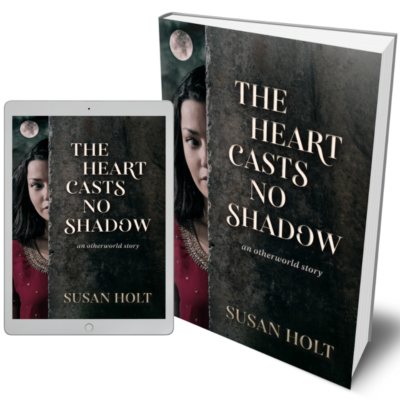
Susan Holt’s The Heart Casts No Shadow earning 5 star reviews
Will Rhonwyn free her heart and her people, or become the pawn of the most dangerous man ever seen?
When her skill at a complex strategy game gives her a way into the palace, Rhonwyn becomes the eyes and ears of the Resistance.
She’s there to help bring down the evil King Risick – the man who seized control and forced her people into his mines. The man who killed Rhonwyn’s father before her eyes, breaking her heart and fracturing her sanity.
Everything changes when she meets a vibrant man who’s also trapped in the palace. Rhonwyn’s not so alone now and her soul begins to heal. But his dangerous secret forces Rhonwyn to choose between the freedom of her people and the love she’s finally found.
Lilyn George from ScifiandScary.com announces opens call for new body horror anthology
ScifiandScary.com is the go-to site for Sci-Fi & Horror Reviews, News, and More. READ THE LATEST REVIEWS.
Twisted Anatomy: A SF&S Body Horror Anthology
Sci-Fi & Scary is pleased to announce that we are opening submissions for our first charity anthology, with a goal of publishing in mid-February, 2021. Proceeds will be split between the Pulmonary Hypertension Association and National Domestic Violence Hotline.
For the details of submitting to this anthology CLICK HERE.
Dan Soule’s Neolithica on Sale for 99¢
99¢ on Kindle
Some things should stay buried…
The discovery of a young boy’s body, brutally murdered and preserved for thousands of years in a Scottish peat bog, brings with it more than a find of a lifetime for archaeologist Mirin Hassan. After the death of her husband, Mirin wants life to get back to normal for her and her young son. But media attention and professional rivalries become the least of her worries. Something other than cameras followed the corpse back to the university. A malevolent force grows unseen. The weather turns biblical. Violence and death spread beyond the university. Could it be connected with the strange discovery? The city grasps for a rational explanation, but time is up. Chaos has arrived, as Mirin realises some things should stay buried.
Most of us have experienced true fear or anxiety on some level — whether it was a close scrape with danger, a rollercoaster ride, or the general anxiety our brains subject us too. But with coronavirus, we are all facing a fear we have never known. It’s not the breathless fear of running away from a predator, but it is a gnawing fear that sometimes overtakes us. We fear death, chaos, and uncertainty. We are living in the dystopian book we all dreaded, worrying about how crazy this is going to get. We might wonder, is it okay to use this fear as a creative impetus? Do we dare transform it into a dark source of inspiration?
Absolutely. Writing has been long used as a therapeutic practice. Storytelling is human beings’ chief way of making sense of a chaotic world that escapes our understanding. We may never understand the scope of our existence, but we can understand our story, and therefore, our place within it.
Writers are observers, chroniclers, and documenters. We examine our world with a microscope. Even though fiction is not real, our stories are a snapshot of the human psyche of our time. In this pandemic, for example, we are witnesses to a historic event, one that humanity will want to learn from for years to come. When people read our fiction, even decades or centuries from now, they will be able to know our experience on an intimate level. They will understand our values, fears, mistakes, triumphs, and insecurities. Just like when we pick up a book by Jane Austen or Tolstoy, we get into the authors’ minds — not just to read about history, but to live it.
Furthermore, what is served by turning fear into fiction is not just for the writer, but the reader. When you speak to the fears of another person, whether they know they have them or not, you make them feel understood, less alone, and less crazy.
Fear is not just for horror
Some may think that writing about fear is just for horror writers, or maybe the next dystopian series, but fear is a driver in every genre. For example:
Thrillers—fear of world destruction: In thrillers, there’s a bomb, a terrorist group, and or even, yes, a pandemic.
Romance—fear of rejection, abandonment, or loss: There is always a point in a romance novel where the heroin may have to lose the one she loves or lose something of herself by falling in love.
Scifi/fantasy—fear of subjugation or annihilation: Similar to thrillers, these stories often involve quests where the hero must save his world or his people.
Dark fiction/noir—fear of stagnation, of the world staying the same: Here, the character is in danger of not growing. If he can’t find the courage to change, it will end in self-destruction.
You can see how we can use fear to inform all our stories.
Writing fears
Because of the circumstances surrounding coronavirus, I pre-launched my first Writers’ Mastermind group discussion called Turning Fear into Fiction. During lockdown, I knew there would be a variety of ways writers use the stress and fear of this situation creatively. What I didn’t expect was how everyone had such unique and amazing insights into how fear affected us and our writing in so many nuanced ways. When talking about fear, we found it threaded through just about everything, including the act of writing itself. I’m going to expand on a thought from each member so that you can use it as inspiration when writing during your quarantine and in whatever world awaits us afterward.
There is a certain point where life gets so bad that we will feel paralyzed creatively. Most of us haven’t reached that point yet during this pandemic, but it could happen. In the meantime, we might escape into writing, and even enjoy it. But David mentioned something many of us have felt but few of us articulated, the guilt we feel enjoying writing while people are sick and dying. How can we be penning dramas about imaginary characters when there is so much suffering? Shouldn’t we feel guilty?
Sympathetic? Yes, but not guilty. We are not meant to carry the sorrow of the whole world, and those suffering wouldn’t want us to either. It’s our duty to tell stories, to make sense of what’s going on and explore how it could affect us personally and collectively.
Ross just finished a novel-in-flash in which he writes very openly about brutal topics like trauma, abuse, sexuality, toxic masculinity. He also writes about his relationship with his father and even from his father’s point of view. Ross was worried the moment he handed it to his father to read. What would he think of such naked honesty?
We all have that fear of people we know reading our work and what they are going to think of it. We don’t want to expose ourselves, but we should. When we put it all out there, we champion those who hide alone in anguish. Writers are brave in that way. We point out the elephant in the room. We expose hidden resentments, sins, and suspicions, giving everyone else permission to be flawed.
In the beginning of the chat, one of our members, Joseph Sale, left the perfect quote in the chat box.
“The oldest and strongest emotion of mankind is fear, and the oldest and strongest kind of fear is fear of the unknown” ― H.P. Lovecraft
Fantasy author, Susan Holt brilliantly expanded on this idea. She said that what lurks in the dark is much scarier than a monster you can see, and writing is a secret weapon that neutralizes our fears. It gives them shape and outline, defining their boundaries. Thus, they are no longer endless voids of horrific possibilities, but a problem with limitations and weaknesses. What we thought was a snake hiding in a dark corner we can now see is just a rope. Writing is the light of day that normalizes scary things.
As a writer, we separate ourselves when we become the narrator. We take a step back from the situation and become the observer. In this state of detachment, we can analyze the fear, and break it into smaller pieces that pose no threat to us.
Sandra’s brilliant term for this was Emotional Autopsy. She said that like determined pathologists, we can cut the outer skin off our fears, dissect them down to the bones and sinew, down to the guts. We can roll them between our fingers, understand them inside and out, so that we know their causes and how to tolerate and address them.
Tia admitted that her writing was escape from all the fear conjured by the coronavirus. Even though calamities happen in her books — terrifying monsters, natural disasters, and even gruesome diseases — Tia is able to distance herself because her stories involve imagined creatures who inhabit on a fictional planet. In this way, she keeps herself psychologically safe. What takes place on her in her imaginary world would never happen in real life.
But of course calamities do happen in the real world, and writing is an escape for most writers. However, this is not altogether a bad thing. Sometimes fear can help us to run away into fiction and stay there, helping us to produce far beyond our normal word counts.
Charlotta was raised in a family that embraced positivity, which sounds admirable, but because of this, she was also discouraged from expressing her darker, more negative feelings. The message was, you’re not supposed to have bad thoughts. Today, Charlotta lives in Norway where people have all their needs met and then some. When she wants to share a worry, most say, “Oh, don’t worry. It will be fine.”
But dismissing fears and problems can be a way of avoiding them, a form of denial veiled as optimism. Sometimes everything is not okay, and it will not be fine. Charlotta pours out this darkness into writing and painting. She still feels guilt for it to this day, which is a problem many of us face.
Negative thoughts are a part of us, and they are natural. Pretending they don’t exist does us irreparable harm. Repressed feelings breed psychological and emotional issues like mental illnesses, self-harm, and addiction. Luckily, we writers have an outlet.
This is why Charlotta takes writing breaks when her overactive mind won’t stop. Purging our feelings, including those we pick up from the people around us, lightens the emotional load — clears the cache, so to speak.
We writers are always in danger of exposing too much. How much of we write is really fiction? When you get to the bones of it, probably not much.
Joseph Sale is editing one of my manuscripts and cited a quote from the story. In the scene, my main character, Ona, makes a comment about the painting The Kiss by Gustav Klimt, saying that the artist revealed more of himself than he realized or intended. Which begs us to think about the pandemic. It will become part of us now. We are forever changed, traumatized, and will probably find ourselves writing about it in some way whether we want to or not. What secrets have we given away? Will they be used against us?
As writers, we may expose ourselves, but we must remember that it’s worth the risk. The best way to get close to our readers is to make them our confidants.
Becoming friends with our fear
Fear is uncomfortable. But it can be used to our advantage. We usually have to put ourselves in our characters’ shoes and presume what it would feel like to be in mortal danger. But today we don’t have to stretch our imaginations. Everything is at stake for us right now. The threat is real. I talked about this in our Writers’ Mastermind mixer — how, for writers, being stuck in a horrible situation has a bright side. It gives us great writing material. So, we might as well make the lemons into lemonade and pay attention to the following list. Jot these observations and ideas down. Come back to them whenever you begin writing.
Thoughts going through your mind — What are the scenarios playing out in your head? What do you keep running over and over again? Solutions? Worst case scenarios? Hopeful endings?
Feelings you’re experiencing — Are you angry? Desperate? In disbelief? Dismissive? Frozen? Depressed? All of over the place?
Physical sensations — Pay attention to your body. Are you tense? Does your back ache? Queasy? Loss of appetite? Itchy? Sleepless? Lacking energy or full of restless energy?
Generalized pressure and stress — How is society reacting? How is your family behaving? What changes are you seeing in the world?Use fear to fuel you creatively by making writing your outlet. How can you channel the energy?
Fear makes us better writers
Becoming friends with our fear deepens our relationship with ourselves and with others, helping us to become better writers. We have the ability to develop more believable, emotionally complex characters. This makes a more mesmerizing, powerful, and satisfying story.