My husband and I just spent a few days in the city for his birthday. There was food and drink and revelry. Unfortunately, I contracted some sort of bacteria that had me writhing on the floor in agony.
I’m facing several deadlines and rarely allow myself any fun lately because of them. Not only that, I’m working very hard to develop the Writers’ Mastermind Group and push the final month of our Short Story Contest.
I had planned to work on my drafts in the hotel and during the long car ride home, but all I could do was lie very still and hope nothing would erupt from my innards.
Sometimes we just can’t do it.
Then we feel guilty.
We think:
Maybe I can’t handle the pressure.
It might be better to just drop it all.
Oh, gods. Why have you forsaken me!*gnashes teeth*
In this case I tell myself:
Dear Writer,
Stop being such a drama queen. The world is not going to end if you take a few days off. You are not superhuman. This is your body telling you to take a rest.
Sit back, enjoy the scenery, and day dream. Your drafts will be waiting for you tomorrow, and you will be that much happier to see each other after a break.
Yes, we need to commit to our writing, but we also need to remember that not every day is going to be productive, and that’s okay.
We talked about bookmovies before, but before we develop our book for the screen, we need to accurately describe the mental movie in our heads.
This is so much harder than it sounds. How do we create the emotions we feel when we think about our story? How do we capture its atmosphere? How do we get readers invested in our story as much as we are?
Here are a few tips for describing the mental movie:
Be the director – It’s all up to you to communicate your vision to the reader. Think about scenes like a movie director. Which is the best angle? Who is the dominant character? Who is the submissive? Do their body positions reflect this? What symbolic colors, sounds, and objects can you incorporate in the scene to reiterate the theme?
Don’t rely on the plot – The stories that make the most impact are the ones where we witness the transformation of a character. What occurs in the plot doesn’t have any impact if we don’t care about the characters who are part of it. Focus on your characters’ inner struggle. What do they want? What do they fear? What’s keeping them from getting what they want?
Create a playlist – All the best movies have epic soundtracks that we remember all our lives. Whenever we hear the song, we’re reminded of the film and how it made us feel. Music is a powerful and quick way to immerse your brain into the mental movie of your story. Make your own soundtrack in your favorite music app and listen to it before you begin writing for the day. It will give continuity to the mood of you story.
If you’ve been writing for a while, you might notice that much of your writing is similar.
Character-types repeat.
Themes replay over and over.
Settings and atmosphere don’t vary much.
This is good when starting out. You settle into your voice, genre, and style. You get comfortable.
Don’t languish in a writing rut.
Once you’ve found your footing as a writer and are confident in your process, it is time to take some risks.
Sure, your readers will expect a certain something from you, but they will also like to be surprised and delighted. Don’t tell the same story over and over again.
Experiment with different POVs, genres, and twists. Ask yourself, how can I make this story unique?
Predictability is boring for you and your readers. Go wild. Go crazy. See what happens! Be remembered!
Will our consciousness survive the death of our body?
No one is sure about what happens after we take our last breath. It can leave us confused, depressed, and maybe even a little bitter.
Humans cope with the big mystery of life by creating. By expressing ourselves through art. By asking the big questions, and hopefully finding an answer to them.
One way we do know consciousness can survive is through writing. Think about the books you’ve read by a dead authors. How have they changed you?
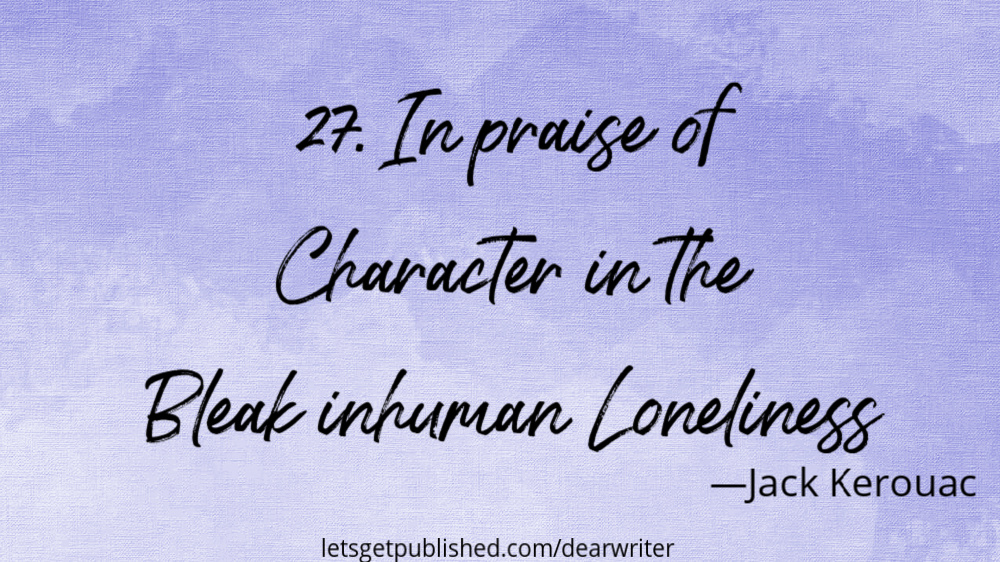
In the bleak, inhuman loneliness, we can touch others all over the world and beyond our physical existence through our books.