#PitMad is a pitch party on Twitter created by PitchWars.org where writers tweet a 280-character pitch for their completed, polished, unpublished manuscripts. Agents and editors make requests by liking/favoriting the tweeted pitch.
Every unagented writer is welcome to pitch. All
genres/categories are welcomed.
#PitMad dates 2020
March 5, 2020 (8AM – 8PM EDT)
June 4, 2020 (8AM – 8PM EDT)
September 3, 2020 (8AM – 8PM EST)
December 3, 2020 (8AM – 8PM EST)
For Official #PitMad rules and the list of category hashtags,CLICK HERE.
About Pitch Wars
Pitch Wars is a mentoring program where published/agented authors, editors, or industry interns choose one writer each, read their entire manuscript, and offer suggestions on how to make the manuscript shine for an agent showcase.
How to find beta readers? It’s crucial for every writer to get honest and useful feedback, but it’s difficult to find beta readers outside of family and friends.
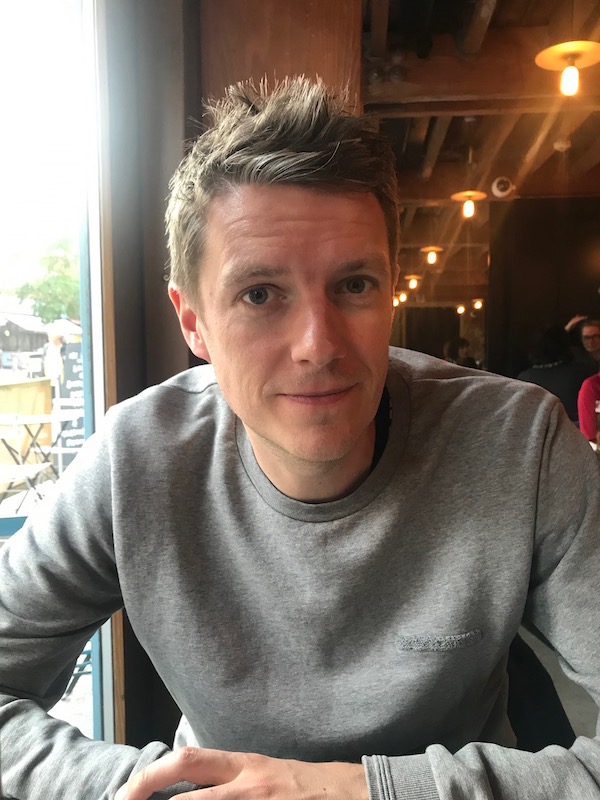
Today, we talk to Matt Brindley from fresh.ink, an exciting new platform that will match writers with unbiased beta readers. It will not only allow them to receive feedback, but also provide detailed analytics.
Ahead of its launch, fresh.ink is hosting a writing contest. $7,500 in prizes are available across 4 fiction categories: short story, novelette, novella, and novel. This contest is live.
Fresh.ink is also launching a digital literary magazine which will feature the best work across the platform and reprints from previously published literary works. All authors will be paid for their submissions.
This means writers can upload a story or novel for feedback, enter it into the writing contest, and possibly get published in the magazine all in one submission.
Read on to learn more about this amazing new tool for authors!
Whether an author plans to publish in a literary magazine, self-publish or traditionally publish, we envision fresh.ink as the connector between authors and agents, publishers and editors.
Interview with Matt Brindley, founder of fresh.ink
Tell us about yourself, Matt. You’re a product and software developer. What made you decide to make the transition to the publishing world?
The idea for fresh.ink was the result of many experiences and conversations over several years. I was first exposed to the writing world and the challenges writers and publishers alike face via my wife, Mary, who is a writer and editor.
While researching and evolving this idea, I met some brilliant people who were very generous with their time. One London-based editor took me to see her company’s office in a converted Victorian house. It was a beautiful building with a grand staircase, books lining every wall. She talked enthusiastically but realistically about working in the industry, the challenges and frustrations, the wins that made it all worthwhile, and the joy of reading. Another advisor, a literary agent, spoke of her passion for reading, of discovering authors, and her reasons for switching roles (she had recently moved from a senior editor position at Macmillan). Their passion was infectious!
I also had the opportunity to speak about the project with an author who had published a number of books with Hachette and was working on her latest novel. She walked me through her story of how she first found an agent, the ins and outs of working with a publisher and the feeling of seeing her book advertised on the subway for the first time.
I have a lot of respect for the publishing industry, for the decades of work it takes to succeed in it, but I was intrigued by the ways in which technology could be used to complement both traditional publishing and self-published authors. Writing great software is about empowering others with just the right amount of technology to improve their lives. I’m very excited that we’ve found a way to strike that balance here and genuinely help authors, agents and publishers.
I wish I had the skills and patience to write! I’m much more comfortable in a code editor than a word processor.
You love a good book, who are your favorite authors?
We Brits love a good murder mystery, so I’d be remiss not to mention the Agatha Christie books I grew up reading. More recently I’ve been reading through everything Ruth Ware has written, Anthony Horowitz’s Magpie Murders and The 7½ Deaths of Evelyn Hardcastle by Stuart Turton.
On those occasions I fancy fiction where the protagonist isn’t solving a whodunnit, I enjoy a pretty wide range of genres. I recently enjoyed reading Red Clocks (Leni Zumas), Goodnight Stranger (Miciah Bay Gault), Where the Crawdads Sing (Delia Owens) and Less (Andrew Sean Greer).
What gave you the idea to help writers with feedback on fresh.ink?
I’d like to claim it was a brilliant idea of mine that came in a eureka moment, but in reality, the idea was formed over many interviews, much research, and ongoing involvement in online writing communities. I was keen to contribute to the literary world, but the idea took multiple years to fully shape, and will continue to evolve.
How does the platform work for authors?
Authors submit their fiction (of any length) to fresh.ink. It should be a final draft, free of typos and mistakes and ready for beta readers.
If a story is accepted, we analyze it to match it to readers who we think we’ll enjoy it to give it the best chance of being well-received. Readers can only see stories they’ve been matched with, otherwise work remains private.
Once reading starts, authors receive detailed analytics on open rates, if and where readers drop off, and ratings. Much like test screenings in film and television, understanding a reader’s behavior can be hugely beneficial in understanding how to improve a story. Readers will also answer more detailed questions about what they liked and what they think could be worked on, as well as join a book club with the author for further discussion and commentary.
Preview of fresh.ink’s story dashboard
How does one become a beta reader on fresh.ink?
We’re aiming to open up to beta readers in mid-October, so sign up for the waiting list at https://fresh.ink/#readers now to be first in line!
Tell us more about fresh.ink magazine and the fresh.ink app.
Our reader app has two sections: reader matching and our premium section, fresh.ink magazine, of which Mary is the editor. At launch, fresh.ink magazine will feature hand-picked writing from around the world. After our contest concludes, the magazine will begin including the best work that has come through fresh.ink’s matching service. All authors who are invited and agree to be featured in our magazine are paid, either via payment upfront or via revenue-sharing.
When is the official launch date?
We’re open to author submissions now, and readers will be invited in mid-October 2019. Not long now!
What is the future vision for fresh.ink?
Our vision is to create the de facto process for getting great writing out into the world.
Publishing is a tough business, especially for smaller houses and literary magazines. We want to support them all and help them thrive, either by matching them with proven writing or providing additional readers for their own content.
Whether an author plans to publish in a literary magazine, self-publish or traditionally publish, we envision fresh.ink as the connector between authors and agents, publishers and editors.
Do you ever get depressed without knowing what exactly is bothering you? Do you sometimes feel tired, restless, and not sure what to do with yourself? Maybe you find yourself spending too much time talking to your dog and checking your social media. You’re sick of your story and your characters and you don’t know why.
Now think about the last time you had a good chat or laugh
with someone. How long has it been?
Writers have a tendency to isolate themselves. We live inside our heads, but it’s medically proven that loneliness bad for us physically and mentally. It’s also bad for our craft. Staying isolated prevents us from being connected to the world and the people we write about.
Meet someone for coffee or a beer. Plan a dinner party. Call a close family member or friend. See how you feel afterward.
Sometimes we begin writing a story and we think, what the hell is this? What does it all mean?
Don’t stop for a second to think about what you are doing.
Don’t agonize over how to make your character more complex, or what pithy theme you’re trying to illustrate.
Just bang it all out. Scribble it down.
Often our stories are something we are trying into tell ourselves. Sometimes you have to get to the end to realize what it’s all really about.
If you don’t know what it means when you get to the end, don’t panic. Read it through. Read it many times. The ‘why’ of the story will become clear to you.
Open loops are unfinalized tasks, all that ‘stuff’ you gotta do. They are the perfect distraction from writing and can be used to avoid hard work. Open loops are the BFF of procrastination and hog up valuable RAM in your brain that could be used to power your writing.
To get into a creative flow state, you must close the loops. Here are few ways to ensure the background tasks are shut down.
Choose a writing time – Start waking up at 4am to have quiet time to write. What? No, just kidding. For some of us, such a drastic change sets us up for failure. It’s easier to carve out a writing time that already fits into the routine we have. Whatever you choose to do, designate this block and stick to it. After a few weeks of regular practice, your brain will expect to be let loose at this time and be primed to focus.
Make a to-do list every day – Write down every thing, big and small, that you have to do. Most of the time we’re not actually worrying about ‘doing the things.’ We are trying to figure out what are all the things we need to do. Are we missing something? Once you have them all listed, you close that loop. You don’t have to worry about what you’re supposed to be doing or if you’ve forgotten anything.
Prioritize tasks – What absolutely must be done now? What can wait till after your writing time? Put them in order of importance.
Knock ‘em down one at a time – Focus on one item at a time. Try to check off as many items as possible. Each check gives you a sense of accomplishment and closes that tab in your brain.
Plan remaining items – Prioritize and schedule the remaining items for later times or dates. That way you know what you have to do after writing. You don’t have to worry about how you’re going to get it all done. You already have a plan of attack.
Now you’re all set. Sit down and write. Slip into the zone.