What do your characters’ names say before they ever speak?
At birth, we are given a name—the one thing we carry with us for the entirety of our life. We are told, “This is your name,” and we are taught to respond to it.
Some of us grow to love our name. Others wish they could change it—and some do.
But over time, something remarkable happens—we give our name its meaning.
At a memorial service, attendees will often pause to reflect on who “So-and-So” was. They were kind. They were brave. They were funny. They were the life of the party. But we are not one thing—we are many things to many people. Each person who hears our name conjures their own version of who we are.
I am Brenda. Someone gave me that name before they knew who I would become. It is I who gave it a personality.
The Writer’s Gift
As writers, we hold a rare kind of power. We choose our characters’ names—not just to identify them, but to hint at who they are, or who they might become.
When I studied literature in college, I was fascinated by allegory. In Hawthorne’s Young Goodman Brown, characters are named quite literally: Goodman Brown represents a faithful, morally upright man, while his wife, Faith, becomes a symbol of belief—both spiritual and personal.
In the morality play Everyman, characters wear their values like name tags: Fellowship, Kindred, Goods, Knowledge, and Confession. While these works are heavy-handed by modern standards, they demonstrate the lasting impact a name can have.
Today’s writers might be subtler, but the principle still stands—names matter. They guide the reader’s perception before the plot even unfolds.
A well-chosen name can suggest courage, gentleness, mystery, or even insecurity. Researching the origins and meanings of names allows us to bestow layers of depth to a character before a single word of dialogue is spoken. A character named Miles, rooted in the Latin for “soldier,” might carry quiet strength. A Celeste could evoke serenity, sky, or the ethereal. Even choosing an ironic name—like a hitman named Lamb—can reveal volumes.
Naming with Intention
As we shape our characters, we have the privilege—and responsibility—of ensuring their names say something about them, even if only in a whisper.
We don’t always choose the names we live with, but as storytellers, we get to assign meaning from the very beginning. We can give our characters the names we might have chosen for ourselves—names that reflect strength, hope, humor, or vulnerability.
I didn’t choose my name, but I’ve spent a lifetime making it mine. Now, when someone says it, they’re not just saying a name—they’re calling forth a carefully crafted identity—mine.
What do your characters’ names say before they ever speak?
About the author
Brenda Wilkins Brenda Wilkins is an up and coming author with a gift for evocative storytelling and profound narratives. With a lifelong love of stories and a passion for exploring the lessons from the challenges of life, Brenda began her writing journey at an early age. Her works often explore themes of identity, resilience, truth, and the human spirit, forcing readers to view new perspectives.
Welcome to Cosmic Ink, a blog series with bits of fuel for a stellar creative life.
There are times when life goes according to plan, and everything I have scheduled falls into place. But, in recent years, this is steadily becoming a rare event.
I keep waiting for the space-time continuum to open up for me, a future when I can dedicate a solid scheduled block of time to work on the projects in my head, but conditions are not improving. And instead of getting little done, I’m getting absolutely nothing done.
Having a clear vision of what we want to create, why we want to create it, and a plan to accomplish this is the most fundamental part of making the untold stories in our heads a reality in the physical world. However, we must not toss the whole dream aside whenever things get hectic.
Creating is our life blood. It’s what keeps our fires alive. It gives our lives meaning.
It’s not always something that can be slotted in like a dental appointment, and it should not be treated as such. It is far more important than that.
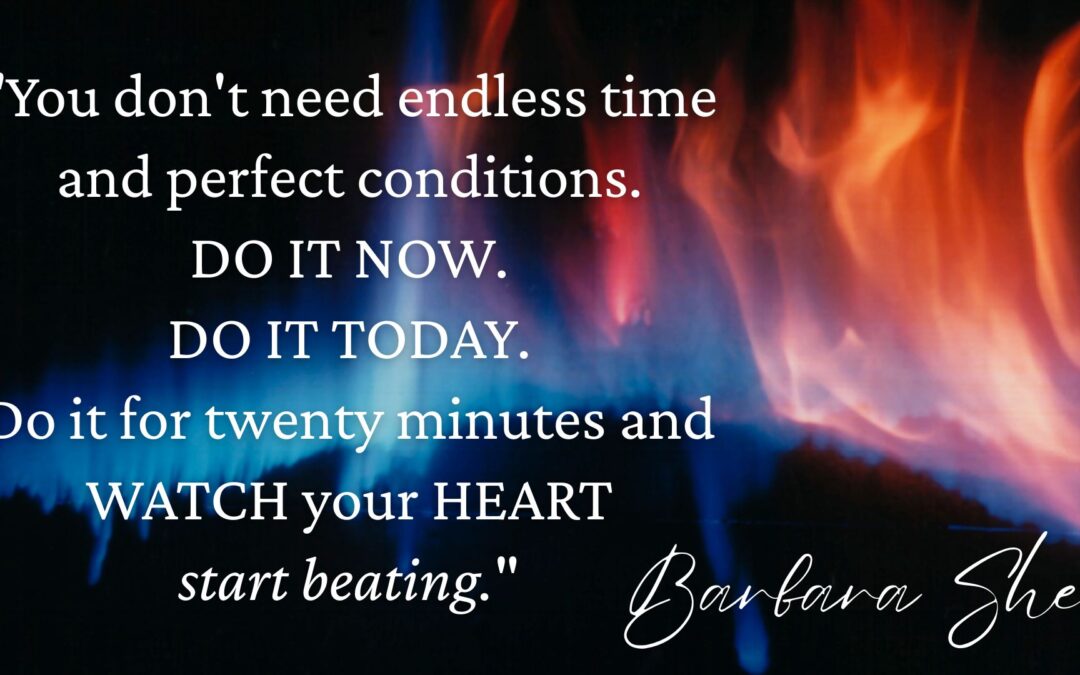
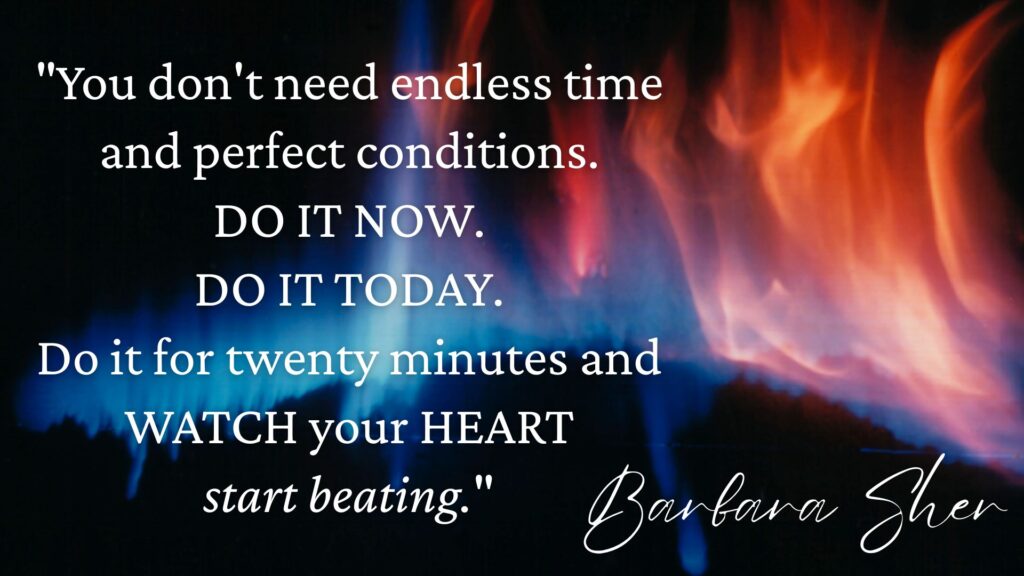
So during those days when you feel you “don’t have the time” or have the perfect conditions, remind yourself that you don’t have time not to.
You can find twenty minutes, I assure you.
Do it. It’s not just for your benefit, but for everyone’s.
(I am writing this pep talk for myself as well as you guys)
I recently read a book called F*ck Like a Goddess by Alexandra Roxo. Contrary to the title, the book is not really about sex, but about approaching life with the force of creation, to learn how to interact with your experience as a conscious, spiritual being as if it were your lover.
While it’s not my favorite book on self-actualization, I appreciated the premise.
Writing is an act of love, of observing and appreciating things others don’t notice in the world.
We artists immerse ourselves in the moment with all five senses. We savor everything there is to feel—blissful or painful. We do this willingly, with passion and adoration.
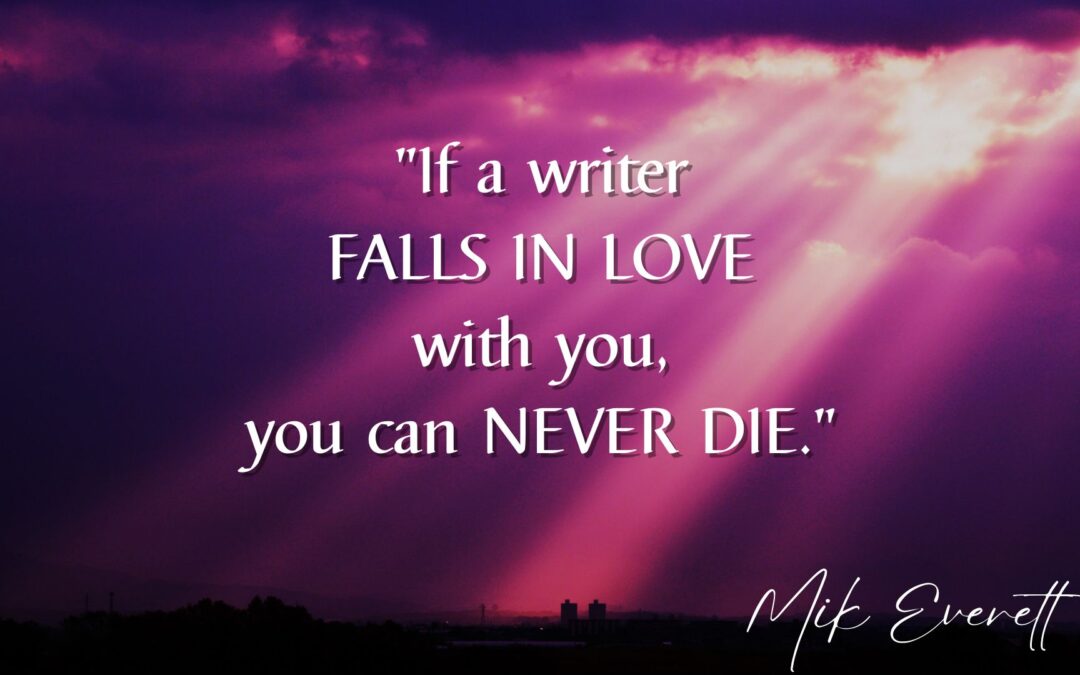
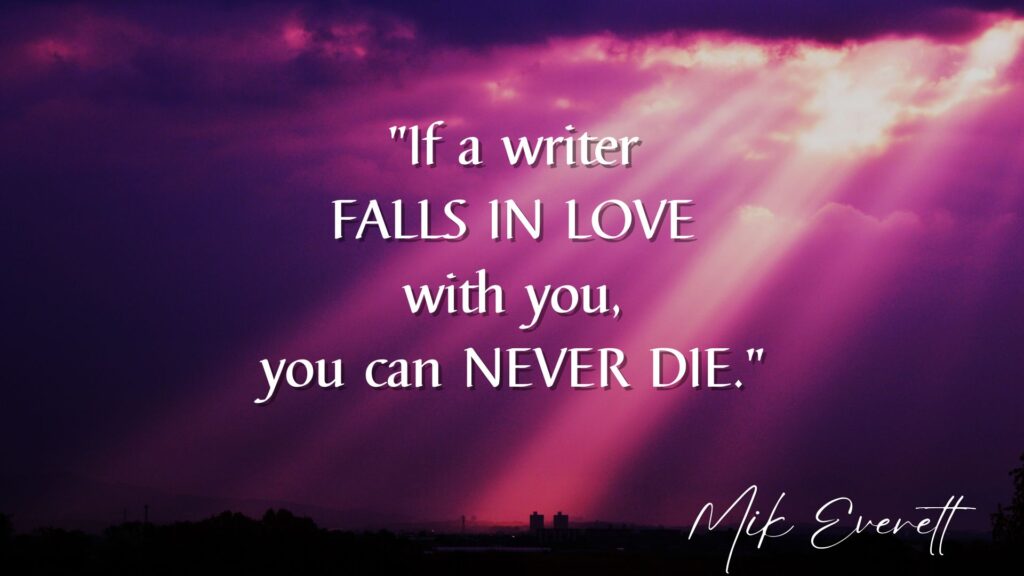
“If a writer falls in love with you, you can never die,” is a quote attributed to Mik Everett.
This is an extraordinary power.
Who or what will you use your artistic gift to immortalize today?
Let me know by replying. May the muse be with you!