If you read my last post, you know I recently attended AuthorCon V in Williamsburg, VA—a yearly event hosted by Scares That Care, an all-volunteer charity. This gathering unites horror fans and authors for a good cause, allowing readers to connect with writers, purchase signed books, attend panels, and brave the infamous Gross Out contest (I’m still recovering from 2024’s edition!).
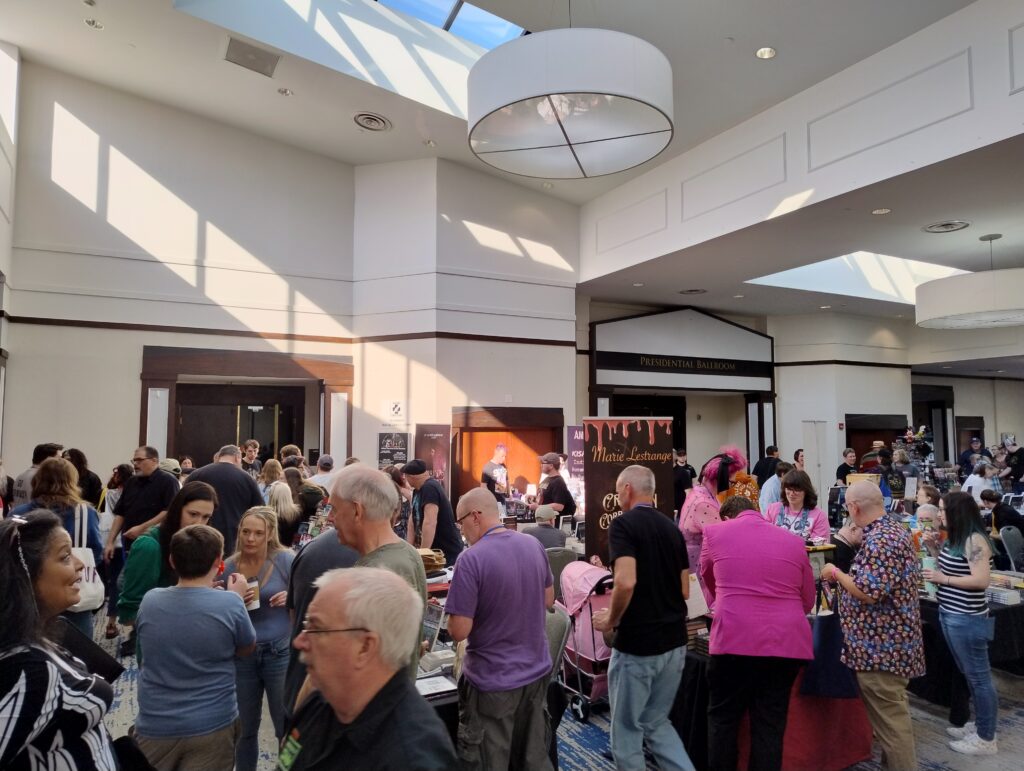
The Doubletree Hilton in Williamsburg featured a promenade and large ballroom for vendor tables, plus an auditorium and smaller rooms for panels and events.
AuthorCon’s atmosphere brimmed with fun and camaraderie. Horror fans are among the kindest, most genuine people you’ll meet—incredibly supportive and enthusiastic. I spotted many dragging large portable carts loaded with books!
After opening ceremonies, the floodgates opened. I was delighted when visitors stopped by my table, asked about my books, and purchased signed copies. This from an introvert who never saw herself as a networker. I met people of all ages and backgrounds, having surprisingly deep conversations amid the convention’s bustle—each interaction like its own little bubble.
Author Tips for Book Conventions
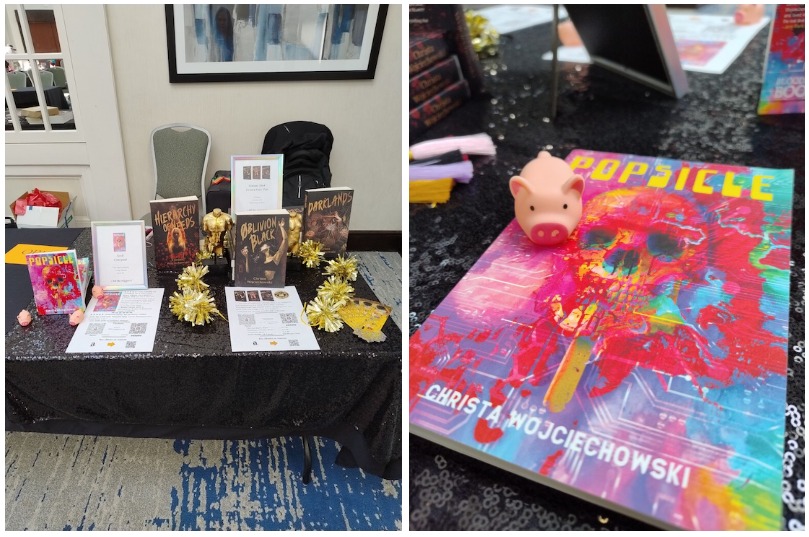
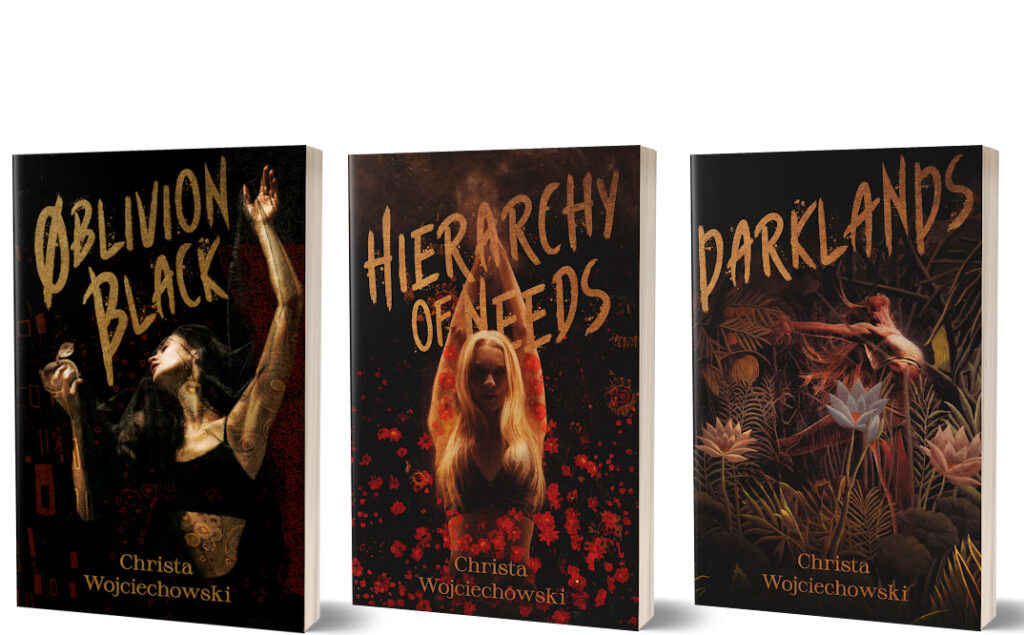
Table Display: Make the most of your limited space. I bought decorations from Dollar Tree and ordered themed items to complement my books—gold sculptures for The Sculptor Series and tiny squeaky pigs for Popsicle (they make sense if you’ve read it!).
Books and Payments: I ordered my books from Amazon and brought them in my checked luggage. Paypal, Venmo, and Zelle made transactions easy with QR codes displayed on my table.
Cash Handling: Bring change! I sold books at $15 each or three for $35, not realizing many would pay cash. I had to beg the hotel barista for small bills from his tip jar.
Signing Protocol: Ensure payment before signing. In my excitement, I could’ve easily handed over books without confirming payment.
Book Pitches: Prepare concise book descriptions. I didn’t realize how unprepared was until people stopped to ask what my books were about. Instead of an irresistible hook, I would charm prospective readers with a long, vague, rambling mess. Next time, I’ll have rehearsed pitches tailored to different reader interests.
Product Selection: Bring standalone books or novellas. For most attendees, this is their first introduction to your work—buying a whole series is a big ask. My novella Popsicle sold out quickly at $10, offering an affordable taste of my writing in a small, easy-to-pack size.
Table Essentials:
Bring snacks and water to avoid leaving your table
Pack a good pen and practice your signature. This is obvious, but easy to forget. Decide on a few phrases you can use to personalize your inscription.
Create useful promotional materials with contact information
Wear comfortable shoes and clothes—you’ll be standing more than expected
Networking: Don’t be shy! I was determined to be more intentional about meeting people this year. Everyone is in “convention mode” and happy to connect. In the evenings, attendees took over nearby restaurants and the hotel bar for deeper creative discussions.
Shopping Strategy: Don’t wait too long to buy books for yourself By the last day, some authors had sold out or already packed up.
Post-Convention Follow-Up
Going to a book convention can be an investment of time, energy, and money. You want to make the most of your experience and maintain the relationships you made during the event.
Connect with new contacts on social media and maintain those relationships
Share photos from the event, tagging those pictured
Engage with posts about the convention
Make signed copies available for those who couldn’t attend
Is It Worth It?
Absolutely. AuthorCon V was well worth the trip. I learned invaluable lessons about in-person book marketing and the horror community culture. The human connection was the most valuable aspect—I spent amazing times with my friends and returned with new ones. In our digital world, meeting readers and fellow authors face-to-face is truly priceless.
Writing is a creative activity—an art—and art is largely an intuitive process. We rarely get down to the bones of planning our writing lives. But if you don’t create a map to your vision as a successful author, you’ll be easily distracted.
I know this happens to me. If I have free time (if that ever happens) it usually gets filled with anything besides writing—even laundry or dishes or my dog’s insistence of going in and out every five minutes. There’s always something.
Furthermore, books are a product. We must think about actually selling the books we write. I, for one, have published books and then just let them sit there. We don’t like to approach writing like a business. It almost takes the magic out of it, crushing the romantic idea that intuitive creative geniuses cannot be bothered with all the drudgery. Don’t readers magically appear? If you write it, they will come. Right?
It rarely works like that. If you read my post on the lottery mindset, you will know it’s extremely rare that a book “goes viral” on its own.
So, you must not only have a clear vision of your best life as a writer, but also outline a detailed plan. Otherwise, you’ll find yourself drifting without making any actual progress toward that vision. An Author Plan is going to be your best weapon against distraction, procrastination, and those days when you’re just feeling “meh.”
First, grab the Author Planning workbook. You can either print it out or grab a sheet of paper. I recommended writing by hand as opposed to typing or dictating into a device. There’s something about pressing pen to paper that activates your creativity, especially when casting intentions into the future.
What we’ll do:
Sketch out a map for five years into the future. This is wide in scope. Dare yourself to push the limits of what you think you can do (but remember to be realistic).
Next, dial down to one year in the future. What do you want to accomplish in the next 12 months?
After that, you will break these tasks down into quarterly goals, monthly goals, weekly goals, and determine what you will do daily.
What’s included in your author plan?
Everything. You will include your writing time and place, your word count or time limit. You will want to set aside time for rewrites and edits, for submissions and deadlines for the magazines, publishers, agents, and even contests you want to submit to.
You must schedule your marketing, blogging, publicity, and social media time. I always “squeezed” marketing and publicity in when “I had free time,” and I got lousy, sporadic results (of course, because I never had free time). You need to keep up with content, social media, email, and publicity consistently to get anywhere.
You will also desperately need time that’s unstructured to browse the internet for research, collect story ideas, and fill your creative well. For me, this includes reading others’ books or exploring other artists’ music. Maybe you want to go to the movies alone or try something weird. Plan an artist date, connect to the source, summon the muses, figure out a way to nourish the mysterious subconscious part that we write from.
Here are 10 areas to consider as you map out your year:
1. Define your writing schedule. Choose your time and place to plan. Stick to it. Set your time window or your word count. Systemize the routine so it become as automatic as brushing your teeth. This will train your brain to turn on for writing at that time of day.
2. Think about your reader and genre. Consult your manifesto from the Author Planning workbook. This is going to as be crucial to marketing efforts as developing your story. Who is your reader? What are you hoping to accomplish with your work? Why do you want to do this? You might even want to develop a reader persona. It’s like creating a character for a book. Who is this person or people, and how are you going to reach them?
3. Design and audit your author platform according to your reader. Where are they on the internet? Where are they on social media? What are they talking about? What are they doing? What causes do they care about? If you haven’t started seriously building your author platform, which is your website, your social media, your email list, and lead capture, you need to incorporate that into your plans for the year. Even if you’re not published yet, at least get the base established so that it’s there when you want to pitch to agents. If you already have an author platform, is what you’re doing bringing results? Audit periodically and make sure you’re still on track. (Download the Author Platform checklist here).
4. Make a list of your blog and newsletter topics for the next quarter. Brainstorm a list or make a mind map of topics you could possibly cover.
5. Think about your social media strategy. How many times a day or week will you post to Facebook, Instagram, or Twitter? I recommend not spreading yourself too thin. Pick one or two networks to be present on and just make sure you’re there consistently.
6. Plan book publicity.This is something you should be actively doing if you have books out. In my personal experience, my sales always go up when I’m doing guest posts, author interviews, pitching for reviews, and actively promoting the book.
7. Build a backlog of short stories. Even if you’re a novelist, writing short stories is an effective way to build your credibility. Not only does it expose you to readers in your genre, but it also gives you some cred so that when you pitch to a big publisher or agent, you’ve got published work to show. Find magazines, fanzines that cater to your reader, and seek out anthologies to submit to. Think about how many short stories you want to write this year. Realistically, how long will it take to complete them? For instance, I can write a short story quickly, but by the time I rewrite and edit, it can be months. On the other hand, I know people who write short stories every week. Then look, where can you write or fit your short story writing into your writing schedule? That little slot of time that we had already designated earlier.
9. Work on your novels if you’re a novelist. Think about the novel/novels you want to write in the next 12 months. What novel ideas are keeping you awake at night? Those are the ones that just spill out and the ones that you obsess over are usually more intense and impactful than ones you’re writing for profit. Having a mission with a story will make it flow easier, you’ll be more productive, and your writing will be better. Set a finish date. You might not keep it, but it will be there in the back of your mind when you’re writing. You need to have an editor to work closely with. If you don’t have one yet, you might want to try a few out with your short stories and see which one does the best job, making your writing better, cleaner, and more concise without taking away from your voice. Then polish your manuscript to perfection and get ready for the self-publishing or submission process.
10. Commit to an ongoing publicity strategy. While you’re waiting for responses on your submissions or for your self-published book, you are going to want to think about how you’re going to promote the new release. As I just said, are you going to pitch to podcasts, do guest posts, blog tours, book reviews, local news, and radio?
In the next post, we will discuss analyzing your results and retooling for the best outcomes.
The objective here is to make sure you always have something planned to do to avoid wasting time, becoming overwhelmed, becoming paralyzed. At the same time, hold your plan loosely. Adjustments will need to be made. Don’t be too hard on yourself if you fall off schedule. You have your writer’s manifesto, your vision. You have your plan. Nothing can hold you back …. except yourself.
“OMG. What if this all works out?”
Now that you’ve crystalized this vision and the path to it, it seems possible, even inevitable that you will achieve what you’ve written here. You might wonder if you will be able to rise up to meet it.
All the planning in the world won’t help if you have blocks against success.
Before executing your plan, ask yourself how you feel when you think of success?
What do you want your life as a writer to look like? Have you ever even thought about this? It’s funny because I never really thought about it at first. I just wanted to get that next submission accepted or get some more sales for my self-published books. I didn’t consider the big picture or the possibility of making a living as a writer. But as I drifted along, I realized that if I didn’t define my desired future, outside forces would shape it for me.
Rarely do we give ourselves a chance to think about extraordinary possibilities. We always play ourselves down and forget to focus on what’s important to us. Worst of all, we often define success by other people’s terms. We have an author planning workshop in the Writers’ Mastermind where we take this foggy goal and give ourselves permission to dream big – like, huge!
So, what would your best-case scenario in the future if your writing became successful?
Think about these things:
Is your idea of being a writer isolating yourself in a cabin in the woods, or do you want a more cosmopolitan, cultural life in a big city?
Do you love your current home, but fantasize about being able to build a writing shed in the backyard so you can be alone in the quiet?
Think about where your future is going to be. Exactly what country? What city? Who will be there – your family, your spouse? Or maybe you’re single and you’ll be surrounded by exciting people. How much income will you need to support this lifestyle? What kind of writing will you be producing? What will you be doing in your downtime, right down to the meals you’re going to enjoy?
Do you crave to travel the world? Take your kids on epic vacations?
Do you imagine going to an award screening of a movie based on your book, winning a prestigious book award, or collaborating with writers you admire?
The reason why we often falter and struggle is we don’t have a clear idea of what we want or why we’re working so hard to be a success.
You’re a writer—use all five senses. Daydream about what your successful life as an author looks, tastes, feels, and smells like. Make sure you are planning this according to what’s important to you. Don’t default to the typical “I want fancy cars and a mansion” idea. Although, if that is your dream (I wouldn’t mind that either) – then cool! But also be honest about what you value most in life. What will make you fulfilled—not rich and famous, but happy, which I think are two different things.
Transcend your reality. Picture everything in the finest detail. Do not limit or sensor your fantasies and deepest desires.
This vision is going to be used as the endpoint as you draw your map to becoming a successful author. In this blog series, we’re going to reverse engineer from there.
Get a nice cup of tea, a beer, G&T, or a coffee. Sit down, put your favorite music on, and close your eyes. Think, “If I could have anything I want, truly and deeply in my soul, what would it look like? What would it feel like?”
I’m not promising your wishes will magically come true without any effort. But you must have some vision of your destination. At the very least, this exercise keeps the whole business of writing fun.
EXERCISE: Download the free Author Planning Guide or get out a journal. Let your writer’s imagination run loose, and comment/reply about what you discovered.
EXTRA CREDIT: Go further and create a Pinterest board or a collage in Canva with all you dream of achieving, having, and experiencing in the future. Share it on social media and tag us (Facebook, Twitter,Instagram, TikTok).
I’m sure I’ve said this too many times in meetings, videos, blogs, and newsletters—once we stop having fun with writing, our reader stops having fun too.
Sure, we sometimes have to command ourselves to sit down and work on our stories, batting away distractions as if they were flaming Molotov cocktails.
But once we close the door and sit to write, are we enjoying it? Or are we grinding it out? Have we become so mechanical and rigid in our process, we’ve forgotten the wild enthusiasm that flooded us when we first felt the thrill of creating our own worlds and characters?
We must remember how it started. For must of us, writing fiction wasn’t a strategic decision. It was a compulsion.
For now, stop worrying about what the world will think or if your book will be a success.
Strap onto the sheer joy of creating and ride it till the end. If you’re tired and empty, look around you. The universe is bussing with enthusiasm. It surrounds us, and we can reach out for a hit whenever we need it. We can piggyback on the artistic boundlessness of others.
Artist dates are wonderful for reawakening creative enthusiasm. So is consuming others’ writing or other forms of art. For example …
Have you seen Everything Everywhere All at Once? It’s an A24 movie that is SO WILD, it will make your brain explode. There is no doubt they had a riotous good time while writing and filming it.
And it won 7 Oscars.
I am not ambitious enough to try to create anything like that yet (the screenplay must have been an insane amount of work!), but it opened me up to thinking beyond the limitations of what’s been done before.
Ask yourself:
Where can I surprise people?
How do I make their jaws drop?
Can I pass on the same enthusiasm my favorite writers and artists invoked in me?
We’ve talked about perfectionism, rejection, and the mysterious phenomenon of self-sabotage when it comes to committing to developing our creative potential.
But if we dig down to the core of most issues that keep us stuck, the culprit is fear.
Fear is insidious. It disguises itself. We will tell ourselves we are many things, but not afraid.
We might resort to drill sergeant tactics to force us to do what we need to do for our writing career. But ignoring or fighting fear costs more energy, and winning is unlikely.
Let us start with this fact—we will never get rid of fear. Don’t wait until you’ve mastered it to do what you’ve always wanted to do. You will wait forever. Feel the fear and move forward anyway.
Another trick is to transform fear into excitement. Do you feel sweaty, anxious, shaky, and unsure of what’s going to happen? Physical feelings of excitement are very close to those of fear. Reframe them and realize this is you taking risks and living your life fully, not hiding away and playing it safe.
Nothing paralyzes the mind like fear. So whenever you feel resistance or procrastination to putting yourself out there as an artist, look for the unconscious fear first. Unpack it, acknowledge it, and calmly move forward.
“I must not fear. Fear is the mind-killer. Fear is the little-death that brings total obliteration. I will face my fear. I will permit it to pass over me and through me. And when it has gone past I will turn the inner eye to see its path. Where the fear has gone there will be nothing. Only I will remain.”