It’s January—which means every fiction writer on the planet is either:
Setting loosely-planned writing goals they’ll abandon by March, or
Avoiding goal-setting entirely because it feels overwhelming and pointless
I used to be both of those writers.
But now, instead of writing a glorified to-do list, full of arbitrary goals that are unrealistic and/or impossible to measure, I reverse engineer my daily routine from a big-picture vision.
Fiction writers need a multi-faceted approach to goal-setting—one that honors the psychological and intuitive aspects of the work, not just the word counts and deadlines.
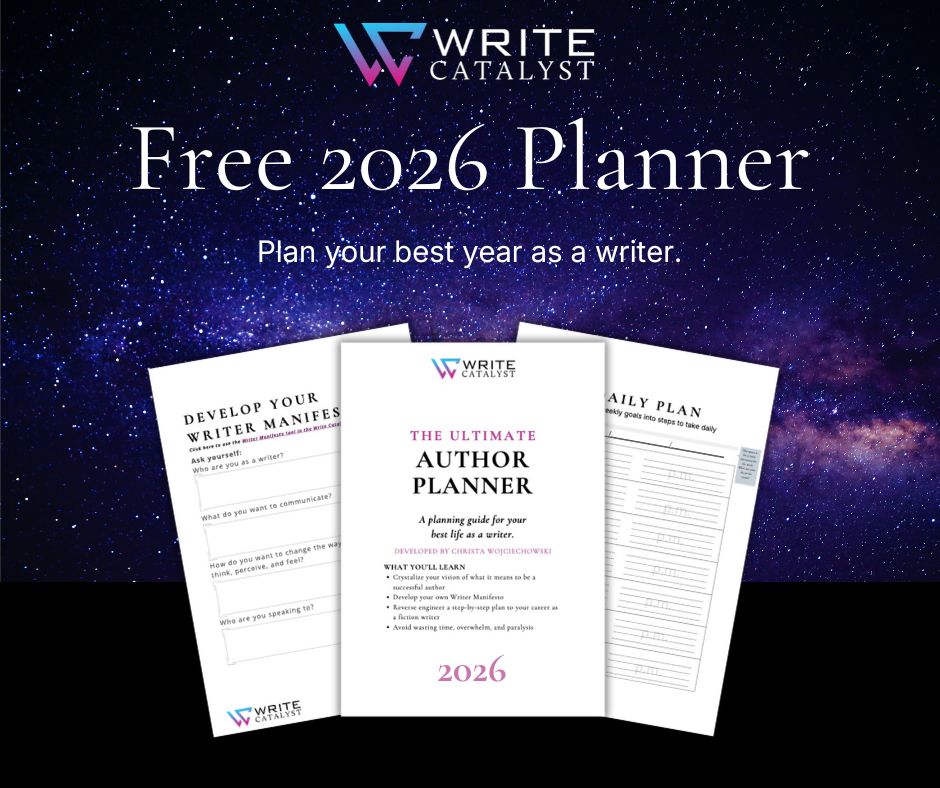
That’s why I created the Ultimate Author Planner.
It’s not just another productivity worksheet. It walks you through:
Your Writer Manifesto — Connecting to your deeper purpose (because that’s what keeps you writing on the hard days)
A Chance to Discover Your Writer Archetype — Understanding how you naturally approach your work (so you stop trying to fit into a box)
Your Vision of Success — Defining what “making it” actually means to you (it’s probably not what you think it is)
The 9 Steps to Building Yourself as an Author — Breaking down the journey from where you are now to where you want to be
5-Year, Yearly, Quarterly, Monthly, Weekly, and Daily Planning Pages — Because big dreams need small, daily steps that lead to real progress
I’m hosting a live Zoom planning session Monday, January 12th at 11am EST.
You’ll get clarity on your 2026 goals while connecting with other fiction writers. You will leave feeling excited about 2026 because you finally have a roadmap you know you can follow, one that is aligned with your values and vision.
Just click here to send me an emailand say “I’m in!” to get your free spot for the live planning session on Monday, January 12th at 11am EST.
Let’s make 2026 the year you bring all your stalled projects to life and evolve into the author you were meant to be.
Until then, feel free to leave a comment with any questions you have about the planner. I would love to hear about your writing goals.
What do you want your life as a writer to look like? Have you ever even thought about this? It’s funny because I never really thought about it at first. I just wanted to get that next submission accepted or get some more sales for my self-published books. I didn’t consider the big picture or the possibility of making a living as a writer. But as I drifted along, I realized that if I didn’t define my desired future, outside forces would shape it for me.
Rarely do we give ourselves a chance to think about extraordinary possibilities. We always play ourselves down and forget to focus on what’s important to us. Worst of all, we often define success by other people’s terms. We have an author planning workshop in the Writers’ Mastermind where we take this foggy goal and give ourselves permission to dream big – like, huge!
So, what would your best-case scenario in the future if your writing became successful?
Think about these things:
Is your idea of being a writer isolating yourself in a cabin in the woods, or do you want a more cosmopolitan, cultural life in a big city?
Do you love your current home, but fantasize about being able to build a writing shed in the backyard so you can be alone in the quiet?
Think about where your future is going to be. Exactly what country? What city? Who will be there – your family, your spouse? Or maybe you’re single and you’ll be surrounded by exciting people. How much income will you need to support this lifestyle? What kind of writing will you be producing? What will you be doing in your downtime, right down to the meals you’re going to enjoy?
Do you crave to travel the world? Take your kids on epic vacations?
Do you imagine going to an award screening of a movie based on your book, winning a prestigious book award, or collaborating with writers you admire?
The reason why we often falter and struggle is we don’t have a clear idea of what we want or why we’re working so hard to be a success.
You’re a writer—use all five senses. Daydream about what your successful life as an author looks, tastes, feels, and smells like. Make sure you are planning this according to what’s important to you. Don’t default to the typical “I want fancy cars and a mansion” idea. Although, if that is your dream (I wouldn’t mind that either) – then cool! But also be honest about what you value most in life. What will make you fulfilled—not rich and famous, but happy, which I think are two different things.
Transcend your reality. Picture everything in the finest detail. Do not limit or sensor your fantasies and deepest desires.
This vision is going to be used as the endpoint as you draw your map to becoming a successful author. In this blog series, we’re going to reverse engineer from there.
Get a nice cup of tea, a beer, G&T, or a coffee. Sit down, put your favorite music on, and close your eyes. Think, “If I could have anything I want, truly and deeply in my soul, what would it look like? What would it feel like?”
I’m not promising your wishes will magically come true without any effort. But you must have some vision of your destination. At the very least, this exercise keeps the whole business of writing fun.
EXERCISE: Download the free Author Planning Guide or get out a journal. Let your writer’s imagination run loose, and comment/reply about what you discovered.
EXTRA CREDIT: Go further and create a Pinterest board or a collage in Canva with all you dream of achieving, having, and experiencing in the future. Share it on social media and tag us (Facebook, Twitter,Instagram, TikTok).
What are the chances you’ll become a successful fiction writer?
In our last post, we talked about Turning Rejections into Success and surviving artistic losses by benefiting from what they force us to learn.
Today, we will talk about becoming mentally and emotionally strong enough to push through moments where the prospect of going for the writing dream is too much to contemplate.
WHAT ARE THE ODDS THAT I’LL BECOME A SUCCESSFUL WRITER?
This question is paralyzing.
We think:
How many writers are out there with the very same dream I have?
What makes me think I will be the one to break through?
I don’t have the time, energy, confidence, or freedom to go for it.
So many are more talented than me. This is a waste of time.
On the other side of the spectrum, sometimes the thought of success is scarier than failure.
What if this becomes a big deal?
Will my marriage survive it?
What will my parents think of what I wrote?
I’m terrified of public speaking. What if they ask me to make appearances?
Either outcome is enough to keep our wheels spinning until the end of our days.
The key to stop sabotaging yourself with thoughts is to practice self-awareness. When you feel resistance to moving forward on your project, ask yourself …
What is it exactly that I’m feeling? (fear, hopelessness, unworthiness, imposter syndrome)
Why do I feel this way? (my partner criticized my work. My savings is dwindling, I’m intimidated by another writer)
Is this true? (Not really. My partner’s criticism is unfounded. They don’t even like my genre. I can earn enough money to make this work. My writing is just as good as other writers for my audience.)
What is the next right thing to do to bring me closer to completion? (Check your author plan, do the next thing on your list. If you don’t have a plan, make one. Or just sit down and write as much as you can, whenever you can, until it’s done.)
You do the work.
The future will take care of itself!
*******
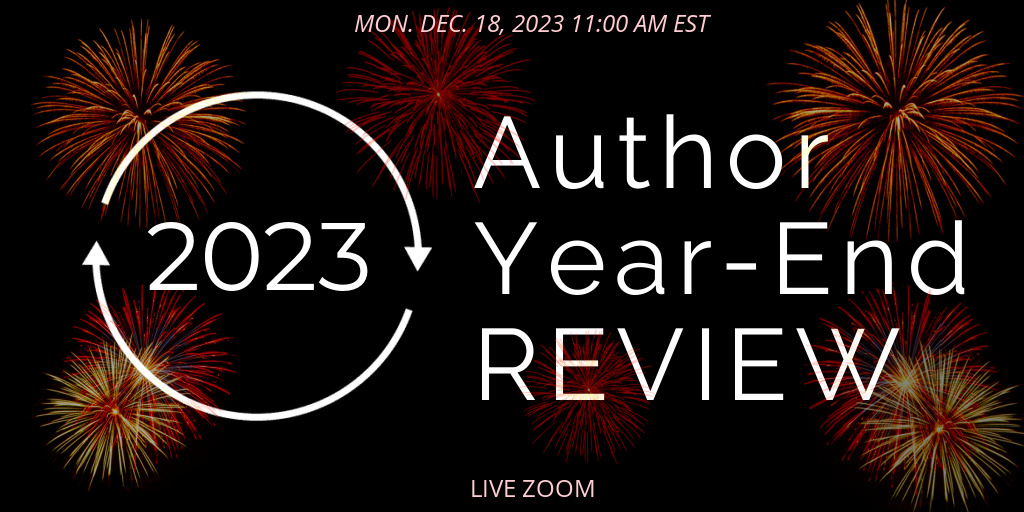
We are pleased to invite all fiction authors (published or unpublished) to our annual Author Year End Review for 2023.
Now that we’re about to close out 2023, it’s important to process all that happened (or didn’t happen) for us as writers this year.
We need to find out what worked and what didn’t, so that we can double down on the things that brought us results and eliminate whatever is draining our time, energy, and creativity.
I’ve worked with many first-time self-published authors andall the writers I’ve met, I mean ALL, have stars in their eyes when they get ready to publish their first book.
Everyone has that feeling when they’ve created something special. Creativity is a divine force and we feel it’s destiny. The world has been waiting this book!
We imagine uploading our copy to Amazon and waking up in the morning with 10,000 downloads.
The truth is that, unless we have a large author platform and at least some basic PR skills, no one will even know we have a book out.
If we don’t know how to SEO our book for Amazon’s search engines, the likelihood of anyone stumbling across it are slim.
Do we have an eye-catching book cover?
Did we hire a professional editor?
Or did we just slap up our final draft and expect people to ignore any flaws because it’s The Book of Destiny?
I think every writer must to go through this.
It’s part of the process, and we have to try because, let’s face it, some writers do become overnight successes.
You can’t win the lottery if you don’t buy the ticket.
Still, I try to prepare my new author clients for the difficult road ahead. Even if your book is good, even if it’s extraordinary, you have to compete with the hundreds of thousands of other authors who have the exact same dream.
This is hard to explain to the first-time author. In my experience, they completely filter out my warnings and march ahead with a huge smile, ready for the confetti to fall and the champagne to pop.
At this point, I just wait and let them go through it. Once they realize it’s not likely they’ll become famous overnight, then they’re all ears and we can get to work.
So go ahead, choose your dream cast for the movie, visualize what you’re going to wear on Good Morning America, and practice your autograph.
Enjoy it.
Never stop dreaming about it.
Don’t give up!
Just keep in mind that it may not happen with your first book. Years later, you’ll probably be thankful it wasn’t your first book (I know that I don’t want the stuff I wrote years ago to ever surface).
Just trust that each challenge is a stepping-stone on your journey to becoming the writer you were meant to be.
Anyone can publish a book, but few authors are successful. Millions of titles come out each year. What can self-published authors do to compete in such a huge market?
Howard VanEs from letswritebooks.net talks about how to prepare and position our fiction books for self-publishing success on Amazon and other distributors (and even become a bestseller)!
Watch this presentation, plus get na free 30-minute private call with our guest speaker about how to market your book. Just start your free trial with the Writers’ Mastermind. JOIN HERE
Last month, we enjoyed an insightful webinar with coach, podcaster, and author Christie Adams on Time Management for Writers. And in this post, I bring you a glimpse of the most valuable tips we learned from her.
At the Writers’ Mastermind Group, a new masterclass from experts and award-winning authors rolls out every month, bringing value and motivation to writers. So get ready to make the best of your time and energy as a writer.
A Writer’s Wellbeing
Although some of us have a primary job that helps us pay the bills, we consider writing our genuine work. We do all it takes to squeeze our writing into our busy schedule, even if it means writing late at night after finishing our house chores, helping our children with their studies, etc., or at dawn before the world wakes up.
However, we forget to nourish the most important part of this tapestry with all this hustle: ourselves, and we get lost among our responsibilities.
Firstly, we are so active with the many things we have to do that we take our physical and mental health for granted, expecting to be always resilient. But, if we don’t take care of ourselves and our precious minds, we can get burned out quickly and waste our creativity.
Secondly, our time is unproductive if we don’t organize our schedule by prioritizing our most urgent tasks. We must give our work a defined time because life is worth enjoying, and writing is a huge part of that.
Time Management Tips
Here are the 13 tips Christie Adams that we discussed in that mastermind session. I hope they will bring you the motivation to look after yourself as the creative jewel that you are and help you to manage your time more effectively.
Look after yourself. You guessed it. This is paramount since we are the main piece of this creative puzzle. Adopt healthy habits that will help you feel energized and strong enough to carry with your to-do list.
Don’t forget your fair amounts of veggies, proteins, fruits, and carbohydrates.
Exercise every day for a minimum of 20 minutes, or take short walks.
Listening to music while you take your daily showers will revitalize you.
Pay attention to your mental health as well, especially if you are passing through a difficult time. Instead of lamenting and questioning your luck, ask what this experience teaches you, what you need to see, and how you can solve this problem. When we shift our questions, we will see different perspectives of the same situation and choose the best solution.
Find the time when you can commit to writing. Perhaps you are a morning person, and you have no trouble waking up early when your mind is the most creative. Or you love writing at night with your coffee or a glass of wine while your muse visits you. Keep in mind that blogging, writing emails, and posting on social media are also writing work, so make space for these tasks in your schedule.
Prepare a schedule and stick to it. Organize each activity (like work, blogging, creative writing, household duties, family time, exercise) by giving each task a defined time. Start your day early and finish what’s most important first. Prioritizing tasks and being disciplined are paramount to productivity.
Set daily achievable goals. Choose three to four goals max so you can commit to them. Once you achieve your daily aims, you will feel empowered and motivated.
Close the door when you write. Set a “no disturb” time and let your friends and family know that. Don’t think of anything else other than writing when you enter this space of time. When others see how serious you are about your writing, they will respect it as well.
Create your personal writing space. Whether it is your study or a corner in your parlor or bedroom, prepare a particular environment that will inspire you every time you come to write.
Save the information you find which can help you with your writing. Write down any idea or tip you read or hear as a writing prompt. This will allow you to remember what to look for next time and the subjects you need to learn and consider.
Schedule time every week for studying and learning new writing skills or topics. Modern writers must know about marketing, networking, and personal branding. You can also learn by listening to podcasts and reading the latest literary articles that shed light on these subjects. It is never too late to learn new stuff.
Set boundaries for your sake! By organizing your time and setting a limited time for each activity, you avoid burning out. Otherwise, you will resent losing your creativity.
Don’t overwork. If you are a workaholic, set the alarm in your phone or a timer to take several breaks during your day. Give yourself time to stretch, exercise, go for a walk, or do some yoga. Even dancing can help you boost your metabolism, drop some stress, and strengthen your muscles, bones, and brain. It is also okay to give yourself a day off if you feel overwhelmed with work.
Celebrate every goal achieved. You deserve a reward after meeting a deadline. Mini presents to yourself are genuinely motivating, like a book you always wanted to buy, a new colorful notebook, a day out, favorite ice cream, etc. Enjoy because you deserve it!
Delegate some tasks and share responsibilities. The state of your mental and emotional health will allow you to write your best. Divide the house chores and other tasks between you and your partner or grown kids. If you have younger children, ask a relative to babysit them for a few hours each week. Outsource tasks that someone else can do.
Keep a positive environment around you. Don’t listen to negative news or gossip, stop watching violent or depressing stuff, and don’t get involved in other peoples’ drama. These are sources of an unhealthy mind and soul. Instead, listen to music or motivational podcasts. Spend time with people that inspire and encourage you. Read inspirational quotes. Do things that make you happy. Invest time in nourishing and enhancing your wellbeing.
These tips will help you improve your time management and your emotional, physical, and mental wellbeing. When you feel well, you will write well!
Connect with Cristia HJ
I write what I write to bring hope to the brokenhearted and ignite the passion for life in the sleeping soul. I want my readers to connect with my characters and free their imagination while the world is still spinning. Because no matter what we do or from where we come, we are all made of dreams and stardust.
Watch the replay of this mastermind session! Start Your Free-Trial at the Writers’ Mastermind Group and get access to our library of masterclasses and recordings.
With the current Pandemic ravaging the world, realizing the value of Indie Publishing, social media, and doing business online is apparent now more than ever. A lot of brick and mortar bookstores are closed, and some will not reopen. The basic system I started this post out as is good initially, but the Indie Author who goes beyond the bare minimum will set themselves apart from the pack.
I have had this post sitting in my drafts since October 2019. I didn’t want to publish it until I had tightened up my own business structure and then Corona hit and I thought, “Maybe this isn’t appropriate right now” and I put it off. I have a habit of meditating on what I have to do throughout the day before I get up from the bed. This morning I thought,“ Wait a minute, this could actually be the perfect time to present this information.”
Even though there aren’t many people working and the world is sick, this could be the perfect time for us to plan, organize, and restructure some things. The other day we cleaned out a closet that had served as the junk closet since we moved in, and Moshe (Husband) organized the garage. These days, we are paying attention to things we have neglected to give much attention to. Why not include our writing business too? Whether you will use this information now or later, this is an excellent time to give it some thought.
In the Beginning
For Self-Publishing a book, things are relatively easy in the beginning. You create a KDP account, connect your bank account (so you can get paid your royalties) and you are set. You can also create a PayPal account to collect funds from books bought through your website or blog and get a card reader to accept payments on the go, such as at book signings.
UPDATE: Card readers are becoming more outdated as apps like Cash App and Zelle become increasingly popular. I highly recommend authors to have a Cash App for book signings and festivals.
Next Level
Depending on your financial situation, it may be necessary to level up if you’ve been at this awhile.
How do you level up from this basic structure? How do you go from author to authorpreneur?
An authorpreneur is an author with entrepreneurial practices.
If publishing a book is like opening a business, you can do things to make sure you are running it like one.
It’s not 2008 and Self-Publishing is not what it used to be. The standards are higher.
Anyone can publish a book today (even if they aren’t good writers), by uploading a Word Document or PDF to Amazon’s Kindle Direct Publishing. In the past, this has brought down the quality of the prestigious process of book publishing and, specifically, Indie Book Publishing. Today, though, the stigma attached to Self-Publishing is fading, and authors who publish top-quality material are being separated from those who do not.
With the current Pandemic ravaging the world, realizing the value of Indie Publishing, social media, and doing business online is apparent now more than ever. A lot of brick and mortar bookstores are closed, and some will not reopen.
The basic system I started this post out as is good initially, but the Indie Author who goes beyond the bare minimum will set themselves apart from the pack.
Create a business name/structure that is legal and connected to a business bank account.
When your business grows, you will discover how important it is to have a legal business structure. It has done wonders for me and helps me keep up with how much is coming in and going out, which helps me have a realistic picture of my ROI or return on investment. You work hard to write these books, publish them and spend good money to get them out into the world. Don’t let all this hard work go to waste.
You can get away with using a Pseudonym or creative business name at first, but if you are serious about using that name for specific projects, you will need it to be legit. What happens if someone sends you a check in your fake business name and you have not made it legal? Without a business bank account in that name, you will not be able to cash it.
Decide if you want to be a Sole Proprietorship, LLC, Corporation, Non-Profit (if you publish books for charity) or any other structure that suits you.
* Most people do not recommend a Sole Proprietorship, but it will work just fine. I am all about keeping things simple.
Set up a business bank account – You can set up your bank account once you have your business structure in place and monitor just how much is coming in from your book sales and other author endeavors separate from other forms of income. You will get a business debit/bank card and checks to use for your business. You can even establish a line of credit.
Creating a business structure can motivate you because you get to see your writing as a real business and not just a fancy play-name. You can get logos made if you want and do transactions under this name which comes in handy when completing W-9 forms and other paperwork that may be required for you to get paid.
Stay Legally Compliant
With a business structure, you will need to keep your business compliant with state and federal business laws. The requirements will vary based on your business structure. (For instance, the conditions are more strict for corporations than LLC’s). An example is that you may have to file once a year with a filing fee of maybe $30 to stay in compliance. The process is not tedious, and you may even be able to do it online. For details on staying compliant, you can visit the small business administration website here.
If you don’t stay compliant your business will fall into an inactive status.
Publish Your Books Under Your Own Imprint
Once you have your legal business structure and business bank account in place, it is time to publish your books like you own your business.
Buy Your ISBNs – The ISBN is a unique identifier for a book issued by an ISBN registration agency. In the US, this agency is Bowker.* In some other countries, the ISBN is free, but in the US they are not. They are expensive, so it’s best to buy them in bulk if you can. You can buy a block of ten which would cover ten separate paperback or hardcopy books. KDP, Lulu, and other POD (Print on Demand) companies do provide ISBNs for free if you absolutely cannot afford to buy one
But…
Free assigned ISBNs belong to the company that issues it, such as KDP or Lulu. This means they (KDP/Lulu/Other said company) are listed as the publishers of that book, not you.
*There are tons of fake ISBN companies out there. If you are in the US, be sure you purchase your ISBN from Bowker.
Once you have your own company, you will want to have your books listed under your company name. If you are the publisher, you should be listed as the publisher. If ownership is important to you, buying your own ISBNs is something you might want to look into.
With your company name legalized, your business structure secure, your EIN in hand, your bank account set up, and books under your ISBN, you have positioned yourself as a serious business person. It is now easier than ever for high-profile people to do business with you.
It’s easy to go the free route, but free is limiting, and it does not always set you apart. Creating an actual business complete with the necessary paperwork makes it easier for you to stay organized, file taxes, rise above the crowd, and stand out as a professional author.
Extra Tips
Your work is under copyright protection the moment it is created. Don’t let scam publishing companies fool you by saying “Keep 100% of Your Copyright.” This means they are promising you something you already have. For publishing rights (different from copyright) all you have to do is buy your own ISBN. If you want to go the extra mile and register a copyright with the copyright office you can do that inexpensively at copyright.gov.
When tightening up your writing business, be sure you have both a paperback and a digital version of your book available.
I talk a lot about paperbacks because a). I have personally done better with paperbacks and b). authors can sell paperbacks through their own author website along with cool author swag and things instead of relying only on Amazon. However, that doesn’t negate the importance of having digital versions of your book available too. We are living in a digital age, and with everything being online, authors without digital books will be left out. Brick and Mortar bookstores without an online presence are struggling right now.
For those who sell paperbacks, consider lowering your print book price if you do not see sales. I love buying paperbacks from Indies, but a lot of them are also costly. I am not saying you can’t raise your price (I have a separate post about that here), that there aren’t people who will buy at that price, or that your book isn’t quality enough to sell that price.
I am only saying to be realistic.
Who is buying a $30 (plus s&h) 100-page paperback from an unknown first-time Self-Published Author?
Do what works for you, but make sure you are being practical.
When I first drafted this post, I watched a video of Tyler Perry advising entrepreneurs. I am not a big Perry fan, but when people are advising about business, I listen. Perry talked about entrepreneurs learning when to let go. Here,he meant letting go of business practices that no longer serve you once your business grows. He spoke of not being so used to how it has always been done that we are not open to change. For example, Perry’s sister used to keep receipts in a folder, but as Tyler’s business grew, that kind of accounting system no longer worked for taxes. Not when you have over 400 employees.
As professional Indie Authors, we must have the same mindset. This may not be ideal for everyone, but if you fit one of these categories a legal business name and account may be worth it:
You’ve been publishing awhile and you are making a significant income from your books and services.
You want to separate your personal funds (finances from your day job or other income) from your book business.
Yecheilyah Ysrayl
Yecheilyah (e-see-li-yah) Ysrayl is an Author, Blogger, and Poet from Chicago. She writes Black Historical Fiction, Soulful Poetry, and anything else her mind thinks up. Yecheilyah has been writing since she was twelve years old and publishing since 2010. She studied Technical and Professional Writing at Chicago State University and Psychology with a minor in child and adolescent studies from Argosy University, Atlanta. She now lives in Dallas, GA, with her husband, where she writes and publishes full-time while attending the University of West Alabama online. She is currently working on her first Urban Fantasy Novel, The Women with Blue Eyes, to be released in late 2021.