
16 Ways Authors Can Harness the Power of Collaboration & Collective Promotion

16 Ways Authors Can Harness the Power of Collaboration & Collective Promotion

Authors Can Harness the Power of Collaboration & Collective Promotion

How Authors Can Harness the Power of Collaboration & Collective Promotion was originally published on DanSoule.com.

In the competitive world of publishing, authors often face numerous challenges when it comes to marketing and promoting their work. It’s hard to get heard. There are so many new books coming out every week. Then there are the old classics on a TBR list a mile high. Ads can be expensive for indie authors, and traditional authors don’t control their marketing budget. Social media cliques seem random and hard to become a part of. However, there is something we can do, and do together. By fostering a supportive network among fellow authors, both self-published and traditionally published authors can harness the power of collaboration and collective promotion.

In this blog post, we will explore various ideas and strategies to genuinely support and uplift other authors, with the ultimate goal of building a strong marketing network.

1. Recommending fellow authors to your mailing list

One powerful way to support fellow authors is by recommending them to your mailing list. Sharing their work with your dedicated fanbase can introduce new readers to their books and create a mutually beneficial relationship. By showcasing authors whose work you admire, you not only strengthen their visibility but also position yourself as a trusted source of recommendations.

2. Recommending fellow authors to podcasts

Podcasts have become a popular medium for book discussions, author interviews, and literary conversations. A meaningful gesture of support is reaching out to podcast hosts and suggesting fellow authors as potential guests. Through direct messages or introductions, you can help expand their reach and provide them with an opportunity to share their stories, insights, and expertise with a new audience.

3. Interviewing fellow authors for your platform

Extend a helping hand by interviewing fellow authors on your blog, website, or social media platforms. By giving them a platform to share their experiences and ideas, you not only provide valuable exposure but also foster a sense of camaraderie among authors. These interviews can generate engaging content for your readers and allow them to discover new voices within the writing community.

4. Writing reviews for popular blogs

Another way to support authors is by writing reviews for popular blogs or literary websites. By sharing your thoughts on their books, you contribute to their visibility and help potential readers make informed choices. Positive reviews can lead to increased sales and exposure, benefiting the authors’ careers. Additionally, your participation in the wider literary conversation enhances the overall credibility of the writing community.

5. Writing reviews on platforms like Amazon

Beyond blog reviews, consider leaving honest and thoughtful reviews on platforms such as Amazon, Goodreads, or other online bookstores. Positive reviews help boost authors’  visibility and encourage potential readers to explore their work. Remember, your words have the power to influence readers’ purchasing decisions, so provide genuine feedback and highlight the strengths of their books.

6. Reading manuscripts and offering feedback

Offering to read and provide constructive feedback on manuscripts can be an invaluable contribution to fellow authors. This gesture not only helps them refine their work but also shows that you genuinely care about their success. Constructive criticism and thoughtful suggestions can lead to improvements and further development of their writing skills. By actively engaging with their work, you build strong connections and foster a culture of support within the writing community. This is time consuming but the potential reward in terms of fostering trusted relationships with a handful of authors could prove invaluable in the long run.

7. Blurb books

When you come across exceptional books that resonate with you, consider offering to provide a blurb for the author. Blurb endorsements from respected authors can significantly impact readers’ perception and generate interest in a book. However, it is essential to be honest and only offer a blurb when you genuinely believe in the quality of the work. Authentic blurbs create trust among readers and maintain the integrity of the writing community. Traditional authors also consider doing this for indie authors. You won’t catch the plague and indies often tap into audiences neglected by big publishing houses. Plus, they have some of the best books going. On the flip side don’t blurb books with high praise that don’t deserve it just for the back scratch. You sully the pool for everyone and undermine the trust of readers.

8. Zoom meetings to share advice and experiences

Connecting with fellow authors through Zoom meetings or online forums allows for valuable discussions, idea sharing, and mutual support. These interactions create a sense of community and enable authors to exchange marketing strategies, promotion ideas, and writing tips. By openly sharing experiences, successes, and challenges, authors can learn from one another and collectively navigate the ever-evolving publishing landscape.

9. Genuinely celebrate fellow authors on social media

Beyond the usual likes and retweets, take the time to genuinely celebrate fellow authors on your social media platforms. Share their achievements, book releases, and accolades with your audience. By amplifying their successes, you not only show your support but also introduce your followers to new authors and their work. Remember, a rising tide lifts all boats, and celebrating the achievements of others creates a positive and supportive environment within the writing community.

10. Create connections between authors

Act as a bridge between authors by introducing them to one another. Connect authors with complementary writing styles or genres, fostering potential collaborations, joint marketing efforts, or even mentorship relationships. By facilitating these connections, you contribute to a stronger network and a culture of collaboration rather than competition. Sharing resources, advice, and experiences can empower authors and foster a sense of camaraderie that benefits all involved.

11. Purchase fellow authors’ books

Support fellow authors by purchasing their books. This not only provides direct financial support but also helps boost their sales rankings, visibility, and overall success. Actively engage with their work, leave reviews, and recommend their books to friends, family, and book clubs. Your genuine support and endorsement can lead to increased exposure and a wider reader base for fellow authors.

12. Collaborate on creative projects

Consider collaborating with fellow authors on creative projects such as short stories, anthologies, or even co-writing a novel. Collaborations provide a platform for cross-promotion, where each author can tap into the other’s audience and expand their reach. Moreover, collaborative projects foster creativity, spark new ideas, and allow authors to learn from one another’s writing styles and perspectives. The combined efforts of multiple authors can create unique and captivating works that resonate with a broader audience.

13. Cross-promote releases across platforms

When you or a fellow author have a new book release, seize the opportunity to cross-promote across platforms. Share information about the release on your website, social media channels, and newsletter, giving a proper mention rather than just sharing a link. By leveraging your established audience, you help generate buzz and increase visibility for both yourself and fellow authors. Remember to approach cross-promotion with a spirit of collaboration and reciprocity, as mutually beneficial partnerships can lead to wider exposure and increased success for everyone involved.

14. Recommend fellow author’s books to local bookstores

Reach out to local bookstores and recommend books written by fellow authors. Many independent bookstores value recommendations from members of the writing community and are often open to showcasing local talent. By advocating for your peers, you not only support their sales but also contribute to a thriving literary ecosystem within your community.

15. Recommend fellow author’s books to local libraries

Libraries are vital hubs for book lovers and readers of all ages. Suggesting books by fellow authors to your local library can help increase their circulation and introduce new readers to their work. Libraries often welcome recommendations and appreciate community involvement. By promoting fellow authors in this way, you contribute to their visibility and enable more people to discover their writing.

16. Recommend fellow author’s books to book clubs

Book clubs provide a unique platform for discussion and discovery. Recommend books by fellow authors to book clubs, either in your local community or online. Sharing titles and authors that have resonated with you can spark engaging conversations and expand the readership for your peers. Book club recommendations also have the potential to generate word-of-mouth buzz and lead to increased sales and exposure.


Conclusion
Building a supportive marketing network among authors is an investment in both individual success and the collective growth of the writing community. By genuinely supporting and promoting fellow authors, we create a culture of collaboration, encouragement, and mutual empowerment. Through actions such as recommending authors to our mailing lists, sharing their work on podcasts, and writing reviews, we expand their reach and introduce their talent to new audiences. Engaging in activities like manuscript readings, collaborations, and cross-promotion allows us to forge meaningful connections and strengthen our ties within the writing community. Celebrating fellow authors on social media, connecting them with one another, and advocating for their books in local bookstores, libraries, and book clubs further amplify their voices and contributions. By investing our time, resources, and expertise in the success of others, we foster an environment where all authors can thrive. Together, we can create a vibrant and supportive ecosystem that benefits each member and showcases the power of unity in the world of literature.


So, if you are looking to try out some of these ideas, this post is sponsored by my novel Witchopper. Maybe you could show it some love?

If you see her, then you’re dead…

All Rob wanted to do was fit in at his new school after being torn from London so his parents could fix their marriage. But when Rob’s journalist father dragged him along to investigate the legend of the Witchopper for the local paper, her curse became their reality.

She was priestess to the pagan god of the wild wood, hanged by a rabid mob for her unspeakable crimes. Now, something far worse than the hell of high school is after Rob and his dad…

Click here to read it now: Witchopper

*****

Thanks to Dan Soule for sharing this post.

Connect and follow his blog at dansoule.com.

*****

Want to write for Let’s Get Published? Contact us here.

Where do self-published authors go wrong?

Woman with neon glasses in the dark

I’ve worked with many first-time self-published authors and all the writers I’ve met, I mean ALL, have stars in their eyes when they get ready to publish their first book.

Everyone has that feeling when they’ve created something special. Creativity is a divine force and we feel it’s destiny. The world has been waiting this book!

We imagine uploading our copy to Amazon and waking up in the morning with 10,000 downloads.

The truth is that, unless we have a large author platform and at least some basic PR skills, no one will even know we have a book out.

If we don’t know how to SEO our book for Amazon’s search engines, the likelihood of anyone stumbling across it are slim.

Do we have an eye-catching book cover?

Did we hire a professional editor?

Or did we just slap up our final draft and expect people to ignore any flaws because it’s The Book of Destiny?

I think every writer must to go through this.

It’s part of the process, and we have to try because, let’s face it, some writers do become overnight successes.

You can’t win the lottery if you don’t buy the ticket.

Still, I try to prepare my new author clients for the difficult road ahead. Even if your book is good, even if it’s extraordinary, you have to compete with the hundreds of thousands of other authors who have the exact same dream.

This is hard to explain to the first-time author. In my experience, they completely filter out my warnings and march ahead with a huge smile, ready for the confetti to fall and the champagne to pop.

At this point, I just wait and let them go through it. Once they realize it’s not likely they’ll become famous overnight, then they’re all ears and we can get to work.

So go ahead, choose your dream cast for the movie, visualize what you’re going to wear on Good Morning America, and practice your autograph.

Enjoy it.

Never stop dreaming about it.

Don’t give up!

Just keep in mind that it may not happen with your first book. Years later, you’ll probably be thankful it wasn’t your first book (I know that I don’t want the stuff I wrote years ago to ever surface).

Just trust that each challenge is a stepping-stone on your journey to becoming the writer you were meant to be.

Keep writing.

Get better.

Build your backlist.

Keep growing your author platform.

One day you will hit the tipping point and sell books!

—Christa

Join the Writers’ Mastermind

*****


Self-Publish the Right Way (FREE CLASS)

Anyone can publish a book, but few authors are successful. Millions of titles come out each year. What can self-published authors do to compete in such a huge market?

Howard VanEs from letswritebooks.net talks about how to prepare and position our fiction books for self-publishing success on Amazon and other distributors (and even become a bestseller)!

Watch this presentation, plus get na free 30-minute private call with our guest speaker about how to market your book. Just start your free trial with the Writers’ Mastermind. JOIN HERE

Secrets of Self-Publishing

Author Platform Mastery

Your author platform has 3 purposes—help readers to discover you, fall in love with you, and buy your books

In the Author Platform Mastery workshop, we will:

  • Establish a distinctive and memorable author brand
  • Discover blind spots in SEO and social media
  • Increase your readership and engagement
  • Maximize results and free up time to write

Author Platform Mastery Overview

Part 1: Your Author Brand

“Branding” is like decorating the storefront of your bookshop. When readers visit your website and your social media, you want them to stop in their tracks and pay attention.

In this lesson, we will define what makes you YOU and brainstorm elements that you can use to express your uniqueness as an author.

Part 2: Your Author Website

Do a complete audit of your website for content, usability, aesthestics, and performance.

Learn how to incorporate the branding elements explored in Part I.

Part 3 : Optimize Author Social Media

Make the look and feel of you brand consistent across all social media. Make the most of what each platform has to offer to drive readers to your website and books.

Formulate a consistent posting plan and make sure you are making the most of your time on social media.

The Author Platform Mastery masterclass includes:

  • 3-Part Video series
  • Author Platform Audit Workbook
  • live Zoom Mastermind and Q&A on Author Platform Mastery
  • ongoing support in the Writers’ Mastermind private Facebook Group

LOGIN
members.letsgetpublished.com

REGISTER
writersmastermindgroup.com

14 Author Platform Mistakes That Are Costing You Big time

14 Author Platform Mistakes That Are Costing You Big time

author platform

Hey writers!

My article about author platform mistakes was featured in The Writing Cooperative, a writing community and publication focused on helping each other write better.

Below is the intro, but you can click here to go straight to the full article.

I develop author platforms for a living and have worked with all kinds of writers — from paranormal romance, to literary fiction, to children’s picture books. No matter the genre, the same basic rule applies.


The goal is to be found by your readers, and your author platform must make it easy for fans to engage with and share your content.


The issues I’m going to share with you might seem obvious, but I come across them daily, even with established writers. The smallest holes in your author platform cost you big time. The worst part is, you won’t even realize the connections, opportunities, and sales you’re missing out on.


Go through this checklist and make sure your author platform is working for you…

CLICK HERE TO READ TO CONTINUE.

11 Ways to Optimize Your Facebook Author Page

11 Ways to Optimize Your Facebook Author Page

Optimize Your Facebook Author Page

A professional Facebook Author page is a must-have for all writers. Though Facebook doesn’t offer the same organic results as they did in the past, they’ve created one of the greatest advertising platforms that is excellent for selling books.

You’ll want to make sure your page is complete before running any ad campaigns. Set up or optimize your Facebook Author Page with this tutorial.

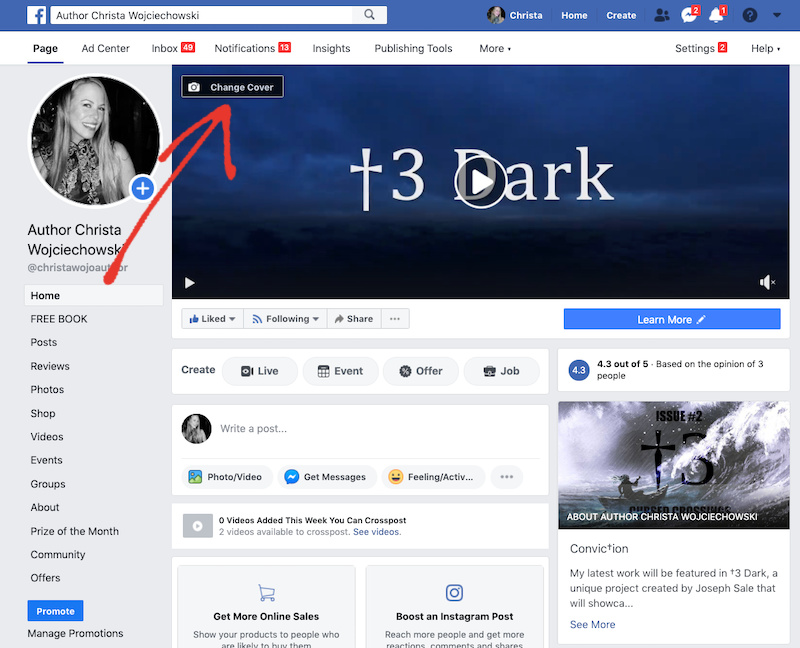
1. Facebook Cover

Your Facebook cover is a billboard where you can create a cover that promotes you and your books.

Design your own cover image according to the Facebook page cover dimensions. You can use a mobile app or web-based graphic designer like PicMonkey or Canva. Make it even easier by hiring someone on Fiverr to do it for you.

Facebook also allows for a video in the cover section. This is a real attention-grabber. If you’re experienced with Windows Movie Maker or iMovie, you can make a cover video in a snap. Visit my Facebook page to see an example of the video I created for my cover.

Otherwise, browse freelance sites for a video production specialist.

Facebook Cover Video

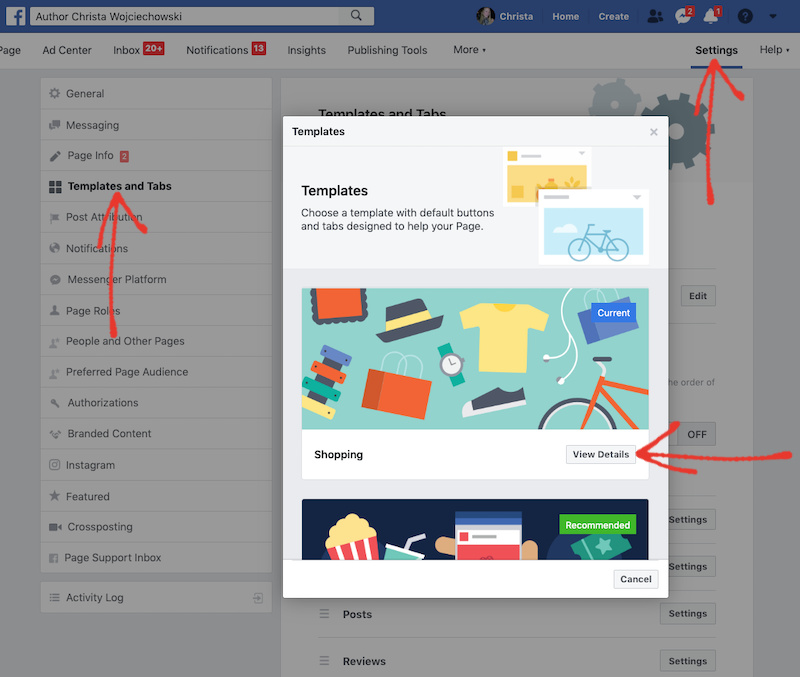
2. Use the Shopping Template

Facebook’s Shopping template will allow you to host a store on your author page. It’s the perfect place to showcase your books.

If you’re setting up your author fan page for the first time, you will be prompted to select a template.

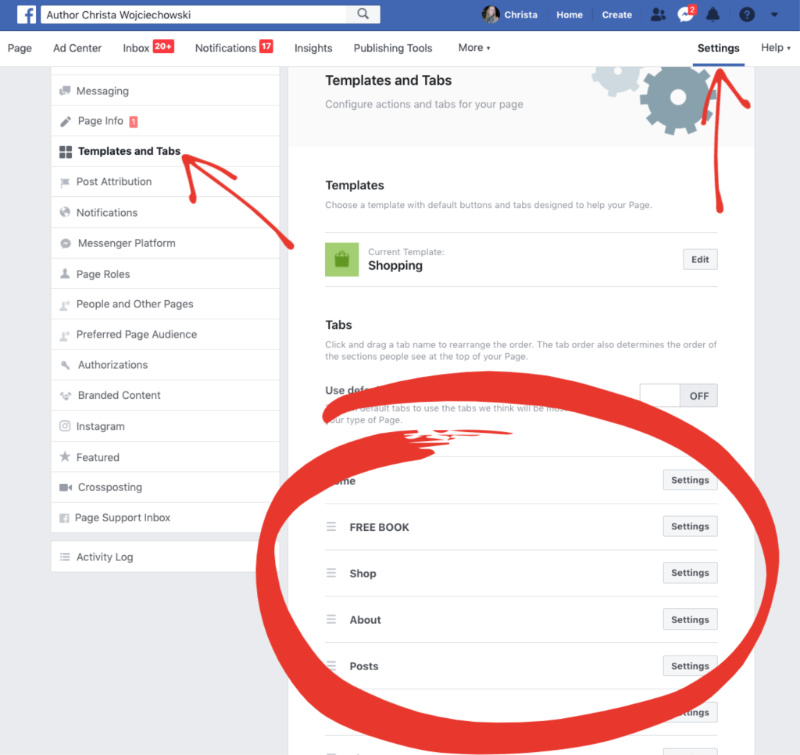
If you already have an author Facebook page, you can change to the shopping template in Settings under Templates and Tabs.

Facebook Page Shopping Template

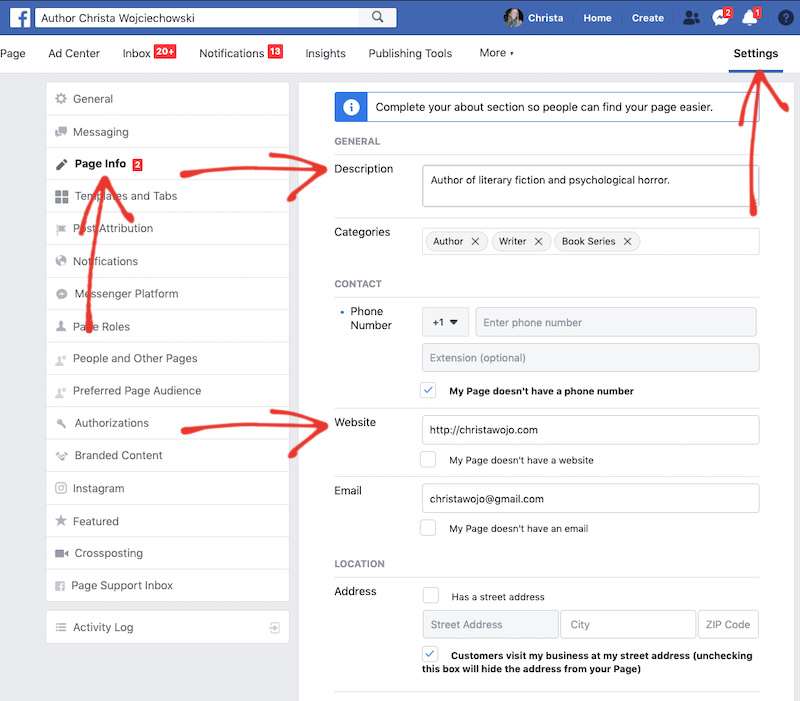
3. Fill out Your Page Info and Story Sections

I can’t tell you how many authors pages fail to include vital information, like bio and website. Fans are going to want to visit your blog, website, or Amazon page so be sure to add as much information as you can.

Page info settings

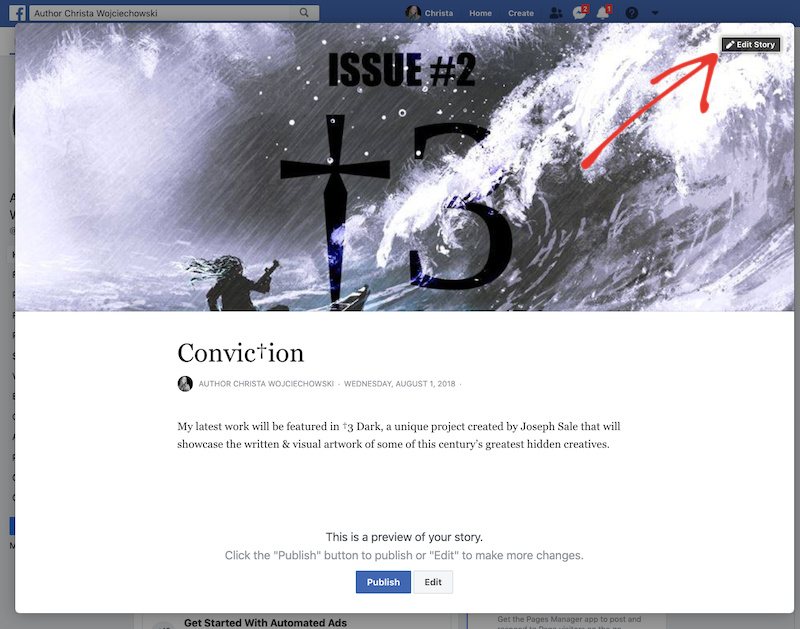
More free promotional real estate is offered in the Story section located in the right sidebar of your Facebook author page. This area features another image and a text area where you can include a live link.

Edit your Story Section

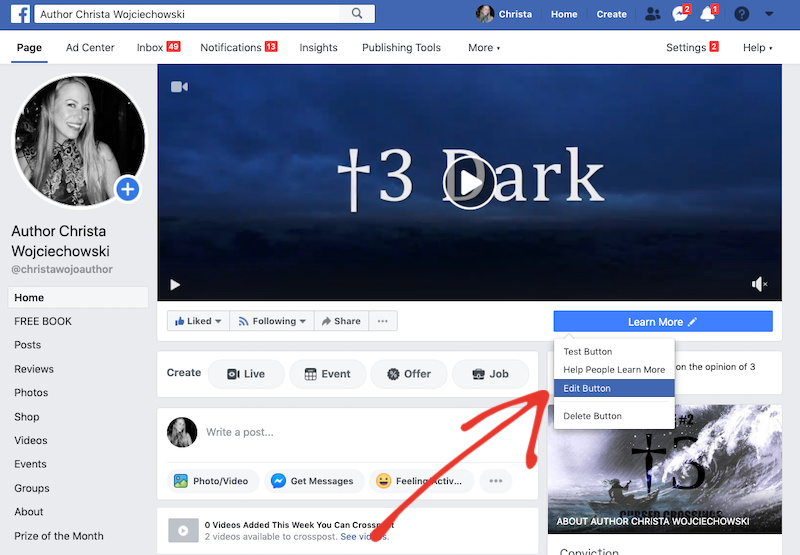
4. Activate Call to Action Button

This call to action button can be used to encourage fans to contact you, watch a video, shop for your books, and more. Click edit button and a box will pop-up with button options and settings.

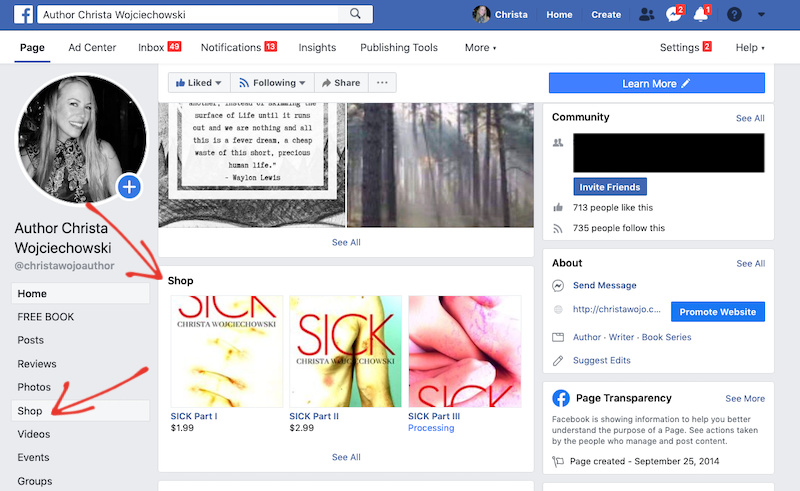
5. Add Your Books to the Shop

The Facebook shopping template is perfect for authors because you can feature a little bookshop right on your page.

What your shop area will look like.

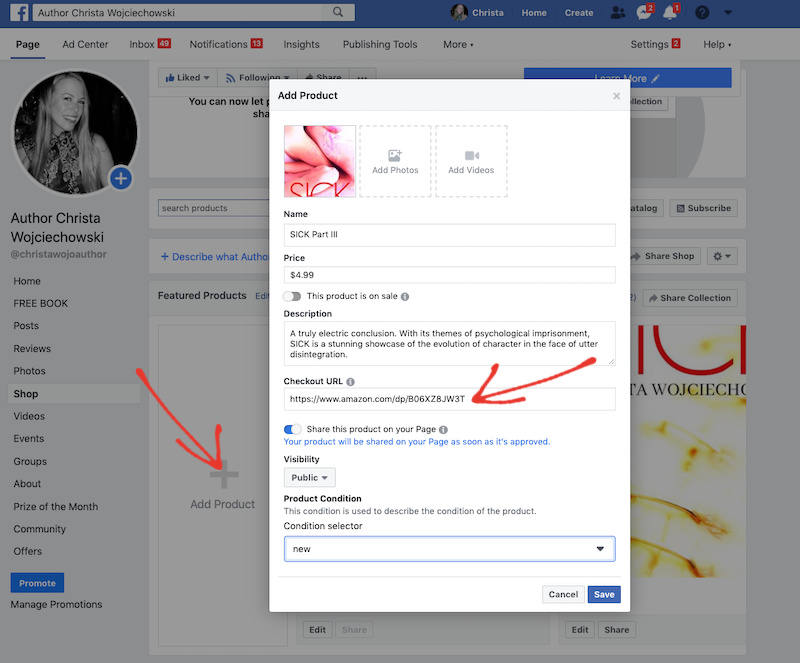
Click Shop in the left sidebar menu. You will see a box where you can Add Product. Click that area to add your book cover, buy link, and toggle the Share this product to your page if you’d like your book to be posted to your timeline.

Adding books to shopping template.

6. Embed a Mailchimp form

If you’re a Mailchimp user, you can grow your email list straight from your Facebook page. However, this must be done through your Mailchimp account.

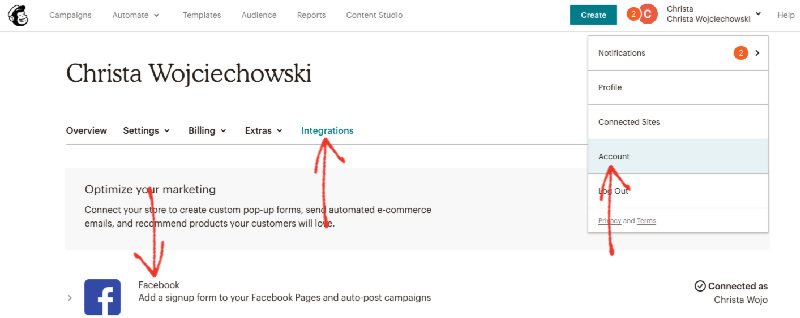
Log in to Mailchimp, click your username in the top menu bar to activate the dropdown menu. Click account and then click integrations. This is where you will find the option to add a tab with a Mailchimp form to your Facebook Author page.

Locate the Facebook signup for option in your Mailchimp dashboard.
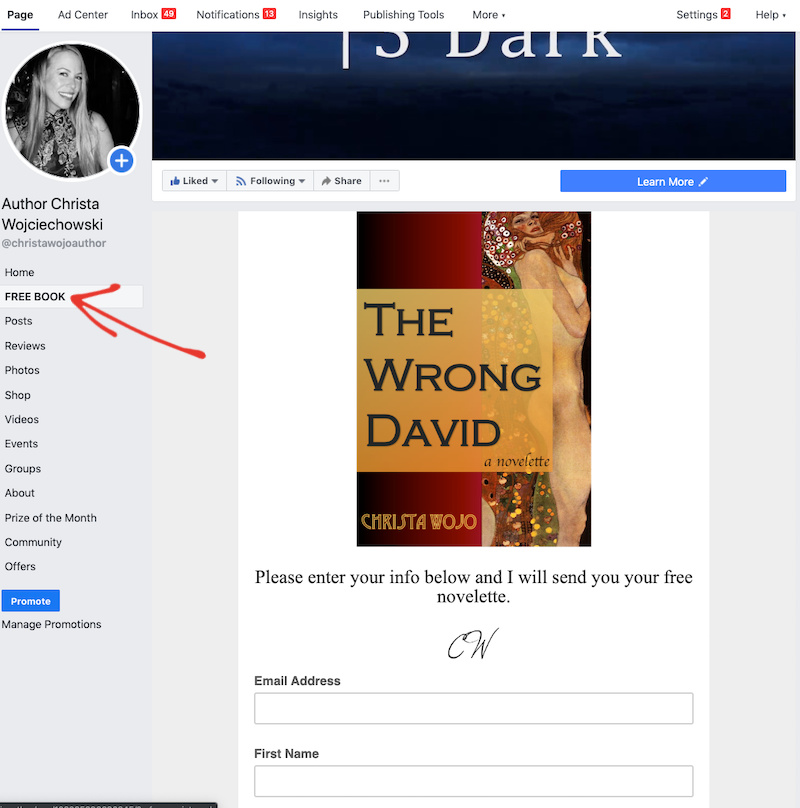
Offer a free download with a Mailchimp form in a Facebook page tab.

You can reorder your tabs by returning to the Templates and Tabs section under Settings. Click and drag them to the desired spot.

7. Invite Your Friends

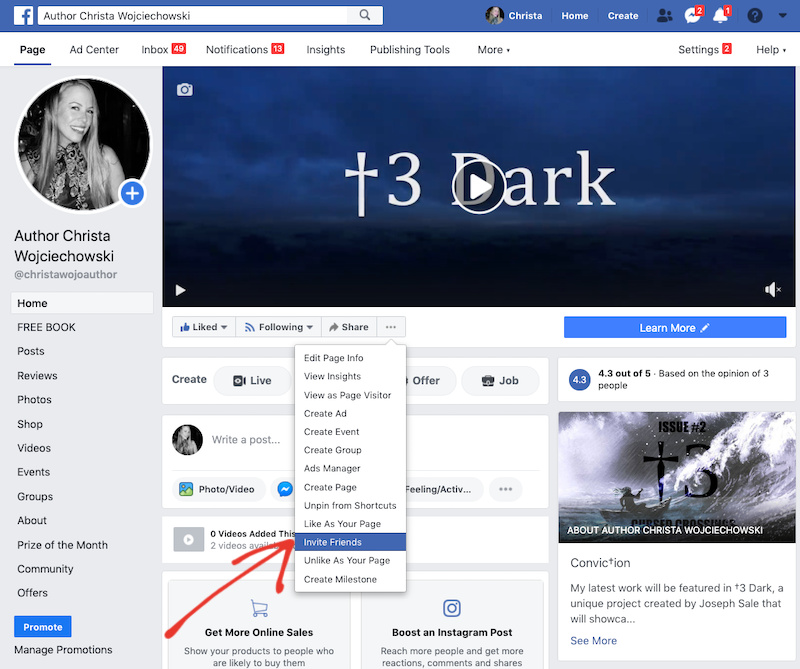
Use the handy Invite Friends button to get the first likes for you page. Click this button ever few months as you add new friends to your personal profile.

Invite friends!

8. Claim Your Facebook Username

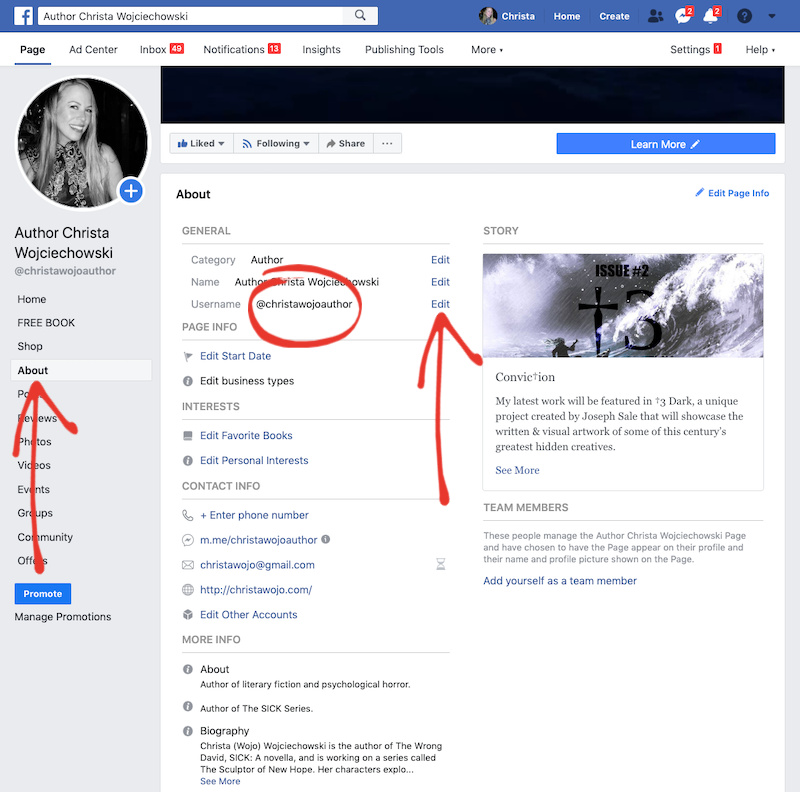
Once you get 25 likes on your Facebook author page, you can choose a username.

Try to find a username that is closest to your writing name or the same as your social media handles.

Choosing a username will also set the URL for your page, making a nice, neat address instead of the default jumble of words with numbers.

Check your username in the About tab.

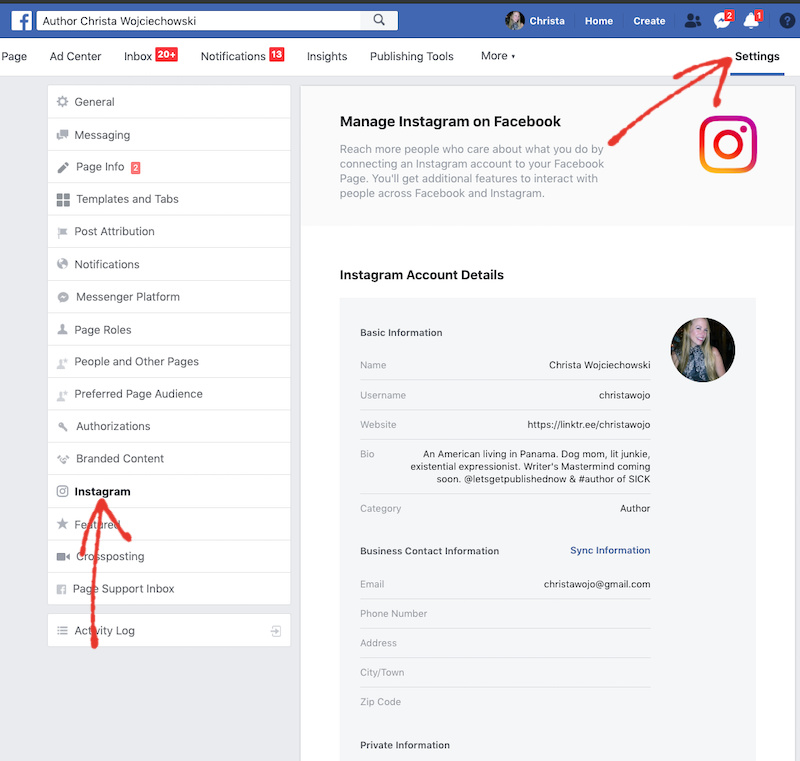
9. Connect to Your Instagram

Connecting your Instagram account allows you to share Instagram posts to your Facebook Author Page. It also makes it possible to configure Instagram ads via Facebook in your browser, which is easier than doing it from a mobile phone.

Make sure your Instagram is connected by visiting the Instagram tab in Settings.

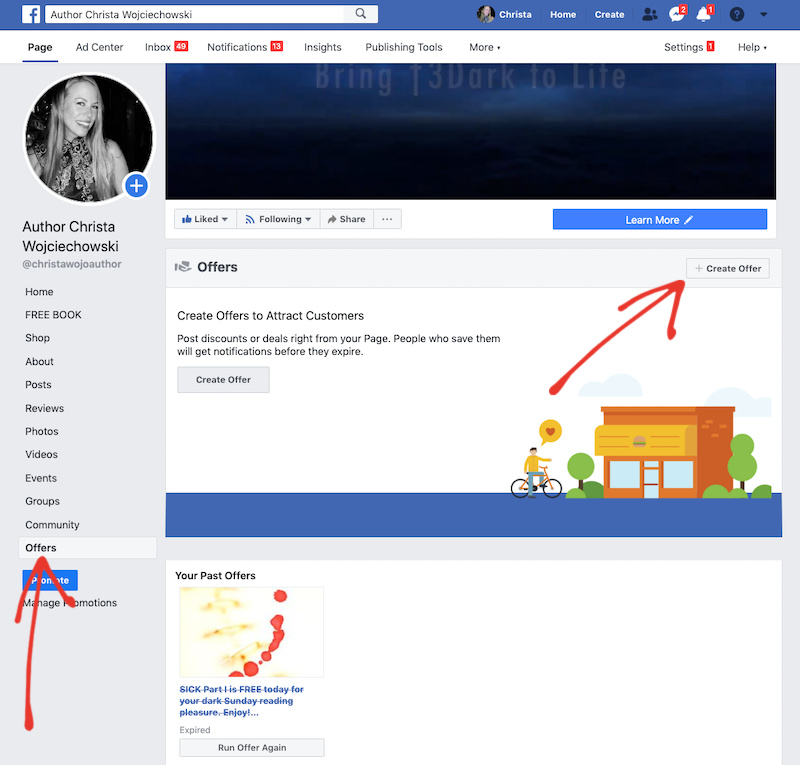
10. Use Offers

Whenever you want to promote your book, you can use Facebook Offers to stir up interest and urgency. Click offers in the left sidebar menu or in the posting options on your timeline.

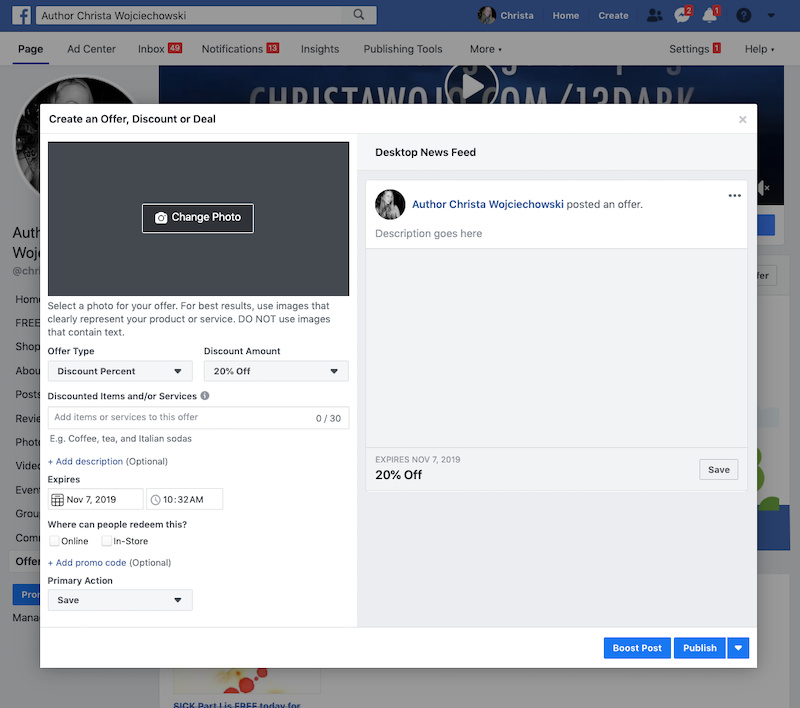
You can then add a photo, choose what kind of offer you want to post (coupon, discount, promocode, or other), and set the expiration date.

Offers tab
Creating your offer

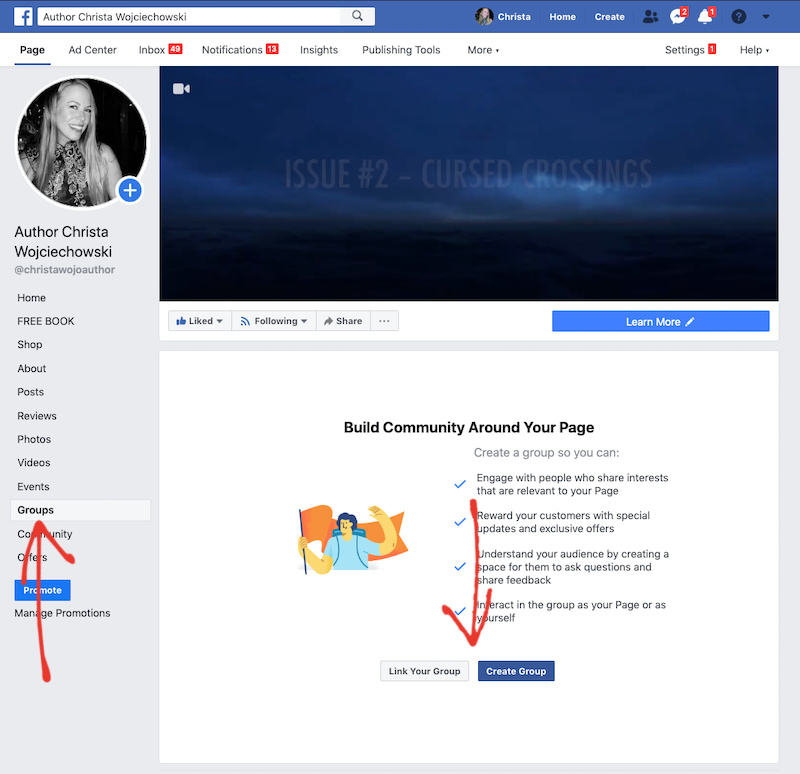
11. Create a Group That’s Connected to Your Page or Link Your Existing Group

Groups are an extremely effective way to stay engaged with your readers. Each time you post to a group, your members will get a notification, so unlike page fans, group members are more likely to see your posts.

A private group can also be a way to give members exclusive access to you. Just make sure you are prepared to invest time and thought into your group to make it a worthwhile endeavor.

If you already have a group, link it to your page so your brand is connected.

Link groups in the Groups tab.

Now You’re Ready to Go!

Your page is ready for using, sharing, and advertising.


Subscribe to Dear Writer
for future posts on Social Media Optimization for authors,
including Facebook Advertising for books.
CLICK HERE.

Pin It on Pinterest