What are the chances you’ll become a successful fiction writer?
In our last post, we talked about Turning Rejections into Success and surviving artistic losses by benefiting from what they force us to learn.
Today, we will talk about becoming mentally and emotionally strong enough to push through moments where the prospect of going for the writing dream is too much to contemplate.
WHAT ARE THE ODDS THAT I’LL BECOME A SUCCESSFUL WRITER?
This question is paralyzing.
We think:
How many writers are out there with the very same dream I have?
What makes me think I will be the one to break through?
I don’t have the time, energy, confidence, or freedom to go for it.
So many are more talented than me. This is a waste of time.
On the other side of the spectrum, sometimes the thought of success is scarier than failure.
What if this becomes a big deal?
Will my marriage survive it?
What will my parents think of what I wrote?
I’m terrified of public speaking. What if they ask me to make appearances?
Either outcome is enough to keep our wheels spinning until the end of our days.
The key to stop sabotaging yourself with thoughts is to practice self-awareness. When you feel resistance to moving forward on your project, ask yourself …
What is it exactly that I’m feeling? (fear, hopelessness, unworthiness, imposter syndrome)
Why do I feel this way? (my partner criticized my work. My savings is dwindling, I’m intimidated by another writer)
Is this true? (Not really. My partner’s criticism is unfounded. They don’t even like my genre. I can earn enough money to make this work. My writing is just as good as other writers for my audience.)
What is the next right thing to do to bring me closer to completion? (Check your author plan, do the next thing on your list. If you don’t have a plan, make one. Or just sit down and write as much as you can, whenever you can, until it’s done.)
You do the work.
The future will take care of itself!
*******
We are pleased to invite all fiction authors (published or unpublished) to our annual Author Year End Review for 2023.
Now that we’re about to close out 2023, it’s important to process all that happened (or didn’t happen) for us as writers this year.
We need to find out what worked and what didn’t, so that we can double down on the things that brought us results and eliminate whatever is draining our time, energy, and creativity.
In my last post, I talked about surviving criticism and disappointment. Today, we explore another way to grow from setbacks.
Case in point: I was so sure my WIP was a perfect fit for a certain small but prestigious publisher. This will be my big break!
Then I received the typical, canned auto-rejection.
At this point, I had barely submitted anything and was naive enough to believe that if you’re rejected by one or two publishers, you must be a hack.
The frustrating part of querying is that they never tell you exactly why it’s rejected. It may have nothing to do with your writing.
Maybe they just accepted a similar story. Maybe your story included elements that weren’t suited for their audience. Maybe the editor didn’t have their coffee yet. It’s like throwing darts in the dark.
But the next time I submitted the story:
About 6 months later, I got an acceptance from a cool indie publisher.
A year later, the story made it to the semifinals of two large competitions.
Last year, it was published with a cover by a wickedly talented designer and two blurbs from legendary writers.
When we write a book (especially if we did it right) we bare our hearts in it. So when someone criticizes our work, even if it’s unfounded, it wounds a deep part of us that doesn’t have the capability of rationalizing it away or laughing it off. It hurts.
Many people give up after receiving criticism, even whether it’s helpful or hateful.
Sometimes, the reviews are right. Maybe you are new at writing and still finding your voice. Maybe you neglected to develop your story properly or haven’t polished your sentence structure. Maybe it just isn’t the right time for a story like yours. In this case, the criticism points you in the right direction. You can digest it and use it to make you better.
On the other hand, stupid, condescending criticism with no foundation hits us in a way that makes us feel bullied and victimized. I remember I received a one-star review for my novella, SICK, that said “waste of time.” She didn’t say why she didn’t like it. Could it have no redeeming qualities whatsoever? I would love to know! It will always be a mystery, and those are the reviews that really get under your skin.
The worst is when it comes from a family member, friend, or partner whose approval is important to us. Nothing deflates us quicker and more thoroughly than the opinions of those we love.
Yes, we need feedback, and we need to listen to readers. But we have to keep ourselves grounded in our creative integrity. If we worry about what others will think while we’re writing, we will not be true to ourselves. Once through the fever dream of inspiration, we can calmly discern which feedback is useful and which is the backlash of pessimistic, bitter human beings.
If it turns out we truly flopped, it is important not to brush it off as if nothing happened. Your heart got crushed into the pavement. Acknowledge your disappointment, take some time to mope, and then get back to the page armed with the new knowledge you’ve acquired in your creative battle.
How do you want to change the way readers think, perceive, and feel?
Who are you speaking to?
It could be to make people laugh. It could be to make them realize who they are. It could be to inspire them to dream a little bigger, or help them to become aware of weaknesses they need to address. Maybe your mission is just to scare the pants off of them.
Remembering the big-picture reason you write will help you push through fear of criticism.
How Authors Can Harness the Power of Collaboration & Collective Promotion was originally published on DanSoule.com.
In the competitive world of publishing, authors often face numerous challenges when it comes to marketing and promoting their work. It’s hard to get heard. There are so many new books coming out every week. Then there are the old classics on a TBR list a mile high. Ads can be expensive for indie authors, and traditional authors don’t control their marketing budget. Social media cliques seem random and hard to become a part of. However, there is something we can do, and do together. By fostering a supportive network among fellow authors, both self-published and traditionally published authors can harness the power of collaboration and collective promotion.
In this blog post, we will explore various ideas and strategies to genuinely support and uplift other authors, with the ultimate goal of building a strong marketing network.
1. Recommending fellow authors to your mailing list
One powerful way to support fellow authors is by recommending them to your mailing list. Sharing their work with your dedicated fanbase can introduce new readers to their books and create a mutually beneficial relationship. By showcasing authors whose work you admire, you not only strengthen their visibility but also position yourself as a trusted source of recommendations.
2. Recommending fellow authors to podcasts
Podcasts have become a popular medium for book discussions, author interviews, and literary conversations. A meaningful gesture of support is reaching out to podcast hosts and suggesting fellow authors as potential guests. Through direct messages or introductions, you can help expand their reach and provide them with an opportunity to share their stories, insights, and expertise with a new audience.
3. Interviewing fellow authors for your platform
Extend a helping hand by interviewing fellow authors on your blog, website, or social media platforms. By giving them a platform to share their experiences and ideas, you not only provide valuable exposure but also foster a sense of camaraderie among authors. These interviews can generate engaging content for your readers and allow them to discover new voices within the writing community.
4. Writing reviews for popular blogs
Another way to support authors is by writing reviews for popular blogs or literary websites. By sharing your thoughts on their books, you contribute to their visibility and help potential readers make informed choices. Positive reviews can lead to increased sales and exposure, benefiting the authors’ careers. Additionally, your participation in the wider literary conversation enhances the overall credibility of the writing community.
5. Writing reviews on platforms like Amazon
Beyond blog reviews, consider leaving honest and thoughtful reviews on platforms such as Amazon, Goodreads, or other online bookstores. Positive reviews help boost authors’ visibility and encourage potential readers to explore their work. Remember, your words have the power to influence readers’ purchasing decisions, so provide genuine feedback and highlight the strengths of their books.
6. Reading manuscripts and offering feedback
Offering to read and provide constructive feedback on manuscripts can be an invaluable contribution to fellow authors. This gesture not only helps them refine their work but also shows that you genuinely care about their success. Constructive criticism and thoughtful suggestions can lead to improvements and further development of their writing skills. By actively engaging with their work, you build strong connections and foster a culture of support within the writing community. This is time consuming but the potential reward in terms of fostering trusted relationships with a handful of authors could prove invaluable in the long run.
7. Blurb books
When you come across exceptional books that resonate with you, consider offering to provide a blurb for the author. Blurb endorsements from respected authors can significantly impact readers’ perception and generate interest in a book. However, it is essential to be honest and only offer a blurb when you genuinely believe in the quality of the work. Authentic blurbs create trust among readers and maintain the integrity of the writing community. Traditional authors also consider doing this for indie authors. You won’t catch the plague and indies often tap into audiences neglected by big publishing houses. Plus, they have some of the best books going. On the flip side don’t blurb books with high praise that don’t deserve it just for the back scratch. You sully the pool for everyone and undermine the trust of readers.
8. Zoom meetings to share advice and experiences
Connecting with fellow authors through Zoom meetings or online forums allows for valuable discussions, idea sharing, and mutual support. These interactions create a sense of community and enable authors to exchange marketing strategies, promotion ideas, and writing tips. By openly sharing experiences, successes, and challenges, authors can learn from one another and collectively navigate the ever-evolving publishing landscape.
9. Genuinely celebrate fellow authors on social media
Beyond the usual likes and retweets, take the time to genuinely celebrate fellow authors on your social media platforms. Share their achievements, book releases, and accolades with your audience. By amplifying their successes, you not only show your support but also introduce your followers to new authors and their work. Remember, a rising tide lifts all boats, and celebrating the achievements of others creates a positive and supportive environment within the writing community.
10. Create connections between authors
Act as a bridge between authors by introducing them to one another. Connect authors with complementary writing styles or genres, fostering potential collaborations, joint marketing efforts, or even mentorship relationships. By facilitating these connections, you contribute to a stronger network and a culture of collaboration rather than competition. Sharing resources, advice, and experiences can empower authors and foster a sense of camaraderie that benefits all involved.
11. Purchase fellow authors’ books
Support fellow authors by purchasing their books. This not only provides direct financial support but also helps boost their sales rankings, visibility, and overall success. Actively engage with their work, leave reviews, and recommend their books to friends, family, and book clubs. Your genuine support and endorsement can lead to increased exposure and a wider reader base for fellow authors.
12. Collaborate on creative projects
Consider collaborating with fellow authorson creative projects such as short stories, anthologies, or even co-writing a novel. Collaborations provide a platform for cross-promotion, where each author can tap into the other’s audience and expand their reach. Moreover, collaborative projects foster creativity, spark new ideas, and allow authors to learn from one another’s writing styles and perspectives. The combined efforts of multiple authors can create unique and captivating works that resonate with a broader audience.
13. Cross-promote releases across platforms
When you or a fellow author have a new book release, seize the opportunity to cross-promote across platforms. Share information about the release on your website, social media channels, and newsletter, giving a proper mention rather than just sharing a link. By leveraging your established audience, you help generate buzz and increase visibility for both yourself and fellow authors. Remember to approach cross-promotion with a spirit of collaboration and reciprocity, as mutually beneficial partnerships can lead to wider exposure and increased success for everyone involved.
14. Recommend fellow author’s books to local bookstores
Reach out to local bookstores and recommend books written by fellow authors. Many independent bookstores value recommendations from members of the writing community and are often open to showcasing local talent. By advocating for your peers, you not only support their sales but also contribute to a thriving literary ecosystem within your community.
15. Recommend fellow author’s books to local libraries
Libraries are vital hubs for book lovers and readers of all ages. Suggesting books by fellow authors to your local library can help increase their circulation and introduce new readers to their work. Libraries often welcome recommendations and appreciate community involvement. By promoting fellow authors in this way, you contribute to their visibility and enable more people to discover their writing.
16. Recommend fellow author’s books to book clubs
Book clubs provide a unique platform for discussion and discovery. Recommend books by fellow authors to book clubs, either in your local community or online. Sharing titles and authors that have resonated with you can spark engaging conversations and expand the readership for your peers. Book club recommendations also have the potential to generate word-of-mouth buzz and lead to increased sales and exposure.
Conclusion Building a supportive marketing network among authors is an investment in both individual success and the collective growth of the writing community. By genuinely supporting and promoting fellow authors, we create a culture of collaboration, encouragement, and mutual empowerment. Through actions such as recommending authors to our mailing lists, sharing their work on podcasts, and writing reviews, we expand their reach and introduce their talent to new audiences. Engaging in activities like manuscript readings, collaborations, and cross-promotion allows us to forge meaningful connections and strengthen our ties within the writing community. Celebrating fellow authors on social media, connecting them with one another, and advocating for their books in local bookstores, libraries, and book clubs further amplify their voices and contributions. By investing our time, resources, and expertise in the success of others, we foster an environment where all authors can thrive. Together, we can create a vibrant and supportive ecosystem that benefits each member and showcases the power of unity in the world of literature.
So, if you are looking to try out some of these ideas, this post is sponsored by my novel Witchopper. Maybe you could show it some love?
If you see her, then you’re dead…
All Rob wanted to do was fit in at his new school after being torn from London so his parents could fix their marriage. But when Rob’s journalist father dragged him along to investigate the legend of the Witchopper for the local paper, her curse became their reality.
She was priestess to the pagan god of the wild wood, hanged by a rabid mob for her unspeakable crimes. Now, something far worse than the hell of high school is after Rob and his dad…
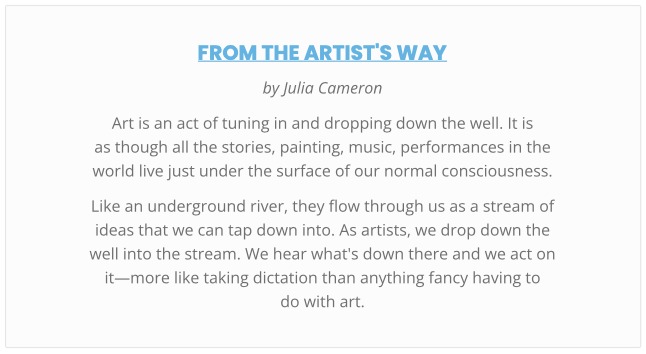
NOTE: These posts are inspired by The Artist’s Way, a 12 Step Process to recovering your creativity by Julia Cameron. You can read all about it here.
Today we talk about one of my favorite sections of The Artist’s Way—Recovering a Sense of Connection.
My first novel, Oblivion Black, is the timeless story of an artist and his muse. It’s about tapping into the creative source and trusting that your work already exists, in complete form, waiting for you to become the person to create it.
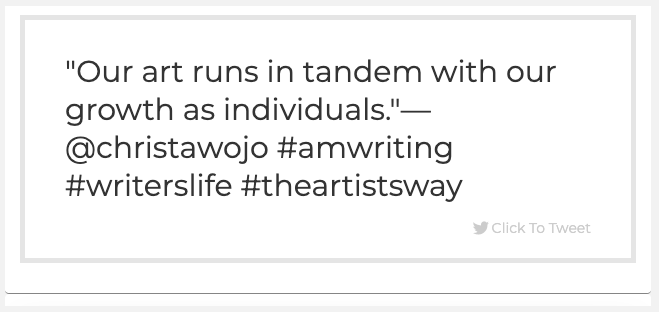
Likewise, your actualized self, who is a masterpiece of creation, is also waiting for you at the end of your artistic journey. Our art runs in tandem with our growth as individuals.
At the time I was writing this novel, I thought I was stumbling into artistic revelations no one had ever thought of. Little did I know, it had all been said and done before by countless others throughout time (including the Artist’s Way).
This only proves that there is a common source we are all connected to that expresses itself through us through our many different artistic lenses.
Where did that come from?
Have you ever written something that completely surprised you? That is a sign that you are connected. You are now at the depth of being that your conscious brain does not have access too, which means it won’t step in your way and say, don’t go there, don’t do that.
This is why Hemingway said, “Write drunk. Edit sober.” Drugs and alcohol are chemically induced ways to bypass the stodgy, reasonable, cautious mind and free the boundless, fearless, artist to do what it knows it’s supposed to do.
Your turn
Fortunately, you can safely connect to your creative source without going into into a chemically-induced trance.
Here are some ways to tap into your unconscious and increase your receptivity to the collective well.
Morning pages/journaling
Yoga
Meditation
Breathing exercises
Self-awareness/mindfulness
Listening to music in the dark
Physical exertion (e.g. trigger a runner’s high)
Therapy/psychoanalysis
Tantra
Hypnosis
Dance
Chanting
Religious practice/service
Massage
Sauna or steam room
Divination practice
Sensory deprivation (float tanks)
Challenge: try something new this weekend
Clear your creative circuits. Pick one or more of the above activities that you haven’t tried before. See what happens!