A professional Facebook Author page is a must-have for all writers. Though Facebook doesn’t offer the same organic results as they did in the past, they’ve created one of the greatest advertising platforms that is excellent for selling books.
You’ll want to make sure your page is complete before running any ad campaigns. Set up or optimize your Facebook Author Page with this tutorial.
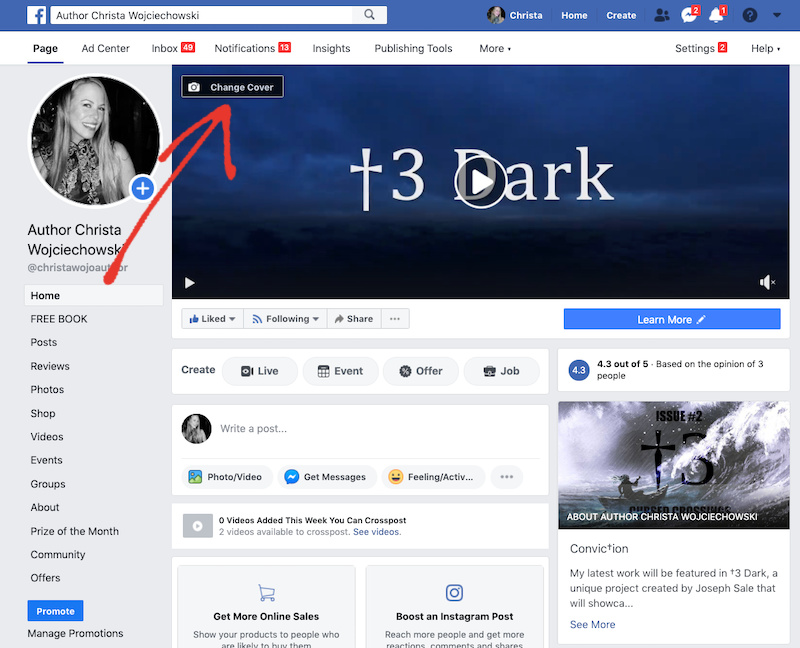
1. Facebook Cover
Your Facebook cover is a billboard where you can create a cover that promotes you and your books.
Design your own cover image according to the Facebook page cover dimensions. You can use a mobile app or web-based graphic designer like PicMonkey or Canva. Make it even easier by hiring someone on Fiverr to do it for you.
Otherwise, browse freelance sites for a video production specialist.
2. Use the Shopping Template
Facebook’s Shopping template will allow you to host a store on your author page. It’s the perfect place to showcase your books.
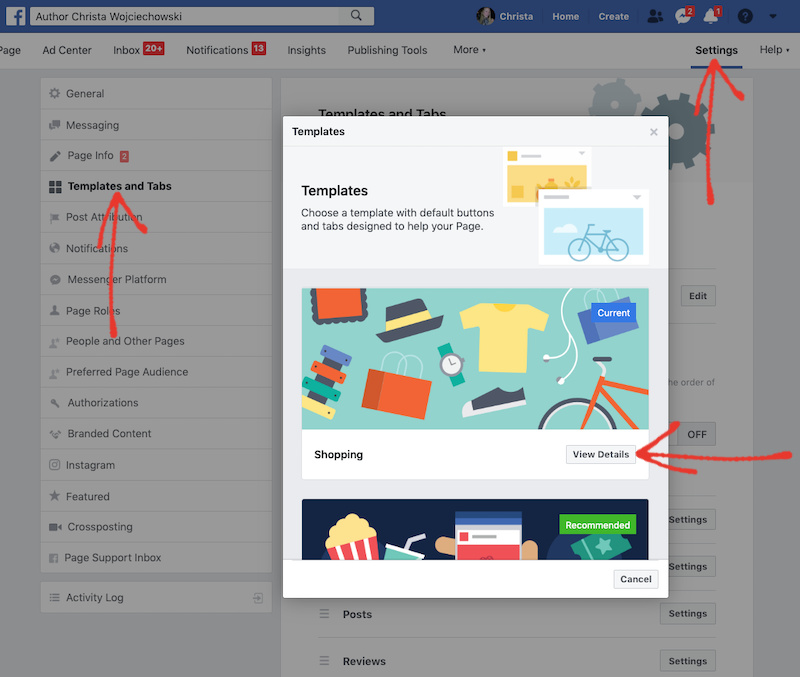
If you’re setting up your author fan page for the first time, you will be prompted to select a template.
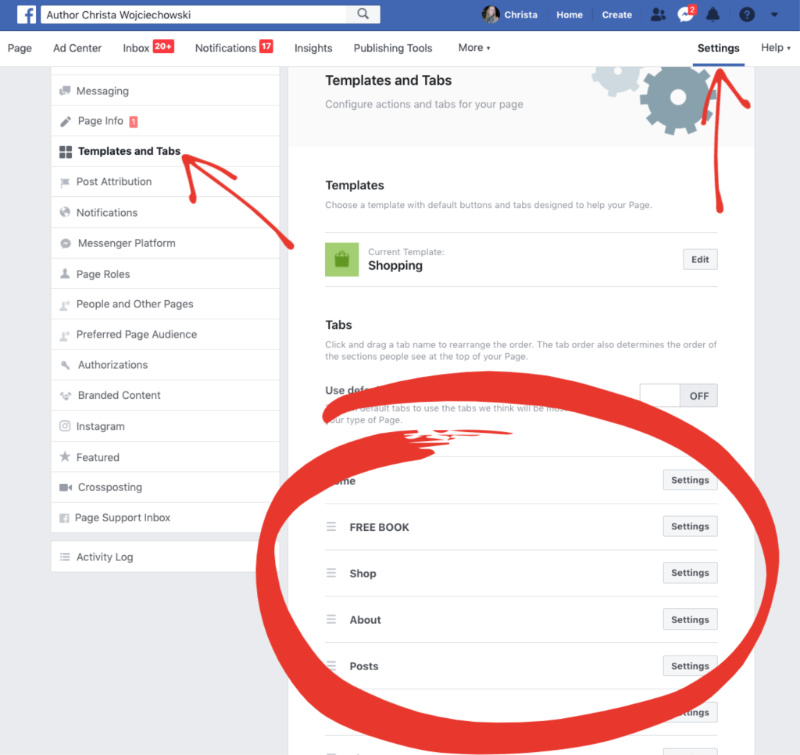
If you already have an author Facebook page, you can change to the shopping template in Settings under Templates and Tabs.
3. Fill out Your Page Info and Story Sections
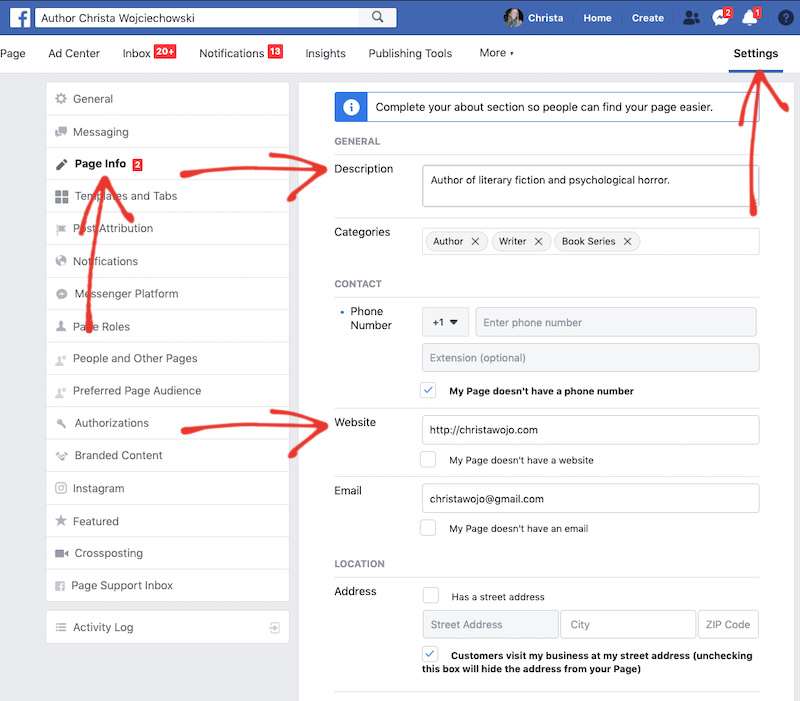
I can’t tell you how many authors pages fail to include vital information, like bio and website. Fans are going to want to visit your blog, website, or Amazon page so be sure to add as much information as you can.
Page info settings
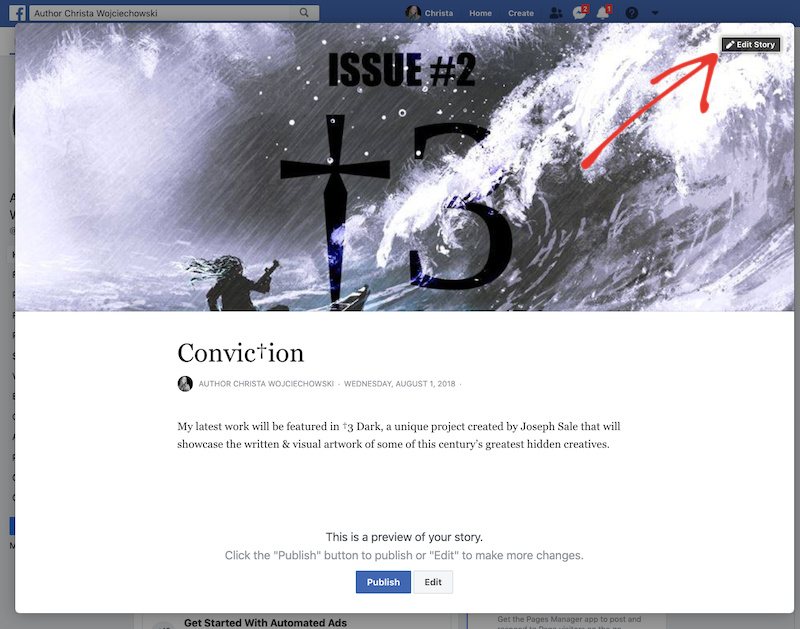
More free promotional real estate is offered in the Story section located in the right sidebar of your Facebook author page. This area features another image and a text area where you can include a live link.
Edit your Story Section
4. Activate Call to Action Button
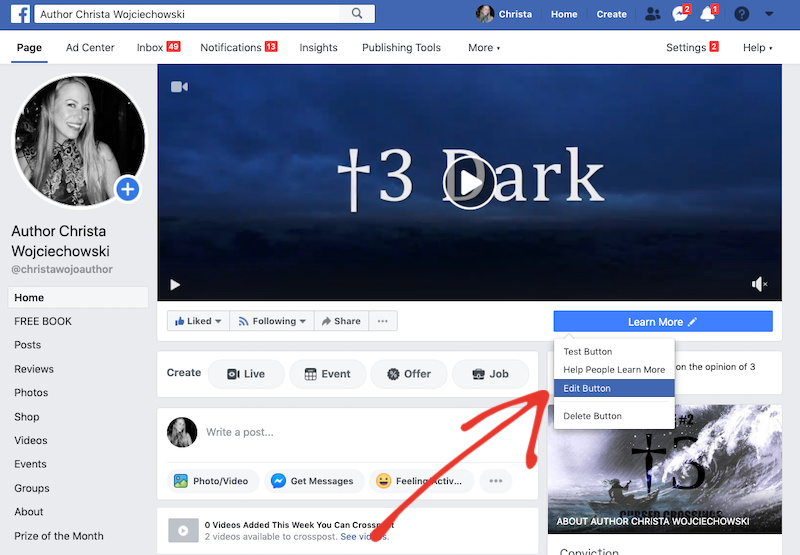
This call to action button can be used to encourage fans to contact you, watch a video, shop for your books, and more. Click edit button and a box will pop-up with button options and settings.
5. Add Your Books to the Shop
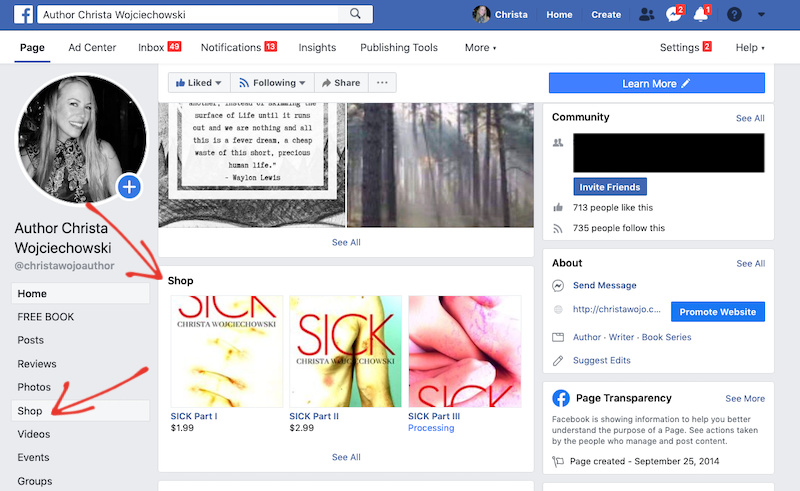
The Facebook shopping template is perfect for authors because you can feature a little bookshop right on your page.
What your shop area will look like.
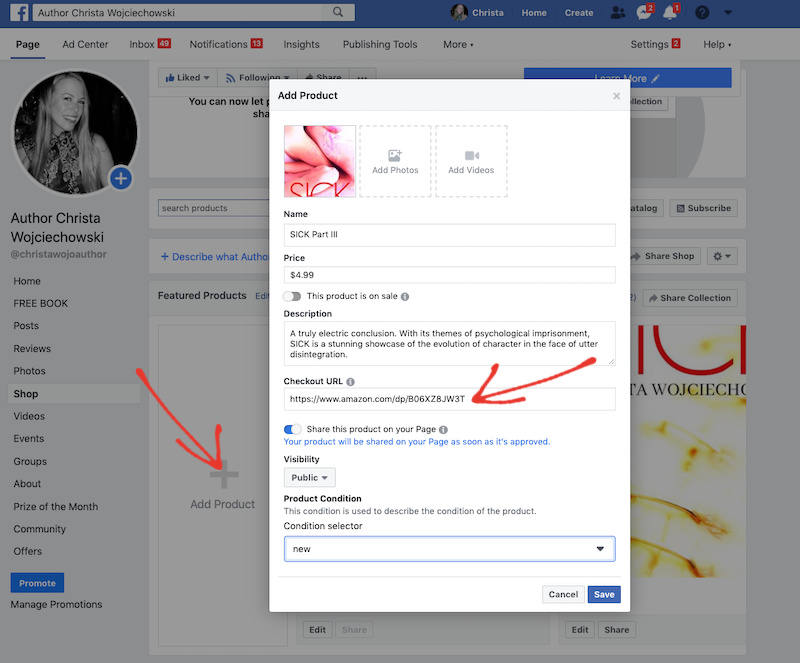
Click Shop in the left sidebar menu. You will see a box where you can Add Product. Click that area to add your book cover, buy link, and toggle the Share this product to your page if you’d like your book to be posted to your timeline.
Adding books to shopping template.
6. Embed a Mailchimp form
If you’re a Mailchimp user, you can grow your email list straight from your Facebook page. However, this must be done through your Mailchimp account.
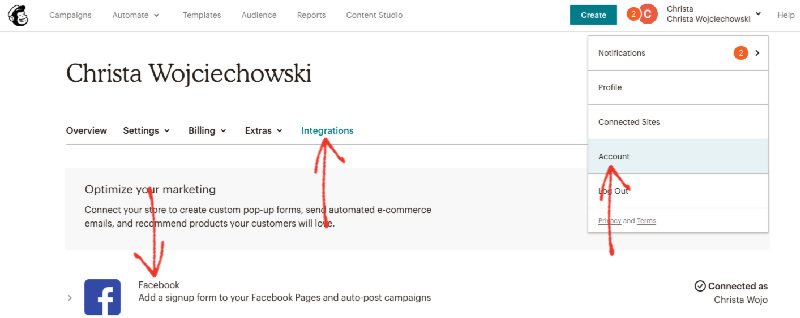
Log in to Mailchimp, click your username in the top menu bar to activate the dropdown menu. Click account and then click integrations. This is where you will find the option to add a tab with a Mailchimp form to your Facebook Author page.
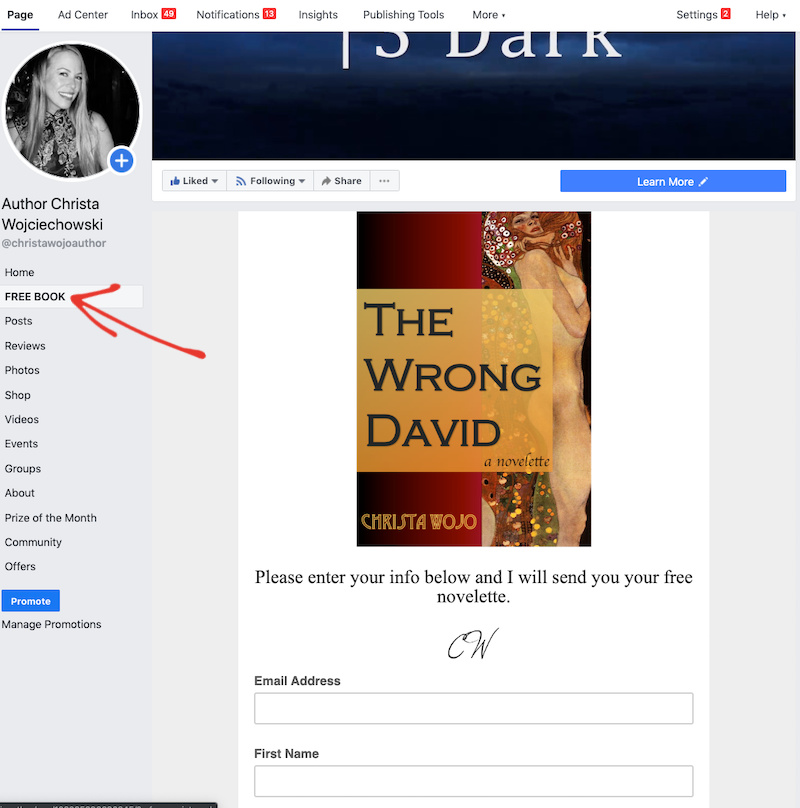
Locate the Facebook signup for option in your Mailchimp dashboard.Offer a free download with a Mailchimp form in a Facebook page tab.
You can reorder your tabs by returning to the Templates and Tabs section under Settings. Click and drag them to the desired spot.
7. Invite Your Friends
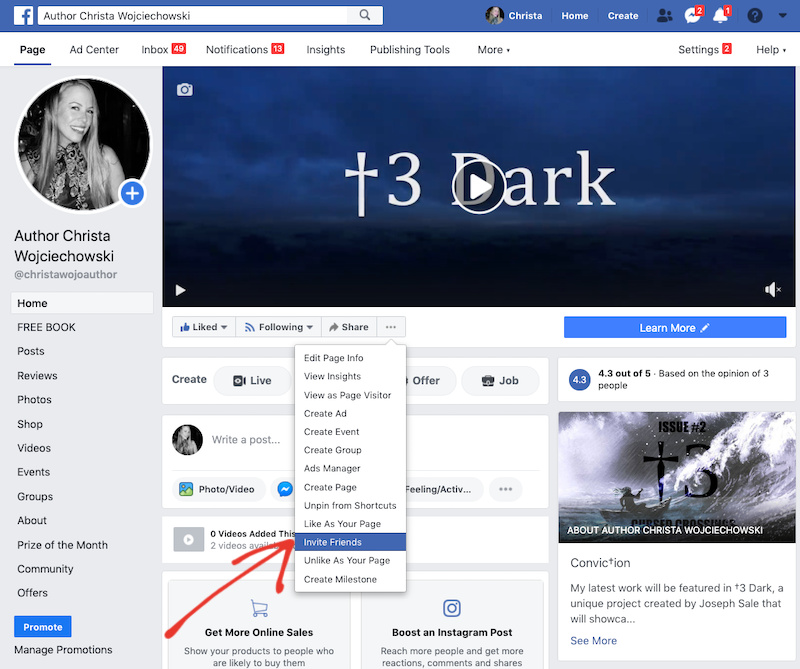
Use the handy Invite Friends button to get the first likes for you page. Click this button ever few months as you add new friends to your personal profile.
Invite friends!
8. Claim Your Facebook Username
Once you get 25 likes on your Facebook author page, you can choose a username.
Try to find a username that is closest to your writing name or the same as your social media handles.
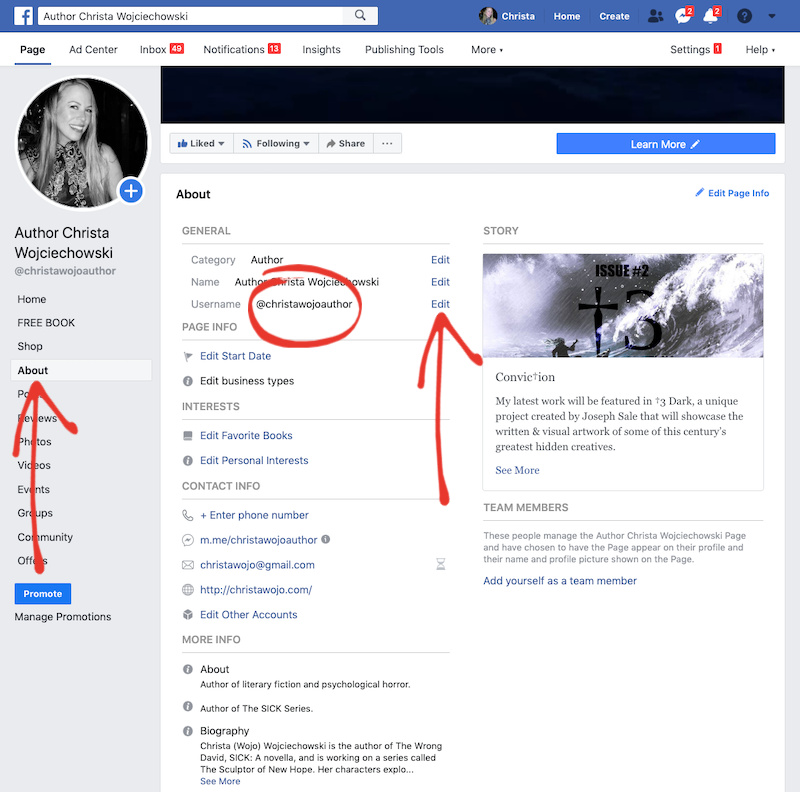
Choosing a username will also set the URL for your page, making a nice, neat address instead of the default jumble of words with numbers.
Check your username in the About tab.
9. Connect to Your Instagram
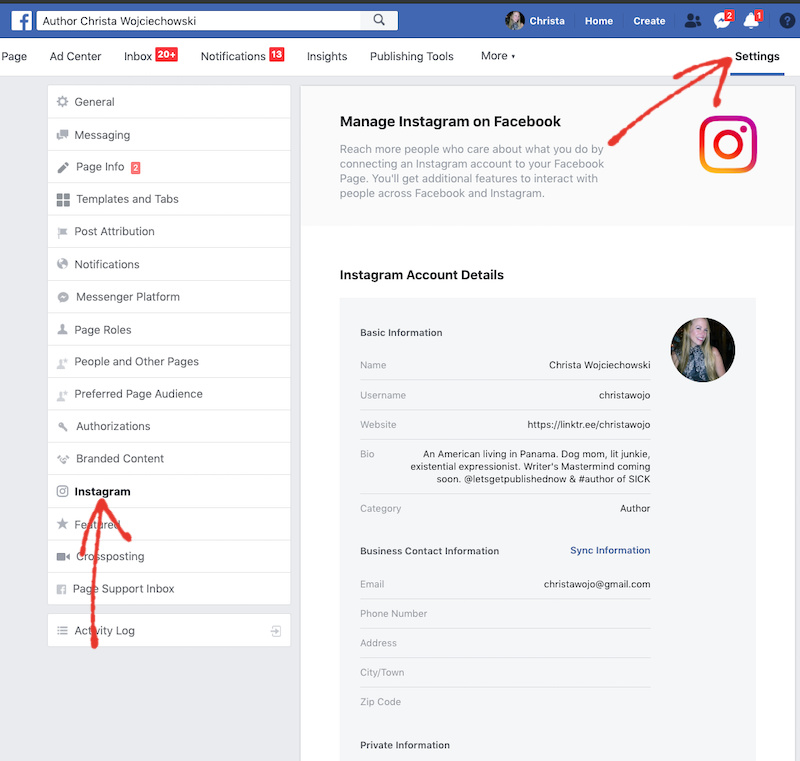
Connecting your Instagram account allows you to share Instagram posts to your Facebook Author Page. It also makes it possible to configure Instagram ads via Facebook in your browser, which is easier than doing it from a mobile phone.
Make sure your Instagram is connected by visiting the Instagram tab in Settings.
10. Use Offers
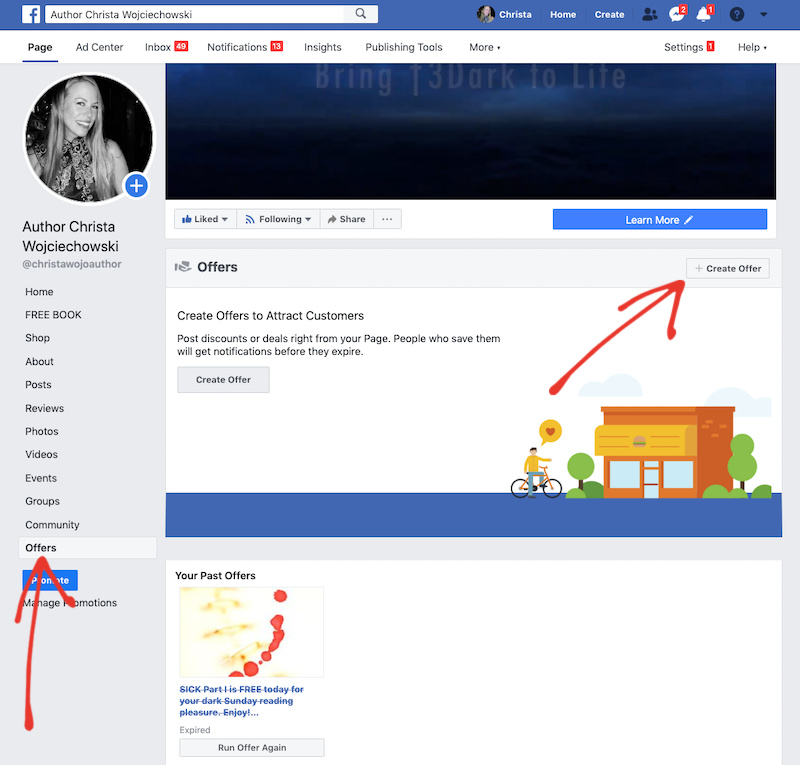
Whenever you want to promote your book, you can use Facebook Offers to stir up interest and urgency. Click offers in the left sidebar menu or in the posting options on your timeline.
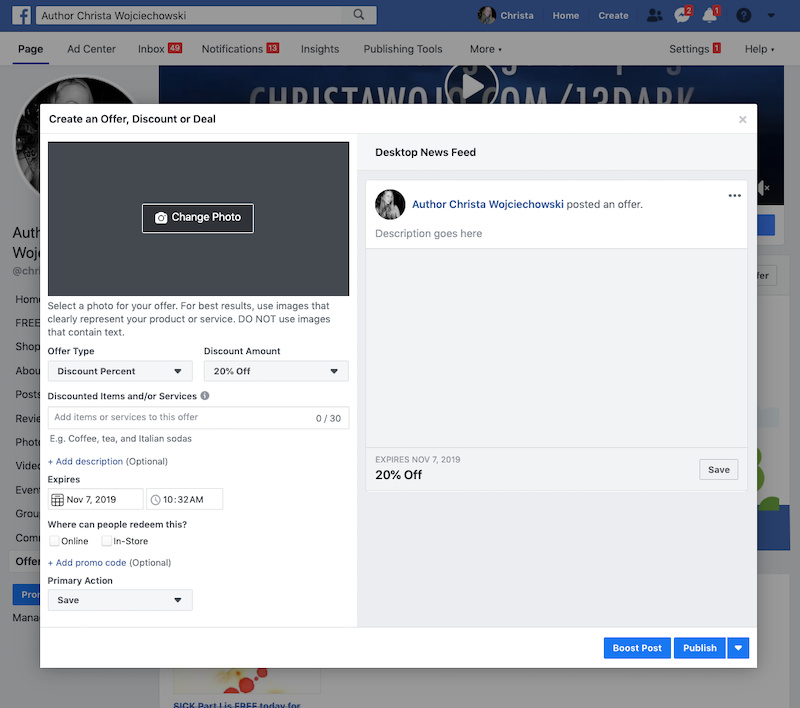
You can then add a photo, choose what kind of offer you want to post (coupon, discount, promocode, or other), and set the expiration date.
Offers tabCreating your offer
11. Create a Group That’s Connected to Your Page or Link Your Existing Group
Groups are an extremely effective way to stay engaged with your readers. Each time you post to a group, your members will get a notification, so unlike page fans, group members are more likely to see your posts.
A private group can also be a way to give members exclusive access to you. Just make sure you are prepared to invest time and thought into your group to make it a worthwhile endeavor.
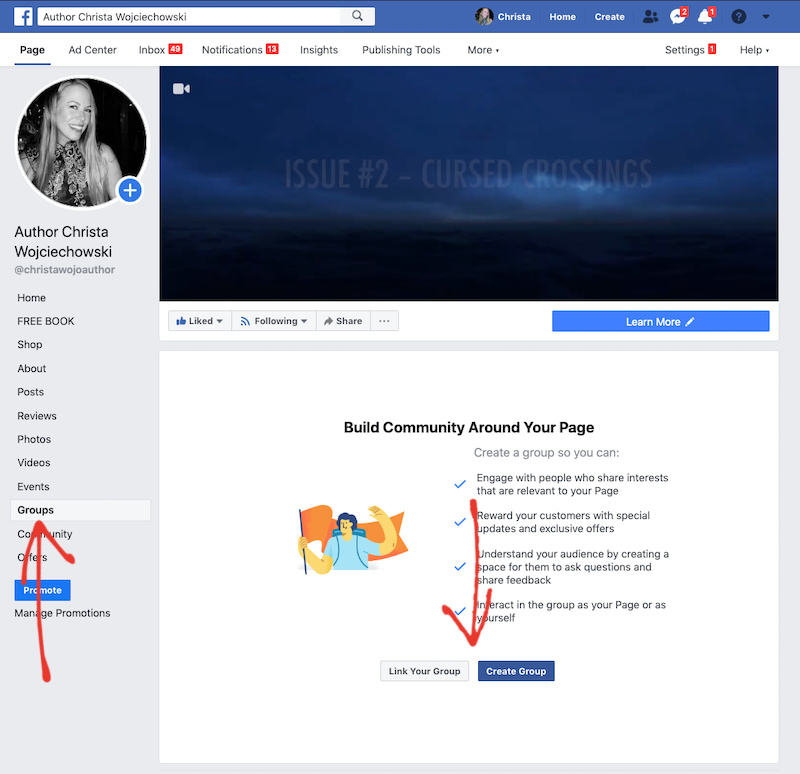
If you already have a group, link it to your page so your brand is connected.
Link groups in the Groups tab.
Now You’re Ready to Go!
Your page is ready for using, sharing, and advertising.
Subscribe to Dear Writer for future posts on Social Media Optimization for authors, including Facebook Advertising for books. CLICK HERE.
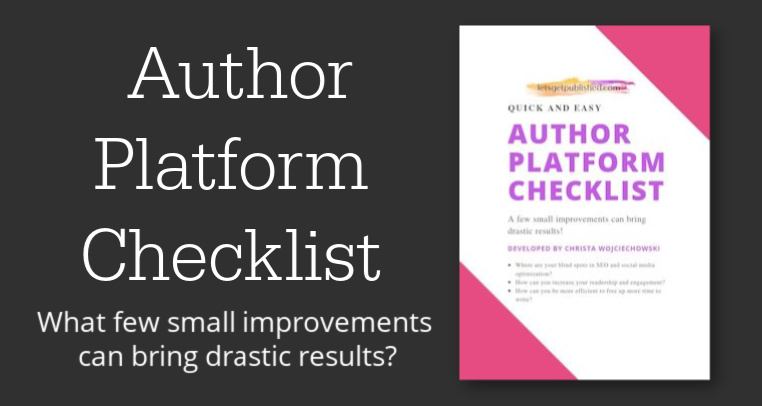
As a digital marketing strategist who works with authors, I notice that many authors are missing a few small cogs and connections in their author platforms. A few quick fixes would make marketing easier and maximize visibility. I created this quick and easy author platform checklist to help make sure you’ve got everything covered.
Where are your blind spots in SEO and social media optimization?
How can you increase your readership and engagement?
How can you be more efficient to free up more time to write?
What few small improvements can bring drastic results?
When I went seeking advice on making a name as a writer, the first person who came to mind was Richard Thomas whose Contemporary Dark Fiction course I’m taking this fall.
This post is geared toward dark fiction, but the information applies to all writers seeking to get their foot in the door. Just insert your genre where needed.
Richard Thomas is the author of seven books and has published over 140 stories. He’s been nominated for the Bram Stoker, Shirley Jackson, and Thriller awards. His list accomplishments is so long, I won’t post it here. Just visit his bio to learn more. Here is advice straight from the master. Save this list or print it out.
8 Marketing and Promotional Tips for Contemporary Dark Fiction with Richard Thomas
1. FIND YOUR PEOPLE. There are going to be plenty of people who enjoy exactly what you do. Whether you write fantasy, science fiction, horror, thrillers, or transgressive fiction, seek out your audience. They are in groups on Facebook, they will follow you on Twitter, just be yourself, and lean into what you’re creating. Those that don’t dig your genre, you’re probably not going to sway them. Connect with your people online, and in real life. They are the ones that will support, and purchase, your work.
2. SEEK OUT QUALITY COVER ART: Whether you are self-publishing, working with small presses, or the big boys, make sure the quality of art attached to your projects is good. I can’t tell you have many horrible, cliché, violent, misogynistic covers I’ve seen for books, anthologies, and magazines. Obviously, if you write splatterpunk, or extreme horror, that might be the case for what you’re doing. But there is still a way to do it well. Bad illustrations are bad no matter what the genre. No, you may not always have a say, but you can at least pre-screen the artists and presses. Working with people like Luke Spooner, Daniele Serra, and Glenn Chadbourne (who has done a lot of illustrations for Stephen King) only elevates my prose.
3. WORK WITH THE TOP PUBLISHERS: Likewise, try to publish with the best in the industry. I know, it goes without saying, but as you develop, as you get better, and start to break through, don’t be so eager to publish with just ANYONE. Seek out those that are exclusive, that pay well (pro rates), have great artists (see #2), and a wide circulation. I don’t just work with Cemetery Dance (pro rates, circulation of 10,000) but also plenty of small presses. Crystal Lake and Written Backwards were relatively unknown a few years ago, but now they are winning Bram Stoker awards, and getting stories into The Best Horror of the Year anthologies.
4. BE UNIQUE IN MANY WAYS: So not only do you need to work hard to write innovative, fresh, original fiction that avoids clichés, tropes, and expectation, but you need to be a part of projects that do the same. You can write an amazing story, but if you publish alongside other stories that are too obvious, in projects that have been done to death, your work will suffer. Choose wisely. You don’t have to submit to every contest, anthology, or magazine out there. Early in your career you need to try and find your voice—the genre/s you want to write, the POV, the tone. But as you develop, you will want to take more chances, push hard to innovate, and try to do something different within the various genres, as well as with the standard monsters, perspectives, settings, etc.
5. ELEVATE YOUR PROSE: One of the things I took away from my MFA program was how literary authors approach their stories. If you can add that extra depth in emotion, intellect, thought, character, and plot then you can stand out in a crowd. There is nothing wrong with a standard, classic horror story. It’s like going to McDonald’s—who doesn’t enjoy a Big Mac now and then? And while I do enjoy hitting my favorite fast food haunts, I can’t say that diet is GOOD for me. So find a way to make the trip worth the price of admission. I just wrote two clown horror stories—and they were very different from each other. In “Clown Face,” (Grease Paint and 45s) I explored the idea of what might lurk beneath the standard clown outfit, taking away the makeup, going deeper, showing something monstrous. In “The Caged Bird Sings in a Darkness of Its Own Creation” (Shallow Creek) I really took some chances—four act story, with the second one shifting POV to a Creator, to give the origin story; starting off showing Krinkles as an old man alone in the woods, his hut filled with all kinds of horrifying items; then later moving to his past, giving you some of that familiar clown story from his youth and prime; and finishing in a much different location, with an ambiguous ending. Understand the tropes and expectations, and fulfill them, while striving to do something truly original, and personal.
6. SHADES OF GRAY: If you write horror, look at all of the different types of stories and try to expand your palette, scope, and voice. There is classic horror, psychological horror, extreme horror, supernatural horror, quiet horror, gothic horror, etc. Show some range. You never know where a story might end up. I’ve seen stories in The Best Horror of the Year that were originally published in Cemetery Dance, Conjunctions, Tor, Black Static, Nightmare, F&SF, The Dark and a number of collections and anthologies. Horror (just naming this one genre, for example) comes in many forms, flavors, tones, and shapes. Play around with it, and see what happens.
7. BLURBS: Whether you are editing an anthology or publishing a novel, seek out the blurbs of those authors that will help to establish, explain, and elevate your project. When I wrote Transubstantiate, my first novel, I sent out blurb requests to a number of my idols, and got rejected by most. Luckily Stephen Graham Jones and Craig Clevenger saw something in that book they liked. For my second novel, Disintegration, I went back to some of those authors, and most said yes—Irvine Welsh, Chuck Wendig, Brian Evenson, Benjamin Percy, Paul Tremblay, Laird Barron, and Donald Ray Pollack. I mean, I was practically in tears when they sent in their kind words. They were all similar voices, and that not only helped sell books, but testified to the quality of my writing. It meant a lot to me.
8. PSEUDONYM: If you are worried that your boss, your mother, your friends will frown on what you’re writing—whether it’s violent horror or erotic stories—maybe consider a pseudonym. I know a lot of authors who do this, and there is nothing wrong with it. It’ll allow you to market and promote without worrying about any pushback. Also, if you write (for example) in two very different genres, such as YA and horror, or cozies and erotica, then it also might make sense. Craig Davidson, for example, is also Nick Cutter.
Best of luck, and remember—it’s important to read widely, not just within your genre/s, but outside as well. You need to know what has worked in the past (classic examples) as well as what’s being published now (the current zeitgeist). You don’t want to repeat and regurgitate, and it’s hard to innovate if you don’t know what’s come before you.
Thanks so much to Richard Thomas for his sage advice. Please leave your questions and comments below and good luck to all you writers out there.