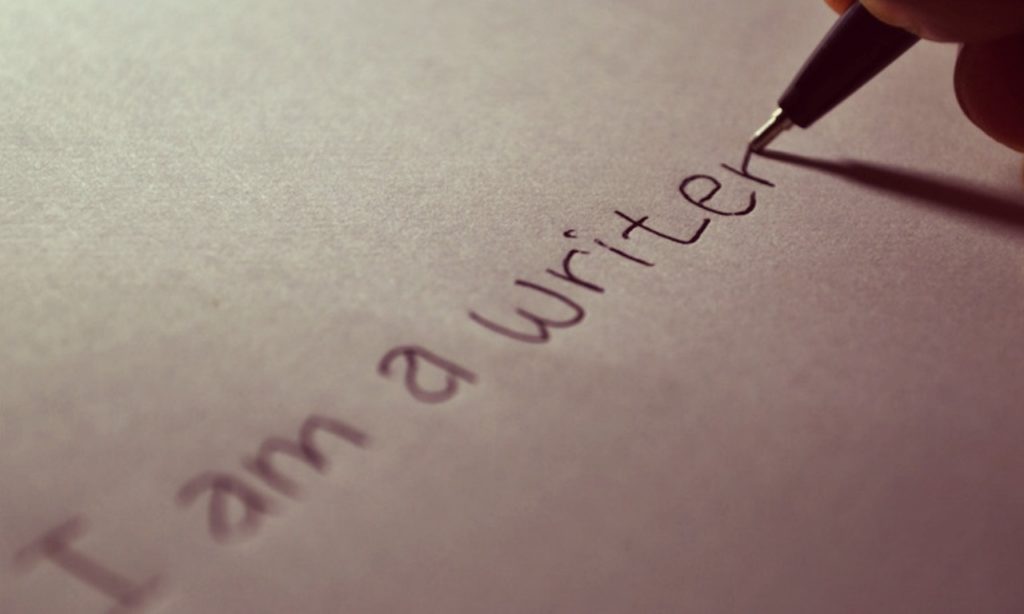
One mistake I see writers making—and probably the biggest—is playing too small. As much as they love writing, they “dabble” in their free time. It’s “a hobby” or “a dream” or “a mirage.” Who would want to hear what they have to say?
I was like that. I used to blush and shrink when people in the real world asked me how “the writing thing” was going.
But our words matter. And we have worlds within us that can only be accessed through writing fiction, ideas that can only be understood through story.
We have to care enough about these words to invest in ourselves and make ourselves into better artists and communicators.
Most of us have experienced true fear or anxiety on some level — whether it was a close scrape with danger, a rollercoaster ride, or the general anxiety our brains subject us too. But with coronavirus, we are all facing a fear we have never known. It’s not the breathless fear of running away from a predator, but it is a gnawing fear that sometimes overtakes us. We fear death, chaos, and uncertainty. We are living in the dystopian book we all dreaded, worrying about how crazy this is going to get. We might wonder, is it okay to use this fear as a creative impetus? Do we dare transform it into a dark source of inspiration?
Absolutely. Writing has been long used as a therapeutic practice. Storytelling is human beings’ chief way of making sense of a chaotic world that escapes our understanding. We may never understand the scope of our existence, but we can understand our story, and therefore, our place within it.
Writers are observers, chroniclers, and documenters. We examine our world with a microscope. Even though fiction is not real, our stories are a snapshot of the human psyche of our time. In this pandemic, for example, we are witnesses to a historic event, one that humanity will want to learn from for years to come. When people read our fiction, even decades or centuries from now, they will be able to know our experience on an intimate level. They will understand our values, fears, mistakes, triumphs, and insecurities. Just like when we pick up a book by Jane Austen or Tolstoy, we get into the authors’ minds — not just to read about history, but to live it.
Furthermore, what is served by turning fear into fiction is not just for the writer, but the reader. When you speak to the fears of another person, whether they know they have them or not, you make them feel understood, less alone, and less crazy.
Fear is not just for horror
Some may think that writing about fear is just for horror writers, or maybe the next dystopian series, but fear is a driver in every genre. For example:
Thrillers—fear of world destruction: In thrillers, there’s a bomb, a terrorist group, and or even, yes, a pandemic.
Romance—fear of rejection, abandonment, or loss: There is always a point in a romance novel where the heroin may have to lose the one she loves or lose something of herself by falling in love.
Scifi/fantasy—fear of subjugation or annihilation: Similar to thrillers, these stories often involve quests where the hero must save his world or his people.
Dark fiction/noir—fear of stagnation, of the world staying the same: Here, the character is in danger of not growing. If he can’t find the courage to change, it will end in self-destruction.
You can see how we can use fear to inform all our stories.
Writing fears
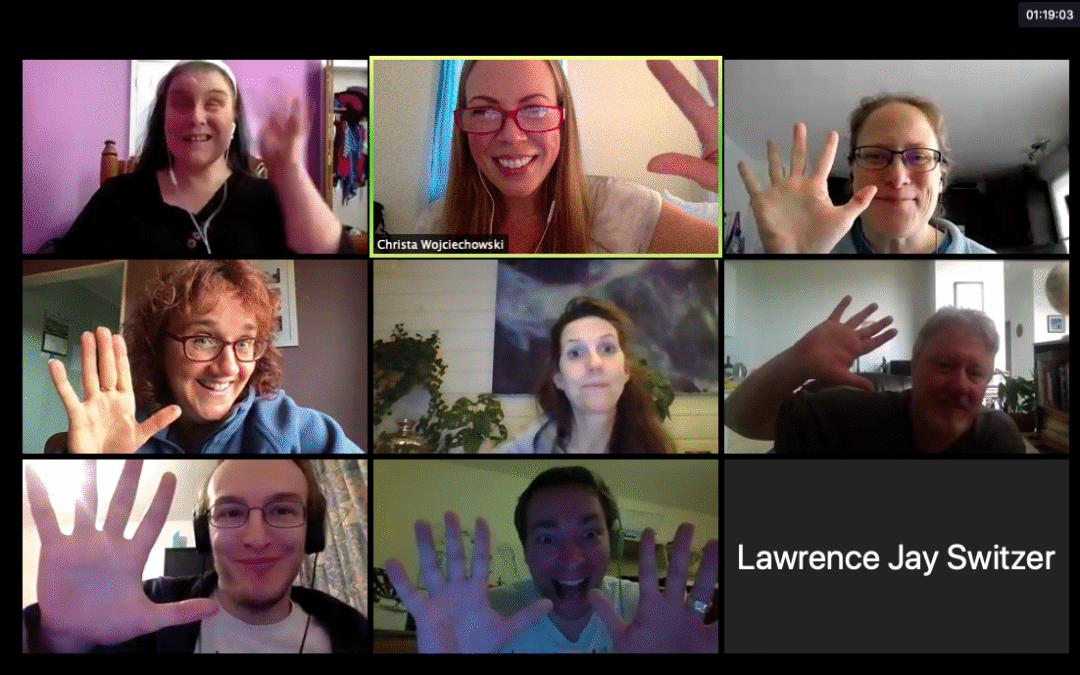
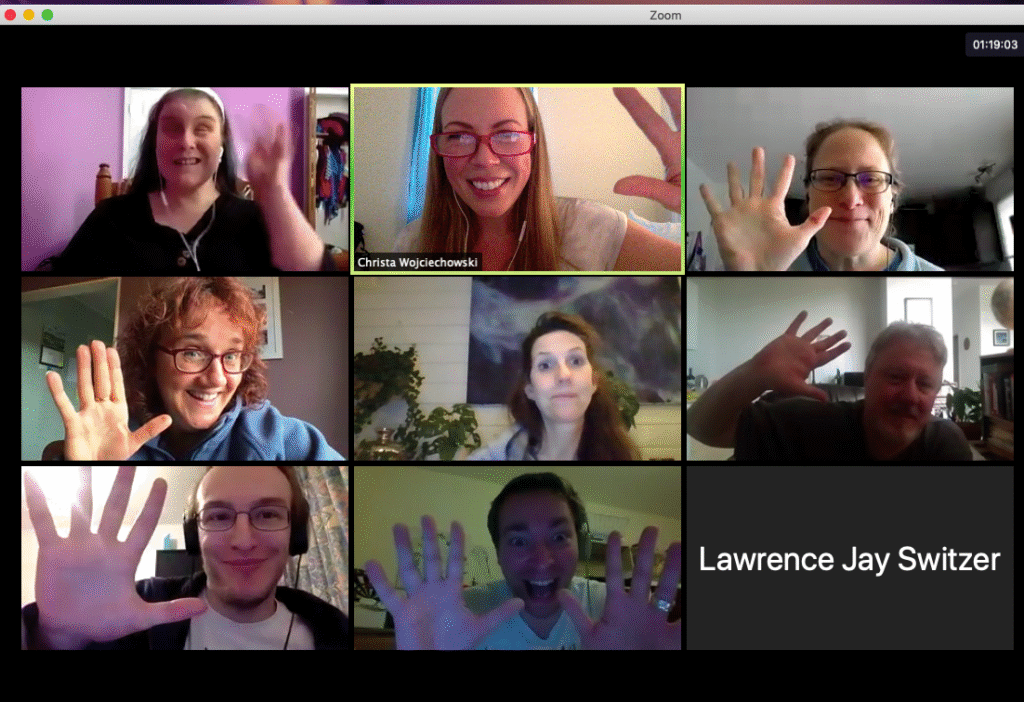
Because of the circumstances surrounding coronavirus, I pre-launched my first Writers’ Mastermind group discussion called Turning Fear into Fiction. During lockdown, I knew there would be a variety of ways writers use the stress and fear of this situation creatively. What I didn’t expect was how everyone had such unique and amazing insights into how fear affected us and our writing in so many nuanced ways. When talking about fear, we found it threaded through just about everything, including the act of writing itself. I’m going to expand on a thought from each member so that you can use it as inspiration when writing during your quarantine and in whatever world awaits us afterward.
There is a certain point where life gets so bad that we will feel paralyzed creatively. Most of us haven’t reached that point yet during this pandemic, but it could happen. In the meantime, we might escape into writing, and even enjoy it. But David mentioned something many of us have felt but few of us articulated, the guilt we feel enjoying writing while people are sick and dying. How can we be penning dramas about imaginary characters when there is so much suffering? Shouldn’t we feel guilty?
Sympathetic? Yes, but not guilty. We are not meant to carry the sorrow of the whole world, and those suffering wouldn’t want us to either. It’s our duty to tell stories, to make sense of what’s going on and explore how it could affect us personally and collectively.
Ross just finished a novel-in-flash in which he writes very openly about brutal topics like trauma, abuse, sexuality, toxic masculinity. He also writes about his relationship with his father and even from his father’s point of view. Ross was worried the moment he handed it to his father to read. What would he think of such naked honesty?
We all have that fear of people we know reading our work and what they are going to think of it. We don’t want to expose ourselves, but we should. When we put it all out there, we champion those who hide alone in anguish. Writers are brave in that way. We point out the elephant in the room. We expose hidden resentments, sins, and suspicions, giving everyone else permission to be flawed.
In the beginning of the chat, one of our members, Joseph Sale, left the perfect quote in the chat box.
“The oldest and strongest emotion of mankind is fear, and the oldest and strongest kind of fear is fear of the unknown” ― H.P. Lovecraft
Fantasy author, Susan Holt brilliantly expanded on this idea. She said that what lurks in the dark is much scarier than a monster you can see, and writing is a secret weapon that neutralizes our fears. It gives them shape and outline, defining their boundaries. Thus, they are no longer endless voids of horrific possibilities, but a problem with limitations and weaknesses. What we thought was a snake hiding in a dark corner we can now see is just a rope. Writing is the light of day that normalizes scary things.
As a writer, we separate ourselves when we become the narrator. We take a step back from the situation and become the observer. In this state of detachment, we can analyze the fear, and break it into smaller pieces that pose no threat to us.
Sandra’s brilliant term for this was Emotional Autopsy. She said that like determined pathologists, we can cut the outer skin off our fears, dissect them down to the bones and sinew, down to the guts. We can roll them between our fingers, understand them inside and out, so that we know their causes and how to tolerate and address them.
Tia admitted that her writing was escape from all the fear conjured by the coronavirus. Even though calamities happen in her books — terrifying monsters, natural disasters, and even gruesome diseases — Tia is able to distance herself because her stories involve imagined creatures who inhabit on a fictional planet. In this way, she keeps herself psychologically safe. What takes place on her in her imaginary world would never happen in real life.
But of course calamities do happen in the real world, and writing is an escape for most writers. However, this is not altogether a bad thing. Sometimes fear can help us to run away into fiction and stay there, helping us to produce far beyond our normal word counts.
Charlotta was raised in a family that embraced positivity, which sounds admirable, but because of this, she was also discouraged from expressing her darker, more negative feelings. The message was, you’re not supposed to have bad thoughts. Today, Charlotta lives in Norway where people have all their needs met and then some. When she wants to share a worry, most say, “Oh, don’t worry. It will be fine.”
But dismissing fears and problems can be a way of avoiding them, a form of denial veiled as optimism. Sometimes everything is not okay, and it will not be fine. Charlotta pours out this darkness into writing and painting. She still feels guilt for it to this day, which is a problem many of us face.
Negative thoughts are a part of us, and they are natural. Pretending they don’t exist does us irreparable harm. Repressed feelings breed psychological and emotional issues like mental illnesses, self-harm, and addiction. Luckily, we writers have an outlet.
This is why Charlotta takes writing breaks when her overactive mind won’t stop. Purging our feelings, including those we pick up from the people around us, lightens the emotional load — clears the cache, so to speak.
We writers are always in danger of exposing too much. How much of we write is really fiction? When you get to the bones of it, probably not much.
Joseph Sale is editing one of my manuscripts and cited a quote from the story. In the scene, my main character, Ona, makes a comment about the painting The Kiss by Gustav Klimt, saying that the artist revealed more of himself than he realized or intended. Which begs us to think about the pandemic. It will become part of us now. We are forever changed, traumatized, and will probably find ourselves writing about it in some way whether we want to or not. What secrets have we given away? Will they be used against us?
As writers, we may expose ourselves, but we must remember that it’s worth the risk. The best way to get close to our readers is to make them our confidants.
Becoming friends with our fear
Fear is uncomfortable. But it can be used to our advantage. We usually have to put ourselves in our characters’ shoes and presume what it would feel like to be in mortal danger. But today we don’t have to stretch our imaginations. Everything is at stake for us right now. The threat is real. I talked about this in our Writers’ Mastermind mixer — how, for writers, being stuck in a horrible situation has a bright side. It gives us great writing material. So, we might as well make the lemons into lemonade and pay attention to the following list. Jot these observations and ideas down. Come back to them whenever you begin writing.
Thoughts going through your mind — What are the scenarios playing out in your head? What do you keep running over and over again? Solutions? Worst case scenarios? Hopeful endings?
Feelings you’re experiencing — Are you angry? Desperate? In disbelief? Dismissive? Frozen? Depressed? All of over the place?
Physical sensations — Pay attention to your body. Are you tense? Does your back ache? Queasy? Loss of appetite? Itchy? Sleepless? Lacking energy or full of restless energy?
Generalized pressure and stress — How is society reacting? How is your family behaving? What changes are you seeing in the world?Use fear to fuel you creatively by making writing your outlet. How can you channel the energy?
Fear makes us better writers
Becoming friends with our fear deepens our relationship with ourselves and with others, helping us to become better writers. We have the ability to develop more believable, emotionally complex characters. This makes a more mesmerizing, powerful, and satisfying story.
Have you ever asked yourself this question and truly answered it?
This is important to define for yourself, the quality of your work. 2020 was a year of chaos, fear, and upheaval. As we begin the new year, it’s the perfect time to let the dust settle and get laser-like focus on why you write and how you’re going to get your words into the world.
It’s not easy to be an aspiring writer. Just tell someone you want to become a successful fiction author and their reaction will be something like:
Laughs awkwardly until they realize you’re serious.
Shows concern about your mental health
Says, “Really? Uhhh… Good luck with that.”
It’s the same look adults gave you when you were six years old and you told them you wanted to be an a pegasus when you grew up.
That’s because writing fiction is a time and energy-intensive pursuit that never guarantees a big material reward.
As a marketing strategist for authors, I see many writers approaching their writing career with a “lottery mindset.” They scribble out a book, feverishly upload it to Amazon, and wait for overnight success.
When they don’t wake up on the bestsellers list, they give up.
This the paradox:
Only by NOT writing for money or fame will you possibly become a successful author because once you begin writing for sales, your words will lose heart.
You must have a bigger reason than to become wealthy and famous. You need to think about who you’re writing for and how you want them to think and feel after reading your work. Either that, or writing must be so satisfying for you that it is its own reward.
Maybe you write because it’s therapeutic, allowing you to express yourself and make meaning of your experiences. Maybe you want to make people laugh and forget their worries. Maybe you just want to scare the hell out of them.
Not only will a writing manifesto help you on the hard days when nothing is working, keeping your mission in mind will inspire you to produce stories that will impact your readers and the world.
You got this!
Create your Writing Manifesto!
Join us for the Ultimate Author Planning Workshop in the Writers’ Mastermind.
Develop your own powerful Writer Manifesto.
Crystalize your vision of what it means to be a successful author.
Reverse engineer a step-by-step plan to your career as a fiction writer.
Avoid wasting time, overwhelm, procrastination, and paralysis.
As a creative person and one who’s plagued by existential questions, I get trapped into that circle of thinking if what I’m doing matters.
Am I just wasting my time and energy torturing nice people with my substandard prose?
I work with writers and for writers (and this applies to all creative people), and I think we all have that dream of becoming famous (even if you say you don’t, you wouldn’t mind it, would you?).
We all have that hope of changing the world with our work.
We want to be praised and validated.
We want to communicate on a deeper level.
We want to be admired, at least just a little bit, and be able to say “I told you so” to all the haters.
Most of all, we want to leave a legacy after our death.
But our dreams deflate each time we see the sheer numbers of other people who have the same exact dream as we do and are pursuing it more efficiently and more fervently.
They write better, market better, sell better.
We see other artists kicking ass out there, and we wonder how in the world they do it.
Maybe we don’t have the resources, the time, or the energy.
Maybe we don’t have the savvy or the persistence. Maybe we’re suffering from imposter syndrome.
It’s easy to get caught up in the race to the bestsellers list, but let me wrap my arm around your shoulders and guide you into my existential realm here.
Although contemplating our place in the ginormous, black Universe can make us feel insignificant and pointless at times, this simultaneously it frees us from our anguish.
Look at it this way…
You only have one life (as far as we know). If there is anything noble about it, it’s living in the pursuit of creating and appreciating beauty in all its forms. It’s one of the only redeeming qualities of our species.
Your one life is very short. You could spend it watching Netflix. Or you could live a life of passion and do what makes your soul sing.
You have to be yourself. If there’s one thing I learned about being happy in this life, it’s being true to who you are. If you only behave and do what you think you’re supposed to do instead of what you really want to do, you will be a miserable person. Guaranteed.
Your audience doesn’t matter all that much. Human beings are a very small, messy, and crude part of the universe. Having their mass approval is not necessarily anything special. There is much of existence beyond our little blue sphere that might marvel at your work if they ever got to experience it.
Creativity is a gift.In making something out of nothing, we can be the gods of our own little universes.
I hope you all found this comforting.
Happy Monday and Happy Creating!
–Christa
Do you ever wonder if what you’re creating matters?
How do you think your work fits into the Universe?
I live in the Chiriquí highlands, a land of eternal spring that bursts with flowers all year long. I try to make sure I crawl out of my writing/working cave for a few minutes a day to appreciate the flowers.
Not only is it soothing to get away from the glowing screens of my electronics, but I feel it’s a shame to ignore them as the buds strain upward to bloom as brightly as they can. I know that all too quickly they will wilt and die. Someone should be there to watch their performance.
On hikes through the cloud forest, I often notice a lone, exotic flower in the mist. It waits there in silence, sparkling with dew, and trembles in the breeze like it’s excited to see me.
I think of how easily I might not have been in that spot at that moment to witness it in its pinnacle of existence. What a pity for those countless hidden beauties who go through the trouble of making a such a performance only to be missed!
But I realize that whether I was there or not, the flower would’ve opened in the darkness of the jungle anyway. It would have raised its petals to the moon and folded back into itself again, a marvel never to be seen.
I think of artists like flowers – painters, dancers, singers, and writers. We are designed to bloom and can’t help ourselves from doing so. It doesn’t matter if anyone is there to witness it or appreciate it. It doesn’t matter if it’s practical or not. It’s what we were made to do, and we must do it or we’ll be miserable.
We may get trampled on or devoured by insects.
We may be clipped short and put in a vase to be put on a brief display for others, then shrivel before our time.
We may be watered and nurtured so that we thrive and mature to our fullest potential, blooming season after season, becoming an attraction for bees and butterflies and hummingbirds.
On the other hand, we may never be noticed or acknowledged by a single soul.
We might throw all our energies, passions, and resources into becoming the most spectacular blossom, only to crumple back into the ground without attracting the slightest notice.
The point is this. Don’t write to be seen. Write to become yourself.
No matter what, we must break from the soil, unfurl with determination, and reach for the sun.
As flowers bloom, so we must write. We must write. We must write!
So go write!
What are your goals as a writer?
Would you still write if you knew no one would ever read it?