Most of us have experienced true fear or anxiety on some level — whether it was a close scrape with danger, a rollercoaster ride, or the general anxiety our brains subject us too. But with coronavirus, we are all facing a fear we have never known. It’s not the breathless fear of running away from a predator, but it is a gnawing fear that sometimes overtakes us. We fear death, chaos, and uncertainty. We are living in the dystopian book we all dreaded, worrying about how crazy this is going to get. We might wonder, is it okay to use this fear as a creative impetus? Do we dare transform it into a dark source of inspiration?
Absolutely. Writing has been long used as a therapeutic practice. Storytelling is human beings’ chief way of making sense of a chaotic world that escapes our understanding. We may never understand the scope of our existence, but we can understand our story, and therefore, our place within it.
Writers are observers, chroniclers, and documenters. We examine our world with a microscope. Even though fiction is not real, our stories are a snapshot of the human psyche of our time. In this pandemic, for example, we are witnesses to a historic event, one that humanity will want to learn from for years to come. When people read our fiction, even decades or centuries from now, they will be able to know our experience on an intimate level. They will understand our values, fears, mistakes, triumphs, and insecurities. Just like when we pick up a book by Jane Austen or Tolstoy, we get into the authors’ minds — not just to read about history, but to live it.
Furthermore, what is served by turning fear into fiction is not just for the writer, but the reader. When you speak to the fears of another person, whether they know they have them or not, you make them feel understood, less alone, and less crazy.
Fear is not just for horror
Some may think that writing about fear is just for horror writers, or maybe the next dystopian series, but fear is a driver in every genre. For example:
Thrillers—fear of world destruction: In thrillers, there’s a bomb, a terrorist group, and or even, yes, a pandemic.
Romance—fear of rejection, abandonment, or loss: There is always a point in a romance novel where the heroin may have to lose the one she loves or lose something of herself by falling in love.
Scifi/fantasy—fear of subjugation or annihilation: Similar to thrillers, these stories often involve quests where the hero must save his world or his people.
Dark fiction/noir—fear of stagnation, of the world staying the same: Here, the character is in danger of not growing. If he can’t find the courage to change, it will end in self-destruction.
You can see how we can use fear to inform all our stories.
Writing fears
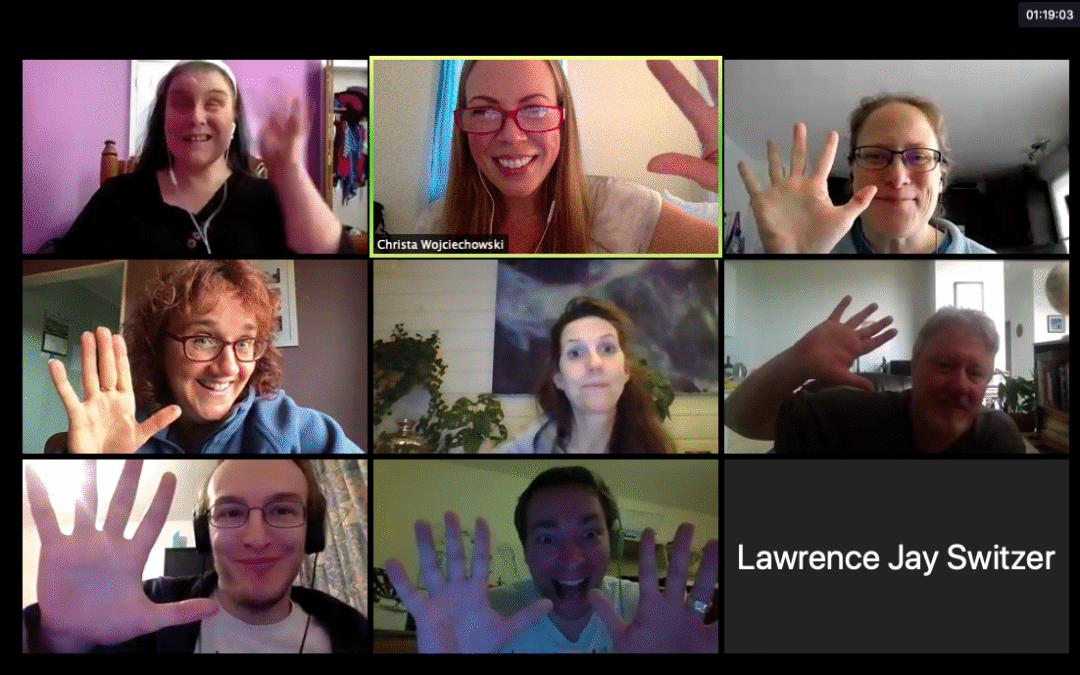
Because of the circumstances surrounding coronavirus, I pre-launched my first Writers’ Mastermind group discussion called Turning Fear into Fiction. During lockdown, I knew there would be a variety of ways writers use the stress and fear of this situation creatively. What I didn’t expect was how everyone had such unique and amazing insights into how fear affected us and our writing in so many nuanced ways. When talking about fear, we found it threaded through just about everything, including the act of writing itself. I’m going to expand on a thought from each member so that you can use it as inspiration when writing during your quarantine and in whatever world awaits us afterward.
There is a certain point where life gets so bad that we will feel paralyzed creatively. Most of us haven’t reached that point yet during this pandemic, but it could happen. In the meantime, we might escape into writing, and even enjoy it. But David mentioned something many of us have felt but few of us articulated, the guilt we feel enjoying writing while people are sick and dying. How can we be penning dramas about imaginary characters when there is so much suffering? Shouldn’t we feel guilty?
Sympathetic? Yes, but not guilty. We are not meant to carry the sorrow of the whole world, and those suffering wouldn’t want us to either. It’s our duty to tell stories, to make sense of what’s going on and explore how it could affect us personally and collectively.
Ross just finished a novel-in-flash in which he writes very openly about brutal topics like trauma, abuse, sexuality, toxic masculinity. He also writes about his relationship with his father and even from his father’s point of view. Ross was worried the moment he handed it to his father to read. What would he think of such naked honesty?
We all have that fear of people we know reading our work and what they are going to think of it. We don’t want to expose ourselves, but we should. When we put it all out there, we champion those who hide alone in anguish. Writers are brave in that way. We point out the elephant in the room. We expose hidden resentments, sins, and suspicions, giving everyone else permission to be flawed.
In the beginning of the chat, one of our members, Joseph Sale, left the perfect quote in the chat box.
“The oldest and strongest emotion of mankind is fear, and the oldest and strongest kind of fear is fear of the unknown” ― H.P. Lovecraft
Fantasy author, Susan Holt brilliantly expanded on this idea. She said that what lurks in the dark is much scarier than a monster you can see, and writing is a secret weapon that neutralizes our fears. It gives them shape and outline, defining their boundaries. Thus, they are no longer endless voids of horrific possibilities, but a problem with limitations and weaknesses. What we thought was a snake hiding in a dark corner we can now see is just a rope. Writing is the light of day that normalizes scary things.
As a writer, we separate ourselves when we become the narrator. We take a step back from the situation and become the observer. In this state of detachment, we can analyze the fear, and break it into smaller pieces that pose no threat to us.
Sandra’s brilliant term for this was Emotional Autopsy. She said that like determined pathologists, we can cut the outer skin off our fears, dissect them down to the bones and sinew, down to the guts. We can roll them between our fingers, understand them inside and out, so that we know their causes and how to tolerate and address them.
Tia admitted that her writing was escape from all the fear conjured by the coronavirus. Even though calamities happen in her books — terrifying monsters, natural disasters, and even gruesome diseases — Tia is able to distance herself because her stories involve imagined creatures who inhabit on a fictional planet. In this way, she keeps herself psychologically safe. What takes place on her in her imaginary world would never happen in real life.
But of course calamities do happen in the real world, and writing is an escape for most writers. However, this is not altogether a bad thing. Sometimes fear can help us to run away into fiction and stay there, helping us to produce far beyond our normal word counts.
Charlotta was raised in a family that embraced positivity, which sounds admirable, but because of this, she was also discouraged from expressing her darker, more negative feelings. The message was, you’re not supposed to have bad thoughts. Today, Charlotta lives in Norway where people have all their needs met and then some. When she wants to share a worry, most say, “Oh, don’t worry. It will be fine.”
But dismissing fears and problems can be a way of avoiding them, a form of denial veiled as optimism. Sometimes everything is not okay, and it will not be fine. Charlotta pours out this darkness into writing and painting. She still feels guilt for it to this day, which is a problem many of us face.
Negative thoughts are a part of us, and they are natural. Pretending they don’t exist does us irreparable harm. Repressed feelings breed psychological and emotional issues like mental illnesses, self-harm, and addiction. Luckily, we writers have an outlet.
This is why Charlotta takes writing breaks when her overactive mind won’t stop. Purging our feelings, including those we pick up from the people around us, lightens the emotional load — clears the cache, so to speak.
We writers are always in danger of exposing too much. How much of we write is really fiction? When you get to the bones of it, probably not much.
Joseph Sale is editing one of my manuscripts and cited a quote from the story. In the scene, my main character, Ona, makes a comment about the painting The Kiss by Gustav Klimt, saying that the artist revealed more of himself than he realized or intended. Which begs us to think about the pandemic. It will become part of us now. We are forever changed, traumatized, and will probably find ourselves writing about it in some way whether we want to or not. What secrets have we given away? Will they be used against us?
As writers, we may expose ourselves, but we must remember that it’s worth the risk. The best way to get close to our readers is to make them our confidants.
Becoming friends with our fear
Fear is uncomfortable. But it can be used to our advantage. We usually have to put ourselves in our characters’ shoes and presume what it would feel like to be in mortal danger. But today we don’t have to stretch our imaginations. Everything is at stake for us right now. The threat is real. I talked about this in our Writers’ Mastermind mixer — how, for writers, being stuck in a horrible situation has a bright side. It gives us great writing material. So, we might as well make the lemons into lemonade and pay attention to the following list. Jot these observations and ideas down. Come back to them whenever you begin writing.
Thoughts going through your mind — What are the scenarios playing out in your head? What do you keep running over and over again? Solutions? Worst case scenarios? Hopeful endings?
Feelings you’re experiencing — Are you angry? Desperate? In disbelief? Dismissive? Frozen? Depressed? All of over the place?
Physical sensations — Pay attention to your body. Are you tense? Does your back ache? Queasy? Loss of appetite? Itchy? Sleepless? Lacking energy or full of restless energy?
Generalized pressure and stress — How is society reacting? How is your family behaving? What changes are you seeing in the world?Use fear to fuel you creatively by making writing your outlet. How can you channel the energy?
Fear makes us better writers
Becoming friends with our fear deepens our relationship with ourselves and with others, helping us to become better writers. We have the ability to develop more believable, emotionally complex characters. This makes a more mesmerizing, powerful, and satisfying story.
As a writer, I know the submissions process can be a huge mental and emotional drain. Not only is it time-consuming and tedious, there are the nail-biting weeks or months afterward waiting for an answer.
If the answer is no, a writer must go through a period of grief and summon the strength to get back out and submit again.
But being rejected often has nothing to do with the quality of the writing.
As the contest creator, I was the gatekeeper and was forced to disqualify stories for the silliest of reasons. In many cases, the writing was great, and it was frustrating because the issues that prevented the story from being in the competition were completely avoidable.
It pains me to see talented writers sabotaging themselves
when it comes to submissions, writers who are racking up needless rejections
that are killing their self-confidence.
So, as a person who not only has suffered rejections, but has also had to read through hundreds of submissions, this is my advice.
1. Not following directions – Read the submission guidelines and contest rules until they’re branded into your brain. Then read them again. Before you send in your manuscript, read them again. Each magazine, agent, or publisher will have slightly different guidelines. Pay attention to requirements for formatting, cover letters, submission length, blurbs, bios, and more. Be especially wary of the next items I discuss in this list.
2. Word count – During our Spring Writing Contest, many submissions were below or above the 1K to 5K word count. I couldn’t understand why. I could only think the writer ignored suggestion #1—carefully read the submission guidelines. There is no excuse to ignore the word count requirement.
If your story is too short, fill it in. Find areas where you can expand. Add some more to detail to the setting. Incorporate a new scene to reveal character.
Likewise, if your story or book is too long, trim some fat. Skim
off anything that is not crucial to the plot. Remove unnecessary description.
Kill darlings without mercy.
If the word count is too far off to feasibly adjust, move on.
2. Mistakes – No matter how interesting a story is, typos and grammatical errors are sure to turn off any reader, especially literary professionals. It says to the organization that you don’t care enough to send your best work—either that, or you’re an incompetent writer who didn’t even realize you made any mistakes.
Being a good writer means you know how to write. This includes grammar and punctuation. If you’re struggling with the technical aspects of writing, take a class so you can execute with confidence.
Then find an editor. Even if you’re an English major, everyone makes mistakes and it’s hard to see them in your own work. Send your work to a professional first.
3. Submitting the totally wrong thing – The contest here at Let’s Get Published was for short stories in any genre of fiction. Short stories are a standalone art form with a very specific structure, yet I received many of what very obviously were chapters of a book. Some authors left the chapter heading in the document! Even the incomplete entries that didn’t have chapter headings were very noticeably just chapters, scenes, or excerpts. I was also puzzled to receive poetry and non-fiction (again, see #1)!
Don’t risk annoying agents and publishers hoping that by some cosmic chance that they’ll be so captivated by your work they’ll ignore the fact that you broke their guidelines. Make sure you’re sending them the material they work with or you’re wasting both their time, and more importantly, yours.
4. Not familiarizing yourself with the agent or publisher – From my personal experience as a writer, I know it’s tempting to jump after every submission call you see. I’ve submitted without ever having read anything from the publishing house, agent, or magazine and ended up rejected. I would have saved everyone time if I had sampled from their stable of writers first.
Read up on the writers your desired publisher works with to see how you compare. Beyond the genre, ask yourself if your style, theme, and subject matter are good fit. What is the publisher known for? Do they have any non-negotiables when it comes to sex, violence, or other graphic material? Do they stick to certain tropes or subvert them? This will help you avoid sending your work into places where it’s not likely to be accepted.
In closing
It’s a shame to think that some talented writers become discouraged or give up entirely because of rejections when they’re only crime is failing to submit properly.
Remember that agents, publishers, and writing contest judges are people too. Respect them and your work enough to be professional. Stop wasting your time and energy chasing after calls that don’t suit your story. Don’t rush to submit or send in sloppy drafts. Take your time. Do your homework.
You might submit less, but you’ll be submitting effectively. This will exponentially increase your chances of getting more acceptance letters and contest wins. It’s definitely a quality not quantity game here. Treat your writing like the one-of-a-kind art that it is.
#PitMad is a pitch party on Twitter created by PitchWars.org where writers tweet a 280-character pitch for their completed, polished, unpublished manuscripts. Agents and editors make requests by liking/favoriting the tweeted pitch.
Every unagented writer is welcome to pitch. All
genres/categories are welcomed.
#PitMad dates 2020
March 5, 2020 (8AM – 8PM EDT)
June 4, 2020 (8AM – 8PM EDT)
September 3, 2020 (8AM – 8PM EST)
December 3, 2020 (8AM – 8PM EST)
For Official #PitMad rules and the list of category hashtags,CLICK HERE.
About Pitch Wars
Pitch Wars is a mentoring program where published/agented authors, editors, or industry interns choose one writer each, read their entire manuscript, and offer suggestions on how to make the manuscript shine for an agent showcase.
We’re getting ready to launch the Writers’ Mastermind, and as part of connecting our writing community, we’ll be sharing the latest accomplishments of our members.
Today, we share groundbreaking book releases and stunning art from our cadre of creatives.
***Do you have a book coming out? A cover reveal? Has a magazine published your short story? Have you landed and agent? What’s new with your other creative pursuits? Send your news to christa@letsgetpublished.com.
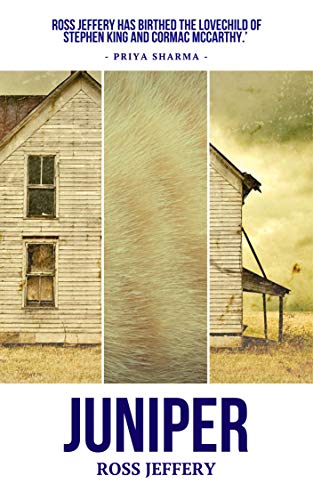
Juniper, the debut novel by Ross Jeffery
After a 7-year writing hiatus, Ross Jeffery is claiming his place on the weird fiction scene with his first book, Juniper. Truly weird and wild, Juniper will keep you rapt in morbid curiosity, even through the moments you want to recoil.
Ross Jeffery
Ross Jeffery is a Bristol based writer and Executive Director of Books for STORGY Magazine.
Ross has been published in print with STORGY Books, Ellipsis Zine 6, The Bath Flash Fiction Festival 2019, Project 13 Dark and Shlock Magazine. His work has also appeared in various online journals such as STORGY Magazine, About Magazine TX, Elephants Never, 101 Fiction, Ellipsis Zine, Soft Cartel and Idle Ink.
Ross lives in Bristol with his wife (Anna) and two children (Eva and Sophie). You can follow him on Twitter here @Ross1982
Juniper
Juniper is the first book in Ross Jeffery’s proposed trilogy: a post-apocalyptic horror about an insane American town seemingly at the edge of reality. As Juniper suffers from scorching drought and medieval famine, the townsfolk are forced to rely on the ‘new cattle’ for food: monstrous interbred cats kept by the oppressed Janet Lehey.
But there’s a problem: Janet’s prized ginger tom, Bucky, has gone missing, flown the coop. As Janet and her deranged ex-con husband Klein intensify their search for the hulking mongrel, Betty Davis, an old woman clinging to survival on the outskirts of Juniper, discovers something large and ginger and lying half-dead by the side of the road.
She decides to take it home…
Juniper is surreal, dark, funny, and at times: excruciatingly grotesque. Buckle up for a wild ride through the dust-ridden roads of a tiny, half-forgotten American town…
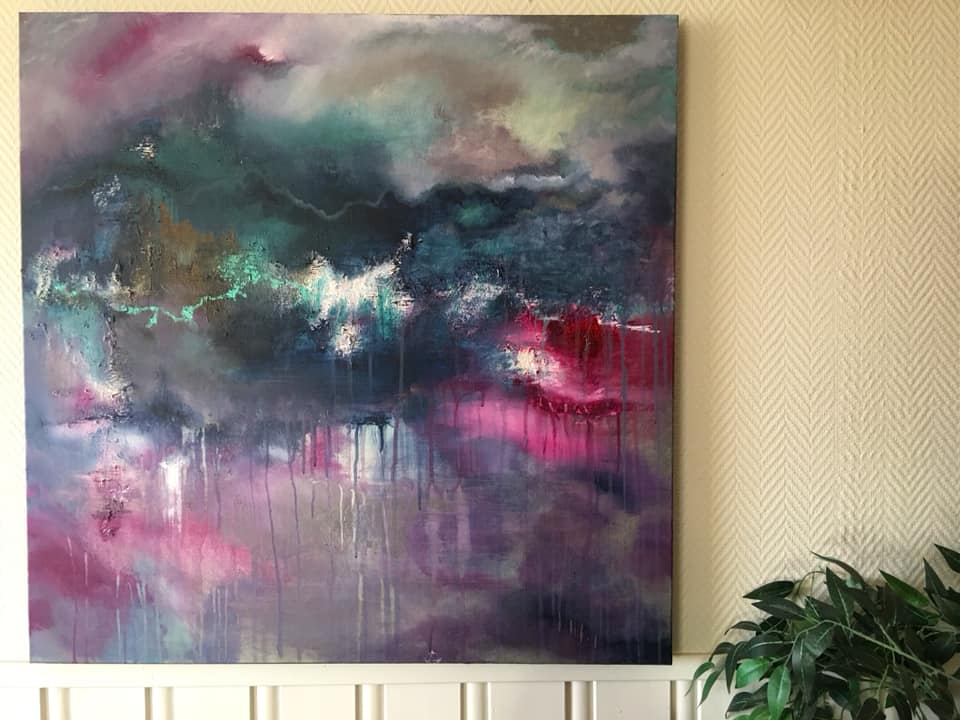
Charlotta Amato is not only a talented aspiring writer, but she also paints mesmerizing artwork—one of a kind, layers of color, life and livity all combined onto a canvas.
Her exclusive works are for sale. Learn more on her Facebook Page.
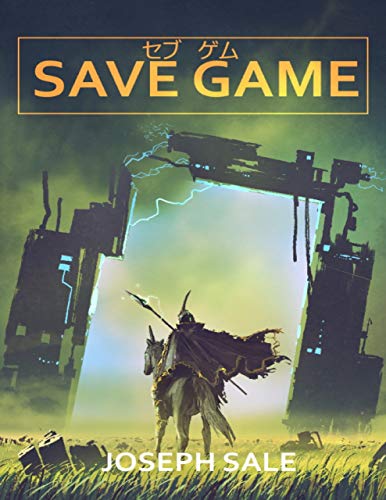
Save Game by Joseph Sale
Save Game is the latest novel from brilliant author, Joseph Sale. This book is a fully immersive page-turner, just like it’s subject matter. Most writers will relate to wanting to escape into an exciting imaginary world, never to return.
Joseph Sale
Joseph Sale is an editor, novelist, writing coach and co-host of Monaghan & The Mindflayer. He currently writes and is published with The Writing Collective. He has authored more than ten novels, including his Black Gate trilogy, and his love-letter to fantasy: Save Game. He grew up in the Lovecraftian seaside town of Bournemouth. He edits non-fiction and fiction, helping fledgling authors to realise their potential.
Save Game
Levi Jensen is, by all accounts, a loser. He failed sixth-form, never got to university, and works at a no-future fast-food restaurant. The only thing he’s good at is gaming. When his father starts dying of a new type of cancer, only treatable privately and at impossible expense, Levi’s one hope of saving him becomes the million-dollar cash-prize for winning the dark-fantasy video-game Fate of Ellaria. But Levi isn’t the only one with motivations beyond money for winning. And the price of success in Fate of Ellaria might mean the destruction of what little he has left in the real world.
Save Game is a heart-breaking story of an underdog against all odds, as well as a love-letter to the beauty of video-games. Inspired by the amazing and eclectic everyday people who inhabit the gaming world, and the pain of their real-world lives, Save Game aims to show the courage of those who feel they’ve got no place in reality.
Sandra Hould is a stay at home mom, environmentalist, karateka, artist, book addict and future writer. She is always exploring new ways to express herself creatively, no matter how difficult the quest may be.
My art will be raw, imperfect, unapologetic and real, just like life.—Sandra Hould
***Do you have a book coming out? A cover reveal? Has a magazine published your short story? Have you landed and agent? What’s new with your other creative pursuits? Send your news to christa@letsgetpublished.com.
I hope your 2020 is going well and that you’re being productive and feeling inspired.
A big thank you for helping me with your suggestions
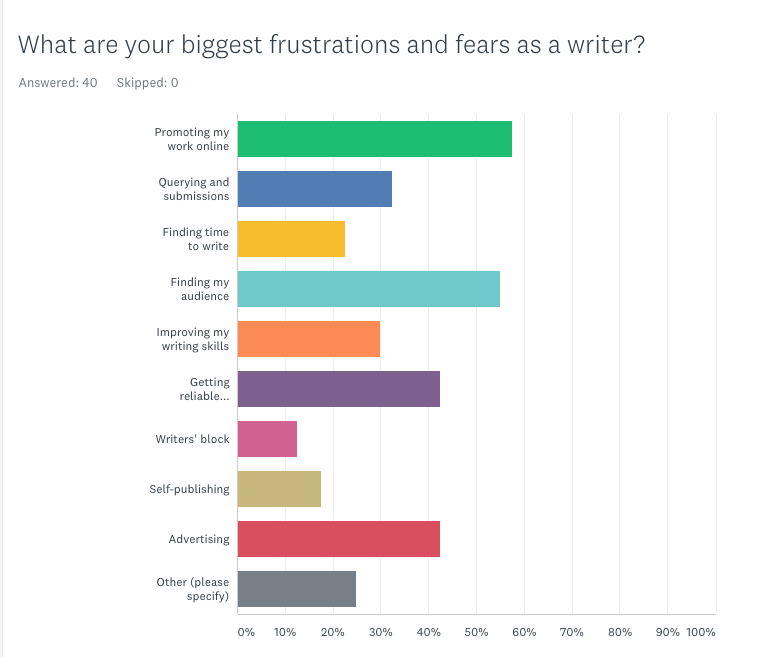
Thanks to those who participated in the survey I sent out last month. The results were enlightening and I’m using your feedback as I develop the site. You can see in the graph below what our writers’ biggest concerns are. I’ll be addressing these topics first as I line up the curriculum.
Psst… The first class is almost finished, but I will wait to announce the subject at a later date 😉
You can still leave your feedback in the survey by clicking here.
An apology for the delay
The start of the year has been hectic, and the launch of the Writers’ Mastermind group is behind schedule. I am building this platform on my own from scratch, and personal issues keep popping up.
I’m trying not to dwell on how frustrating the interruptions are and keep focused on how excited I am for the future when we go live. Life doesn’t work on our schedules, unfortunately, so we just have to do the best we can!
But we’re making progress
The good news is I have laid out the foundation of the membership area of the site! I’ve acquired a powerful combination of Divi from Elegant Themes and the Memberpress plugin to create a visually appealing and well-organized learning experience for you all.
So, what’s next?
I’ll be working on finishing and testing the site during the next month. I’ll be traveling and limited to what I can accomplish away from the office, but my goal is to have our new launch date in April 2020.
Get your hair did. We’re having a soirée, and you’re on the VIP list!
If you’re on the wait list, you’ll be invited to a virtual pre-launch mixer where members all over the world will get together in a live video conference, enjoy their beverage of choice, and talk about their writing.
This is going to be a massive event since it will be the first time I speak live with writers who’ve been my close email and social media pals for years. I’m freaking out a bit about that! 🤯 But that’s the purpose of the Writers’ Mastermind. No more isolated writers’ syndrome!
Are you on the wait list?
I’ll be closing the wait list this week. Those on the wait list will get the pre-launch price of $9 a month. This price is locked in for a lifetime.
Those who sign up after the wait list closes will pay regular price of $19 a month. So get in now! SIGN UP FOR THE WAIT LIST.
In this world of indie publishing, anyone and everyone is writing a book, but should they be?
I might be a jerk for bringing this up, but I’ll say it.
I see a lot of crappy books out there.
It makes me wonder—if all these writers think they’re good, and I am just as optimistic about my abilities, could I be mistaken too?
Of Human Bondage by William Somerset Maugham is one of my favorite books about this creative dilemma. Fed up with a dreary accounting job, our protagonist, Phillip, goes to Paris to become a painter. He does well, but never creates anything extraordinary.
After the suicide of a classmate, who for all her artistic passion was a lousy painter, Phillip reevaluates his reasons for becoming an artist. He wonders what his future will look like if he continues to pursue his dream.
Phillip finally works up the nerve to end the subject once and for all by asking one of his painting masters to give an honest opinion of his work. The teacher is perplexed by his request.
Monsieur Foinet: “I don’t understand.”
Phillip: “I’m very poor. If I have no talent I would sooner do something else.”
Monsieur Foinet: “Don’t you know if you have talent?”
Phillip: “All my friends know they have talent, but I am aware some of them are mistaken.”
After Monsieur Foinet evaluates Phillip’s collection of work, he respectfully tells Phillip that he will never be anything other than a mediocre artist. Phillip decides to give up painting and go to medical school. Just like that — his abandons his whole Bohemian dream.
Unlike Phillip, I won’t give up writing no matter how paranoid I am about sucking. Although I would feel foolish pouring all of my energy into something I lack the talent for, whether anyone likes my writing should be secondary. Phillip’s friend and fellow painter, Clutton, puts it perfectly earlier in the book:
“What happens to our work afterwards is unimportant; we have got all we could out of it while we were doing it.”
That doesn’t mean I don’t care if my writing is bad. Like Phillip, I‘m afraid I am not, and will never be, any good. But I have to remember that I am still learning and to be okay with that. You should be okay with that too.
You wouldn’t expect to shoot par on your first trip to a golf course. You will hack and slice and end up in bunkers covered in sand. You will be humiliated and discouraged and tested, so don’t expect to sit down and write a brilliant novel if you haven’t devoted yourself to learning everything you can.
Sure, writing, like painting, seems to involve a certain amount of innate talent. I read scores of writers who create beautiful, technically perfect prose but whose writing is devoid of passion. Then there are those who are great at inventing characters and plot lines but lack the ability to make it all mean something. I used to believe they were missing that “it” factor that makes a great writer.
But the “it” factor is not always a mysterious gift bestowed on few. It’s mostly doing what you need to do to get better, whether it be technical or intuitive. I believe that with the right tools, instruction, feedback, and hard work, anyone can become a good writer.
Are you frustrated? Unsure? Do you feel like something’s off but you don’t know what?
Then think about this…
How many years did you have to attend school to earn a diploma? How much training did you go through for your profession? Now, how many hours have you devoted not just to writing, but to actively learning how to become a better writer?
Imagine if you took your writing as seriously as your job.
What training do you need?
Where can you get qualified feedback?
Think about where you feel a lack of confidence.
Analyze the areas where you can improve.
Respect your creative compulsions. Invest in yourself. Make a plan and take action to learn all you can.
[et_bloom_inline optin_id=”optin_12″]
Christa Wojciechowski is a dark fiction author and the founder of writecatalyst.com/, a virtual Mastermind Community where writers will learn how to become successful authors through live video chats, critique swaps, monthly masterclasses, and featured experts. Sign up for the wait list here.