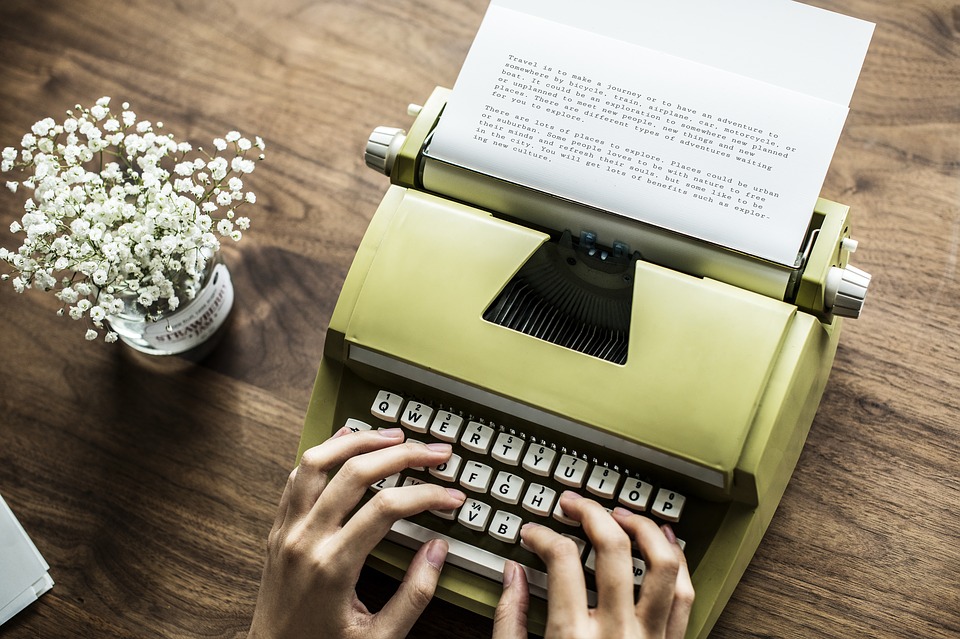
No one writes a perfect first draft. Even the most skilled writer makes mistakes.
Once your story is done, how do you keep track of all the things that can possibly go wrong?
And publishers rarely give a reason for rejection. What if an editing issue is the reason your otherwise amazing story was passed up?
Our upcoming self-editing mastermind event is about developing a foolproof system to make your stories and manuscripts the best they can be before submitting to agents, publishers, or a professional editor.
Learning to self-edit will also incrementally help you become a better (and faster) writer.
We invite you to join us and to bring your most pressing editing questions and struggles. We will help you settle them once and for all!
Our Guest Expert
Candace Johnson is a professional freelance editor, writer, proofreader, and ghostwriter. She has worked with traditional publishers, self-published authors, agents, and independent book packagers in numerous fiction genres and nonfiction subjects. As an editorial specialist, she believes in maintaining an author’s unique voice while helping to polish every sentence to make it the best it can be.
Unnecessary, weak words, like grammatical expletives, dilute our writing, but most of us don’t even realize we’re using them. That’s because they are part of our everyday conversation.
I’ll tell you about my rude awakening to filler words and weak qualifiers (e.g. “very, really, a lot”). When I was going through the editing process with my first novella, I noticed I used the word “just” twice in a sentence. Out of curiosity, I searched up how just many “justs” were in the whole document. My story was infected!
Here is a list of overused vague qualifiers/filler words. Sharpen your writing in minutes by searching your manuscript with the “find and replace” feature and removing/changing these words.
very
too
so
quite
rather
somewhat
basically
virtually
generally
slightly
really
a lot
sort of
indeed
still
almost
fairly
even
a bit
a little
kind of
usually
a few
mostly
and my favorite“just“
Stephen King said that the road to hell is paved in adverbs. I would then say that same road is blacktopped with the words in this list. It’s almost impossible to get out of the habit of using them, so make sure you look for them before submitting, publishing, or turning your manuscript over to your editor.
What word out of this list do you notice in your writing?
I’d love to know if you’ve filtered your writing for these words. How many did you find?
Happy Writing!
—Christa
Our focus this month is on systemizing your self-editing process.
Grammatical expletives are not dirty words, but they can be equally offensive. Grammatical expletives are empty words that take up valuable space and dilute the power of your sentences.
This article from Just Publishing Advice tells us how to target these words in your writing and how to formulate your sentences so that each word does a job.
You probably use the grammatical expletive very often in your writing. But what is it?
The definition of the word expletive is an oath or a swear word. But in grammar, it means to use a word or phrase to fill out a sentence without adding to the meaning or sense.
The word derives from the Late Latin word, expletivus, which means to fill out.
When you know what you are looking for, you can quickly edit these words with no meaning.
What are expletives in grammar and writing
They are empty words that occupy space in a sentence but with no meaning or action.
The most common forms use there or it as the subject of a sentence.
When a sentence starts with either of these two subjects, the verb that follows is usually the verb to be.
The forms are almost the same.
There is/are/was/were/will be
It is/was/will be
When you start a sentence with any of these combinations, the words say nothing.
As with many writing rules, there are exceptions. For example, you can certainly use grammar expletives when you want to add emphasis or delay the main subject of the sentence.
However, in general, the best practice is to remove them when you can.
Grammatical expletive examples
Here are some example sentences that start with the expletive.
There were more than one hundred and fifty people at the wedding.
It was a very violent storm that hit the city last night.
There are so many politicians riding on the gravy train.
It is my fault that we lost the match.
There are lots of reasons why you shouldn’t take the job.
It will be my 21st birthday in June.
There is no way you can learn all the grammar rules.
As you can see from these examples, the first words give no meaning, sense, or action to each sentence.
How to fix grammatical expletives
If I use the sentences above, you have some options to change each one.
All you need to do is start the new sentence with a subject that is a person or thing, and if possible, follow it with an active verb.
There were more than one hundred and fifty people at the wedding.
More than one hundred and fifty people attended the wedding.
The wedding was attended by one hundred and fifty people or more.
It was a very violent storm that hit the city last night.
A very violent storm hit the city last night.
The city was hit by a very violent storm last night.
There are so many politicians riding on the gravy train.
So many politicians are riding on the gravy train.
The gravy train is ridden by so many politicians.
It is my fault that we lost the match.
We lost the match because of me.
I lost the match for my team.
There are lots of reasons why you shouldn’t take the job.
You shouldn’t take the job for lots of reasons.
You’ve got lots of reasons not to take the job.
It will be my 21st birthday in June.
I’m turning 21 in June.
My 21st birthday is in June.
In June, I’m celebrating my 21st birthday.
There is no way you can learn all the grammar rules.
You can’t possibly learn all the grammar rules.
Don’t think that you can learn all the grammar rules.
You all know this famous phrase. It is the opening line written by Edward Bulwer-Lytton in the novel Paul Clifford (1830).
It was a dark and stormy night.
When you think about how you would change this sentence, the possibilities don’t seem right. The night was dark and stormy; it doesn’t have the same ring to it.
Although the expression may have originated before the 14th century, it was made famous by Judy Garland in The Wizard of Oz.
There’s no place like home.
In the Tale of Two Cities, Charles Dickens uses the grammatical expletive to emphasize each element of the sentence.
It was the best of times; it was the worst of times, it was the age of wisdom, it was the age of foolishness, it was the epoch of belief, it was the epoch of incredulity, it was the season of Light, it was the season of Darkness, it was the spring of hope, it was the winter of despair …
As you can see, using expletive phrases have a use. So while you are not competing with the greats of literature, you know that it is a tool you can use.
Summary
There is no right or wrong when it comes to using either common or grammatical expletives.
But usually, a little goes a long way. When you are aware of the rules, you can then decide to edit them out or leave them as is.
Remove literary, grammatical and syntactical inhibition
Jack Kerouac
Do you proofread as you write?
Whenever spell check underlines something in its taunting red line, I immediately want to make it disappear. I know this interrupts my flow, but it’s almost impossible not to fix the mistake before moving on (I’m doing it right now as I type this!).
I notice that I tend to do more self-editing when I’m stuck in my stories. This is the sneakiest form of writers’ block. It feels like I’m being productive, but what I really am doing is stalling. Instead of getting a thousand words on the page, I get a few over-edited sentences.
Jack Kerouac said to remove literary, grammatical, and syntactical inhibition as you write—not forever. Just until you finish. You’ll have plenty of time to correct your mistakes when the mad dash is over.
May the muses be with you,
—Christa
Do you correct mistakes as you write? What’s your worst procrastination habit?
Want a proofreading checklist for a flawless manuscript?
Look forward to Candace Johnson’s masterclass in the Writers’ Mastermind
SYSTEMIZED SELF-EDITING
Get access to this class and all the benefits of membership with your free trial.
If adding “Published Author” after your name is one of your goals, you’re probably itching to polish a NaNoWriMo manuscript or a WIP that is marinating on your hard drive and send it out into the world.
But don’t just run a final spellcheck and pronounce your work ready for publication.
If you are serious about publishing, your first readers should be beta readers.
And just what is a beta reader?
Think of beta readers as superhero partners/readers for your WIP. Correctly employed, your superheroes can save you time and money.
How? I’m glad you asked!
Ideally, you want to assemble a team of beta readers. By getting focused, constructive criticism from multiple viewpoints, you’ll be able to identify (and you’ll have the opportunity to address) potential problems with your manuscript before you spend money on professional editing. Then, when you do hire an editor, you’ll get more bang for your buck. (Learn more at Three Things You Shouldn’t Hire an Editor to Do.)
Each one of your superheroes will have a different strength, and no one beta reader will offer the same level of advice in every area. (That’s why you’ll get the most comprehensive feedback from a team.) Some will be generalists, some will be detail-oriented, but they’ll each see your story in a new way, because
Beta readers approach your manuscript from a fresh point of view.
Here are the types of beta readers who make perfect team members:
The Workhorse: a reader who is very familiar with your genre—perhaps a reviewer of books in your genre who can let you know if the story is entertaining, has a good flow and interesting characters, and where you dropped the ball if something isn’t working.
The Expert: a writer with an intimate knowledge of both the type of story you’ve written and the craft of storytelling. This reader/writer can be invaluable when it comes to constructive criticism about the way you’ve told your story and can offer useful suggestions for other things to try.
The Professor: this is the stickler for grammar. Of course, you’ve already run spell-check and grammar-check programs, but this type of proofreading step will save you time and money when you’re ready to hire a professional editor. (For more money-saving self-editing tips, check out How to Save Money on Professional Editing by Preparing Your Manuscript.)
The Bookworm: a reader who is representative of your average reader, perhaps a reviewer, maybe just an avid reader, but someone who can let you know about the experience of reading your book. Do your opening pages create a desire to keep reading? Does the action slow down in the middle of the story? Are the characters fully fleshed out?
Now, how does this team do its magic? The short answer is: That’s up to you.
You decide what guidance, if any, your beta readers get.
Do you want to ask your readers to look for specific things, or do you want to let them read the work and give their natural reactions? If you are concerned about a specific issue, by all means ask your superheroes to zero in on that part of your manuscript.
If you prefer to just cut them loose and see what they come up with, you can do that, too. (Hint: most beta readers appreciate some guidance, so feel free to create a list of things that are important to you.)
Through trial and error, you’ll learn who provides the type of valuable critique you’re looking for . . . and who doesn’t.
What is the most valuable skill beta readers possess?
It’s the ability to be honest with you.
This point cannot be overstated. Critiquing a manuscript isn’t a popularity contest, so surrounding yourself with people who will tell you how wonderful your story is and what a great writer you are won’t help you. (Your spouse, parent, or BFF probably won’t be as objective as you need a beta reader to be, either.)
I’m not suggesting you take every suggestion to heart and revise your manuscript by committee, but do give careful consideration to each suggestion, and then reject those that really don’t work for you. If three of your four beta readers make the same observation about your tendency to overuse adverbs, for example, you’ll be wise to go through your manuscript one more time to see how many adverbs you can remove.
Your beta readers’ input allows you to go back and do minor (or even major) revising before you spend your hard-earned money on professional editing . . . which means your editor’s time can be spent on helping you polish the remaining rough edges instead of trying to explain why your character’s motivation doesn’t make sense or your middle chapters lack action.
And now I’d like to offer a few words of advice to beta readers and the authors they critique:
First, to beta readers:
If you’re asked to be a beta reader, approach the manuscript like a teacher: point out what works for you and what doesn’t, and explain why you feel that way. The writer trusts you to understand that this is a draft, and she’s looking for constructive criticism. She might not incorporate all your suggestions, but merely the fact that you’ve pointed something out and had a great explanation will make you an invaluable member of a team . . . and there might be chocolate chip cookies involved, although I can’t promise anything.
Next, to the authors:
Your beta readers are not professional editors or writing coaches, so don’t expect them to do the heavy lifting. Do be clear about your expectations and your timeframe, and remember that they are unpaid volunteers and are making time to read and critique your manuscript. If their advice proves helpful, they can be invaluable to your writing career, but even if you reject some suggestions, thank them profusely for their time, both in person and in writing in your acknowledgments. And, if possible, offer to pay them back by being a beta reader for their manuscripts in exchange.
In my experience as an editor, one of the most common mistakes writers make is believing their work is ready to publish when more revising and editing are necessary. This often leads to higher editing bills because your editor will have to make edits that beta readers might have pointed out to you at no (or low) cost! So start now to line up a group of beta readers who are willing to give you their honest assessment about every aspect of your story.
Have you used beta readers?
I’d love to know how their comments helped you with your next round of revisions. Have you ever used beta readers at multiple stages of revising your manuscript? If you’ve been a beta reader for another writer, did you find the experience helped you with your own writing?
Happy Writing,
Candace
Look forward to Candace Johnson’s masterclass in the Writers’ Mastermind
SYSTEMIZED SELF-EDITING
Get access to this class and all the benefits of membership with your free trial.
Candace Johnson is a professional freelance editor, proofreader, writer, and writing coach who has worked with traditional publishers, self-published authors, and independent book packagers on nonfiction subjects ranging from memoirs to alternative medical treatments to self-help, and on fiction ranging from romance to paranormal. As an editorial specialist, Candace is passionate about offering her clients the opportunity to take their work to the next level. She believes in maintaining an author’s unique voice while helping him or her create and polish every sentence to make it the best it can be. Learn more here.
An appositive is a modifier. It’s a noun or noun phrase that immediately follows another noun or noun phrase to further define it. You probably use appositives all the time without even realizing it. But are you punctuating them correctly?
Why am I devoting a blog to appositives? I’m so glad you asked!
Learning how to punctuate appositives—most often done with commas but sometimes with parentheses—isn’t difficult, but I see incorrect examples almost every day. The sad thing is that so many of this common appositive punctuation mistakes show up in Amazon book descriptions, websites, book reviews, and pretty much anywhere you find the written word.
So let’s review definitions, and then I’ll show you how easy it is to correctly punctuate whenever you use an appositive in your writing.
What Is an Appositive?
As a reminder, an appositive is a noun or noun phrase that provides additional information. Like other types of modifiers, an appositive can be essential (restrictive) or nonessential (nonrestrictive) to the sentence. Removing an essential modifier may cause confusion, but removing a nonessential one still leaves most of the meaning intact.
Essential: My cockatoo Snowflake attacked my computer.
Nonessential: My cockatoo, Snowflake, attacked my computer.
Snowflake’s handiwork the day she decided I was working too much.Snowflake the Cockatoo
What’s the difference, and why does it matter?
If I had more than one cockatoo, I wouldn’t use a comma—I’d want to make it clear that I’m discussing Snowflake and not another bird. I’m specifically throwing “Snowflake” under the bus (she deserves it, don’t you think?). If I delete her name (the essential modifier), I remove the clue that tells you which bird was the culprit, so I could be referring to one of several birds.
The second example is the one I personally would use because I only have one cockatoo, and her name is Snowflake. If I delete the appositive (her name), which is a nonessential modifier, you still know my only pet cockatoo created some trouble.
A good test is to use names of people you know. In this example, the writer has two daughters, so which example is correct?
My daughter Mary is ten years old
My daughter, Mary, is ten years old.
Answer: the first. The writer has another daughter, so removing the essential phrase in the second example creates confusion: “My daughter is ten years old” … but which daughter?
Appositives and Titles
The same principle applies when a proper name follows a descriptive title.
“Freelance editor, Candace Johnson, is writing this blog” is incorrect. Why? Remove my name and the sentence is confusing. No commas needed here: “Freelance editor Candace Johnson” is the noun phrase that is the subject of this sentence.
“Candace Johnson, freelance editor, is writing this blog” is correctly punctuated because “freelance editor” is not essential to the sentence’s meaning.
Here’s another example taken from something I read recently:
“The science fiction author, Philip Dick, may have said it best.”
You see the problem, right? By removing what the writer thought was an appositive (Philip Dick’s name), the sentence makes no sense. Correctly punctuated, this sentence should read,
“The science fiction author Philip Dick may have said it best.”
How to Avoid Appositive Confusion
When you’re writing an appositive noun or phrase, always ask yourself if removing the information between the commas creates confusion.
Remember: if a word or phrase is essential or restrictive, meaning that it provides essential information about the noun or noun phrase it refers to, don’t use commas.
QUIZ
Now it’s your turn: which of the following sentences are correctly punctuated?
Thanks to my fiancé Mark Jones for his support while I wrote this book. (She has not been previously engaged.)
Actress Kate Hudson recalled one of her favorite memories from giving birth to her son, Bingham. (She has two sons.)
Speaker, author, and consultant, Mary Smith, is revolutionizing hair care.
My favorite pie, cherry, is out of stock.
Answers:
Mark Jones is the writers only fiancé, so use commas before and after his name.
Kate Hudson has two sons, so no comma.
Mary Smith is a speaker, author, and consultant, so no commas before or after her name (but the Oxford commas after “speaker” and “author” are correct).
My favorite pie is out of stock whether I name it or not, so use commas.
Do you have questions about the correct way to punctuate an appositive, perhaps in your book’s acknowledgments or in a blog? Please post them in the comments, and let’s work together to make your writing shine.
Happy Writing, Candace
Candace Johnson is a professional freelance editor, proofreader, writer, and writing coach for fiction and nonfiction. She works with traditional publishers, self-published authors, and independent book packagers. As an editorial specialist, Candace is passionate about offering her clients the opportunity to take their work to the next level. Learn more at her website https://changeitupediting.com, and follow her on Facebook, Twitter, and LinkedIn.
Look forward to Candace Johnson’s upcoming class in the Writers’ Mastermind