Last month, we announced our Writers Mastermind Short Story Contest winners. In this series, we interview each of them to discover the soul behind their story.
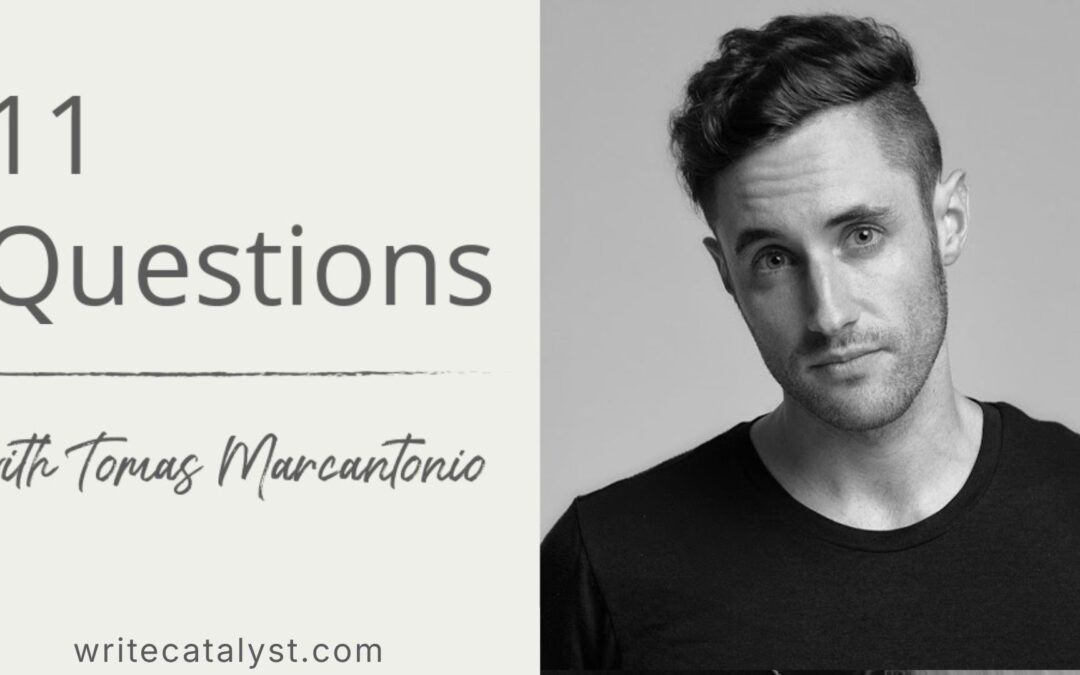
Today we talk to Tomas Marcantonio, who won third place with his story, Feathers. He taught English in South Korea for most of the past decade, and is now settling in England to finish his dystopian noir series. Learn about his experience abroad and what drives his writing.
Meet Tomas Marcantonio, author of Feathers (3rd Place Winner)
Tomas Marcantonio is a writer from Brighton, England. He graduated from the University of Sussex with a BA in English Language and Film, and he spent most of his twenties teaching English while travelling and writing.
Tomas is the author of two travelogues, Gift of the Gap and How Not To Live Your Twenties, as well as the coming-of-age novel The Leap of Grebes. His dystopian trilogy Sonaya Nights is being published by Storgy Books, with first installment This Ragged, Wastrel Thing released on August 1st, 2020.
Tomas is also the author of numerous short stories, many of which have appeared in literary journals and speculative fiction magazines online and in print. He has placed in several short story and flash fiction competitions, and was the winner of the‘Just Back’ travel writing competition in The Telegraph in 2017. In 2020, Tomas was also nominated for the Pushcart Prize and Best of the Net.
When not scribbling about future worlds or his two beloved seaside cities, Brighton and Busan, Tomas is often writing obscure articles about Korean football. Otherwise, he is most likely getting lost in neon-lit backstreets somewhere, searching for new brands of makgeolli.
1. Tell us a little bit about yourself. Where are you from? Where are you now? What has your life been like?
I’m from Brighton on the south coast of the UK, but I spent most of the past ten years in South Korea, where in addition to writing I was teaching English. I recently moved back to Brighton to be closer to family and friends. It’s great being back, but I do miss the thrill of being abroad. I did a lot of travelling in my twenties, but now that I’m in my mid-thirties I’m trying my best to settle!
2. What kind of stories do you like to write?
I love exploring alternate worlds, especially dystopian or futuristic societies. I also frequently write about anxiety, and coming of age through travel. I rarely write about mundane life – I love travel and adventure and diverse peoples and places.
3. What sets you apart from other writers in your space?
I suppose my dream as a writer is to combine genre writing with literary fiction. As a reader I adore both, but I haven’t come across too many writers who write genre fiction with the poetic prose I enjoy. That’s the little corner I aim for.
4. What drives your writing? What do you mean to accomplish with your stories?
I recently wrote a Writer’s Manifesto as part of my Creative Writing Master’s degree – I called it the Soul Tattooist’s Manifesto. The idea is to ‘tattoo’ your soul into history, to make a permanent record of your thoughts, fears, feelings, and inspirations. I love the idea of trying to capture your true self in your writing, and the possibility that future generations will be able to read it and have an insight into your identity.
5. Who are you favorite writers and books? What are your other creative influences?
It’s hard to narrow this down to a few! I adore the writing of James Lee Burke, one of the few crime writers I’ve read whose beautiful descriptions of places and people can take my breath away. In terms of prose I’m hugely inspired by the writing styles of the likes of Laurie Lee, Virginia Woolf, and Annie Proulx, but I also love the big ideas and imagination of fantasy and speculative fiction novels. Haruki Murakami is my go-to writer if I’m in need of a definite pleaser.
6. Tell us about your writing space. When and where do you write? Do you work in silence? Or music?
I tend to write better in cafés, so a little background music is welcome. In Korea my ideal writing routine was to get up early and head to a quiet café with sea views and spend the whole morning there. I haven’t found my perfect writing café since moving back to Brighton, so I’m still searching!
7. What is your favorite thing to do when you are not writing?
Apart from curling up with a good book, my favourite hobby these days is beach volleyball. There’s nothing better than jumping around in the sand on a sunny day – especially if there’s a cold pale ale waiting afterwards.
8. Who is your current artistic muse?
My biggest artistic muse of the past decade has been Busan, my favourite city in Korea. Sandy beaches, sprawling mountains, labyrinths of neon-lit backstreets, and don’t get me started on the food. A huge city bursting with personality, and inspiration in every little nook.
9. Why do you think it’s important to write fiction?
I want to avoid trying to give a deep, profound answer here, so I’ll just answer this from my personal point of view as a writer – it’s a release, a calling, a joy.
10. Who would be the best writer, alive or dead, to tell the story of your life?
I’d love to read a Murakami novel of my life – he’d be able to side-step the boring parts by having me stumble upon a parallel world.
11. What are you working on right now?
I’m tidying up Book 3 of my dystopian noir trilogy, Sonaya Nights, from Storgy Books. I’m also working on a fantasy novel, which is something I’ve always wanted to do. I love world building and letting my imagination run riot, so it’s been a joy so far.
*****
Thanks to Tomas Marcantonio for letting us into his world.
Last month, we announced our Writers Mastermind Short Story Contest winners. In this series, I interview each of them to discover the soul behind their story.
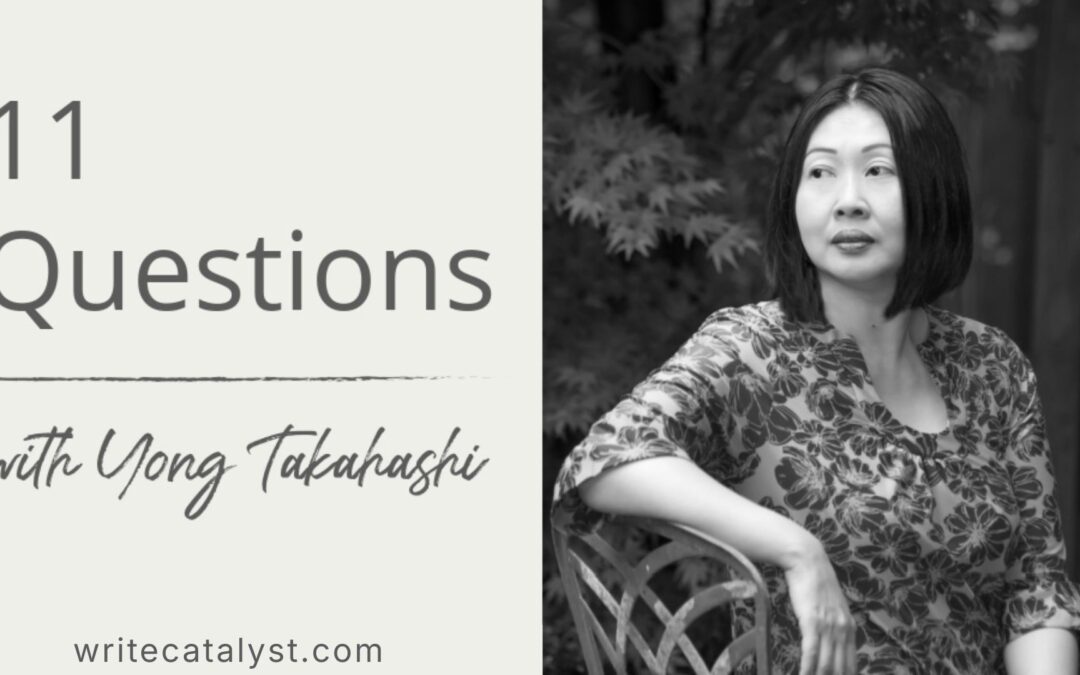
Today we talk to Yong Takahashi, author of The Elements. You’ll learn about her struggles as a Korean immigrant and how she writes all her drafts in longhand on pink legal pads.
Meet Yong Takahashi – The Elements (FINALIST)
Yong Takahashi is the author of Observations Through Yellow Glasses: A Memoir Through Poems, Rising, Sometimes We Fall, and The Escape to Candyland. She was a finalist in The Restless Books Prize for New Immigrant Writing, Southern Fried Karma Novel Contest, Gemini Magazine Short Story Contest, The Writers’ Mastermind Short Story Contest, and The Sexton Prize for Poetry.
Yong’s YA novel, Camp Detroit, will be published in 2023. To learn more about Yong, visit: linktr.ee/yongtakahashi
OBSERVATIONS THROUGH YELLOW GLASSES
Yong Takahashi moved to The United States with her parents when she was three years old. She grew up in a traditional household where her Korean and American worlds pulled her in opposite directions. Shortlisted for The Sexton Prize for Poetry, OBSERVATIONS THROUGH YELLOW GLASSES invites you to follow her journey as she learns life’s bitter lessons, longs for love, and attempts to heal the wounds she collects along the way.
1. Tell us a little bit about yourself. Where are you from? Where are you now? What has your life been like?
I was born in Seoul, South Korea and grew up in Detroit, Michigan. Currently, I live in Atlanta, Georgia. I was the only Asian student in a newly desegregated school. The white students lived on one side of the highway and the black students lived on the other. I remember the landlord telling my parents we could choose which side because we were yellow. Trying to fit in was difficult and a lot of the pain in my writing comes from surviving childhood. Some of my experiences are in my memoir, Observations Through Yellow Glasses: A Memoir Through Poems.
2. What kind of stories do you like to write? I write poetry, songs, short stories, and novels.
I tend to lean towards darker storytelling. Many of my protagonists don’t have happy endings or struggle to find them. I find this is more realistic as life is not wrapped up in a bow.
3. What sets you apart from other writers in your space?
I blend my Korean and American experiences into my work. It tends to be a tightrope walk between the two cultures.
4. What drives your writing? What do you mean to accomplish with your stories?
I want the reader to see a perspective other than their own. I want them to say: Could that really happen? Well, maybe it could. Let me read it again.
5. Who are you favorite writers and books? What are your other creative influences?
My favorite book is The Metamorphosis by Franz Kafka. It is the only book I’ve read more than twice. The Inspector Gamache books by Louise Penny are the only ones I wait for each year. I don’t really read mystery but her words are just magical.
6. Tell us about your writing space. When and where do you write? Do you work in silence? Or music?
I usually listen to music while I make my to do lists and drink coffee. Then, I start writing or editing. It needs to be completely silent for my editing or writing sessions. If I’m at a coffee shop, I wear noise cancellation headphones. Prior to the pandemic, I wrote at Starbucks for three to five hours a day. Then, I’d come home to type my notes. Now, I write in my backyard or in bed.
7. What is your favorite thing to do when you are not writing?
I binge watch all my recorded shows. I just finished the 23rd season of Law & Order: SVU. I’m on season eight of the original Law & Order.
8. Who is your current artistic muse?
I study songwriters. I also watch cover artists on YouTube before my writing sessions.
9. Why do you think it’s important to write fiction?
I think every form of writing is important: poetry, fiction, nonfiction. However, fiction allows me to create worlds I could never live in. It lets me insert myself into situations that would never happen in real life.
10. Who would be the best writer, alive or dead, to tell the story of your life?
I absolutely love Louise Penny’s way of drawing the reader into her stories. It would be an honor if she’d write about me or just join me for coffee.
11. What are you working on right now?
I’m editing a YA novel. I hope to complete it next month. It will be published in 2023.
Add these contest deadlines to your calendar and get your stories ready! This article also provides tips on how to submit and increase your chances of winning.
You live to write and have numerous short stories to prove it. Best of all, people other than your mother love and praise them! But because your name doesn’t happen to be Danielle Steel, no publisher is currently knocking down your front door to rip manuscripts from your printer before the pages even cool. So what is an aspiring writer to do? Apply to a writing contest, perhaps?
If you were a singer, you could try out for American Idol; if a dancer, you could apply to So You Think You Can Dance. But let’s face it, a television show where you typed at your keyboard is not must-see TV.
Even so, there are numerous (non-televised) writing contests where you can display your skills and improve your writing. Plus, if you win, you might receive some well-deserved critical acclaim—not to mention a cash award and potential future writing contracts.
In this article, you will learn:
How to enter a writing contest and increase your chances of placing or even winning
Which contests are reputable
Which contests are currently accepting submissions
After reading amazing fiction, I always ask, who writes like this? What drives them? Where do they get their ideas?
Last month, we announced our Writers Mastermind Short Story Contest winners. In this series, I interview each of them to discover the soul behind the story.
Sam is a writer from North-West Leicestershire, in countryside man-made and wild. He is fascinated with the mundane fantastic of the day-to-day, and writes about these in the breathing spaces of his life. He was first published with his story ‘Undertow’ in 13Dark, and after a writing break now has short stories upcoming in Metaphorosis, Pridebook Café, & SpaceCat press’s ‘Aliens and Otherness’ anthology.
He barely goes on social media and has no website, but you can always receive a warm welcome from him by reaching out at samjamesparr at gmail dot com.
1. Tell us a little bit about yourself. Where are you from? Where are you now? What has your life been like?
I’m Sam, and I’m from Leicestershire, UK. I grew up in a world cross-hatched between nature and industry; think pockets of rigorously planned forest squeezed between motorways, warehouses, and industrial estates. I spent my childhood exploring these spaces alongside hundreds of fantasy worlds in fiction and haven’t stopped as an adult. I wrote my first story ten years ago and have been writing on and off since then (though never as much as I’d like)!
My life has been great overall. Not without a few challenges like all of us, but they’ve been so worth it for everything I have experienced.
2. What kind of stories do you like to write?
I absolutely adore reading fantasy, and I can’t help writing mostly fantasy too. In the last six years I have written one story without an overt fantastical element. Why? I don’t really know, but I do know I’m interested in fiction that evokes a sense of otherness in time and place, grounded by relatable characters. So, I try to evoke this in my stories.
3. What sets you apart from other writers in your space?
To be honest, I’m still figuring this out. I’m still trying to find my ‘voice.’ That said, my friends feedback that I often build unique, interesting fantasy worlds. My partner also tells me I have a recurring ‘Sam’ character in most of my fiction: a middle-aged man, usually a little overweight, isolated and uncertain. He has a subterranean anger decades in the building, but also feels things deeply, and can be exceptionally kind. Who is this man? Why does he keep popping into my fiction? I don’t know! But maybe he’s one of my unique selling points…
4. What drives your writing? What do you mean to accomplish with your stories?
I’m not sure I have an answer for this! I’m driven to write perhaps to give back something to the rich world of fantasy and fiction I have drank from all my life. And to get the colours out of my head, for at least a while. But honestly (like many of us I suspect), I don’t know. I just know that, if I haven’t written for a couple of months, I start getting the urge to create again.
I’m a careers advisor as a day job, and with that head on, I wonder if part of the reason a lot of us write is because the role becomes embedded in our imaginations from a young age. Writing as an occupation is very visible to us even as toddlers (who isn’t read stories as children?). When you’re seven, you also find it far easier to imagine what a writer’s life is like compared to, say, an accountant’s. It’s also far more appealing, especially as, when we’re children, creativity often comes so easily to us (was it Ursula Le Guin who said the ‘the artist is the child who survived?’).
So, perhaps what drives my writing deep down is that childhood identification with this fascinating occupation.
I don’t have any specific defined goals for what I hope to accomplish in my writing, but I always want to build cool worlds, and ultimately entertain the reader and myself. I also want to create characters that are complex, mysterious, and emotive.
5. Who are your favorite writers and books? What are your other creative influences?
Ah Christa, so many good ones! Recently my top three favourites from the past year’s reading would be Piranesi by Susanna Clarke, Annihilation by Jeff Vandermeer, and the Wolf Hall trilogy by Hilary Mantel. They all have a majestic sense of time and place, grounded through a unique character. Each work is something you feel could only be the product of a playful, deeply introspective imagination, paired with some major writing skill.
In terms of wider influences, I am fed by everything: TV, video games, art, history. However, I particularly find myself influenced by locations. For example, I have always been a little captivated by the idea of transitory spaces like service stations, or the middle of a road. Something about their nature appeals to me; they are nondescript, unremarkable, powerfully mundane, and uniquely of this modern moment (I find them quite relatable). The feelings they evoked in me is what I channeled while writing The Knowable Failures.
6. Tell us about your writing space. When and where do you write? Do you work in silence? Or music?
I’m a sucker for a nice café. I particularly like big cafes, where I can feel anonymous, a little like ShorelessSea in the story.
Apart from that, my most popular writing spot is likely at my desk in our spare room. It overlooks our garden, and a host of magnificent birds.
I sometimes write with classical music, but anything with words distracts me too much!
7. What is your favorite thing to do when you are not writing?
I love lots of activities, but I think the crown would have to go to a pleasure that is wonderfully simple: reading/watching something cool, while eating good food. It’s a simple pleasure, but we all have access to it every day, and that’s awesome.
8. Who is your current artistic muse?
I don’t really have a ‘muse’ in the general sense. But right now I’m enjoying reading various texts on history and mythology, particularly from religious traditions like Buddhism. The worlds they reveal are so grand, rich with meaning and image, in a way that feels fresh and exciting to me.
9. Why do you think it’s important to write fiction?
To go back to Ursula Le Guin, in her essays she writes about how the purpose of art should fundamentally be to ‘entertain and delight you’. I think there’s a lot more reasons that fiction is important, but this one is enough for me. I am entertained and delighted by writing (though that’s not to say I find it easy) and I hope my readers can be too.
10. Who would be the best writer, alive or dead, to tell the story of your life?
Hmmm. I think I’ll nominate my good friend and writer Joseph Sale. He’s a stunning writer of fantasy, horror, and epic poetry, and I enjoy the idea of him turning my life into an epic tale in 33 cantos.
11. What are you working on right now?
I’m currently editing the only non-fantasy story I have written for six years; a short story about grief and pigeons. Alongside that, I’m also slowly working my way through a high fantasy novella set in a world loosely inspired by feudal Japan, where a warrior’s reputation gives them literal magic powers. Progress is slow as my mental/physical health hasn’t been as tip-top as normal over the past few months, but the world is starting to take weight now. It’s the longest thing I’ve written (if I finish it) and I’m excited to see where it goes.
*****
Thanks to Samuel Parr for letting us into his world. Look forward to interviews with other winners in the coming weeks.
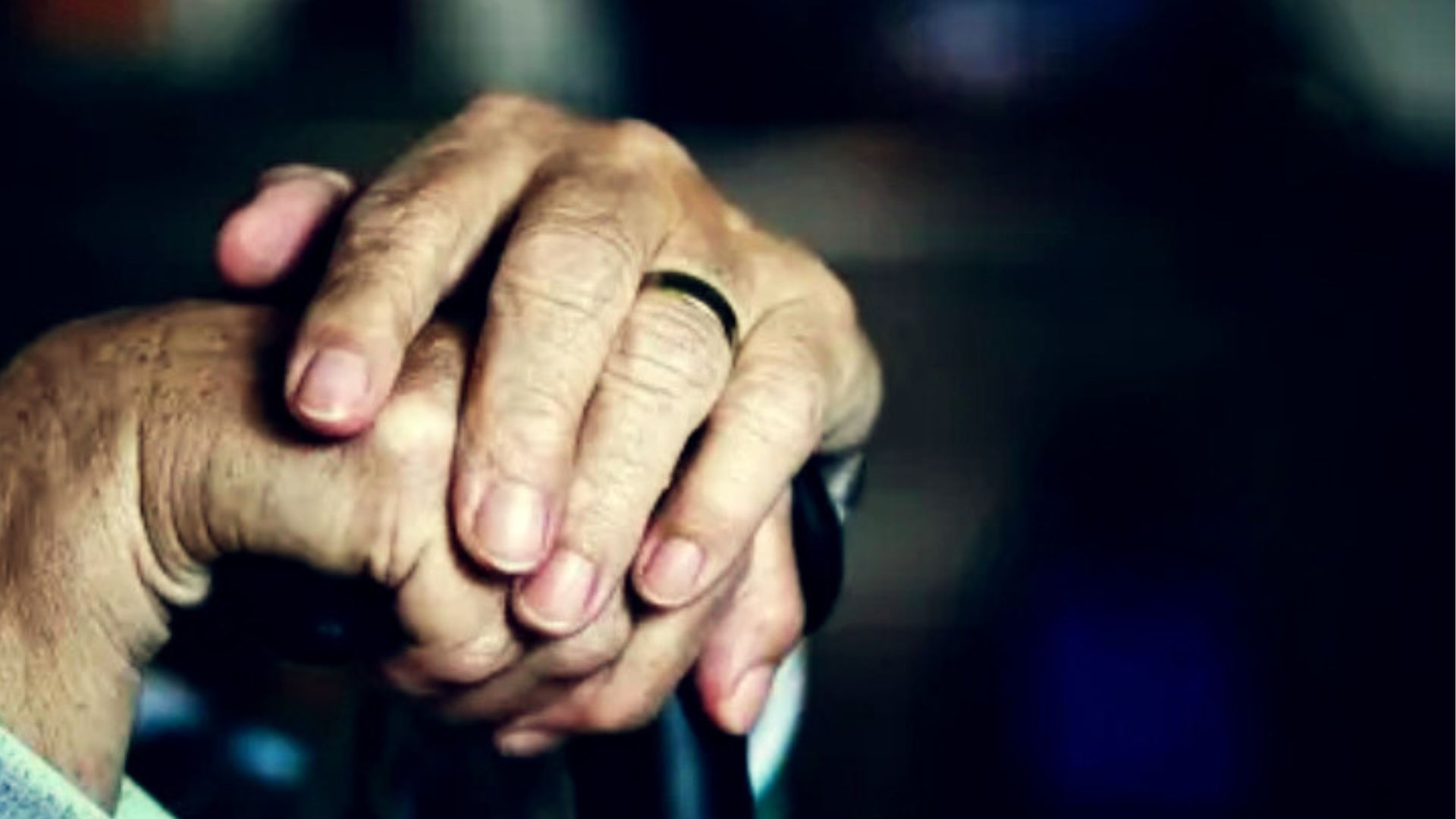
Barbara Weitzner is the grand prize winner of the Writers Mastermind 2021/2022 Short Story Contest with Away from the World and All the Horrific Things That Happen In It. Poignant and heartfelt, it explores the reflections of a remorseful man as he lives out the rest of his days in a nursing home during COVID. Barbara Weitzner has written and published various short stories and novels and placed third in the 2015 Writers’ Digest Short Story Contest. She tells us when and how writing took over her life.
*****
Why We Write
By Barbara Weitzner
The reason I started to write was because I had retired from working. After the first few months of hanging around the house, a funny thing happened on the way to the kitchen for a snack. I changed direction and sat down at my computer and began to write a short story.
At first, my husband was thrilled. I was spending less time at the mall snatching up have-to-have bargains.
Sequestered in the den, smart phone turned off, I began to type my story.
In every story is the soul of the person who wrote it. I let the spell of each character, their words and thoughts take over until my characters seemed as real as family.
Soon, my characters were wearing me down. I did everything to raise them right, and as soon as they hit the page, they did anything they damned please.
Before I began to write my story, I was unable to button my jeans. With each hour spent mulling and deleting they began to hang pleasantly loose. While friends mulled over good restaurants and hairdressers, I worried about my protagonist’s unsavory personalities. Would my readers hate them, pity them, identify with them? Wish them well or hell? Would I have any readers?
Family noticed my less than perfect manicure, my rounded shoulders, the slight squint I’d developed in my eyes, a growing tendency for my mind to wander away from conversations.
My husband warned me my lack of returning e-mail and telephone messages was beginning to alienate a lot of folks. “And forget about sex, I’ll settle for a good home-cooked meal. You never have time to cook. Shut down the computer and read the directions on the oven,” he grumbled.
Hubby peered over my shoulder to read a sexy paragraph. He cleared his throat. He squinted. I noticed his eyes watering, was he reading lines too shocking to be kept in focus? He began to show the first signs of his age.
My canasta partners got annoyed when I lay my cards in my lap to jot down an idea. Friends got annoyed when their phone calls went unanswered. Hubby got annoyed when I’d jump out of bed to rewrite a paragraph. I stuck to my guns with the sangfroid of John Grisham, and when I completed my story, I e-mailed my submission to Writer’s Digest Short Story Competition. (November/December 2015) and waited months for an e-mail from the Writer’s Digest Editors my nails chewed down to my cuticles. (This is not an exercise for the faint-hearted). I wanted to be published before I dropped dead of anxiety or old age. I made promises to myself; if I only win a mention I’ll give money to charity, I’ll donate blood, help at our local soup kitchen. I’d give up ice cream. Give up chocolate.
Recently, my husband, my best friend, the love of my life, has passed away. I am still grieving.
My books, THE MOST GLORIOUS THING EVER, THE BOUGAINVILLEA CLUB, and THE PARRADINE ALLURE were published by Solstice Horizons (I do not have those editions I’d given them all to family). My short story, AN AMERICAN CHRISTMAS received honorable mention in the 2006 LA BELLE LETTRES short story contest. My article, IT’S NEVER TOO LATE, appeared in the September 2014 issue of SOUTHERN WRITING. My short story, FIRST LOVE was accepted for the 2014 fall issue of GEMINI MAGAZINE 2015. My short story HARRIETT S FATHER was accepted for TELL US A STORY December 2016 quarterly issue. I received an e-mail on 10/19/15 from The WRITER’S DIGEST Editors. My story won third place! And I am proud to have won first place in WRITERS MASTERMIND, for AWAY FROM THE WORLD AND THE HORRENDOUS THINGS THAT HAPPEN IN IT.
Away From the World and the Horrific Things That Happen In It
by Barb Weitzner
As time and life passes, my fellow neighbors and I, most of us well into our eighties, gather every morning to claim our familiar positions at a table under an umbrella on the veranda, at The Bowers, an upscale assisted-living facility, our lives lived in slow motion, killing time, in similar, desperate ways. Despite my having done everything in my power to avoid being here, I have joined the resident’s here, and have been forced to join a smaller world in the long autumn of dying lives, and as I expected, away from the world and the horrific things that happen in it.
I think growing old is hard work, with long hours and whatever is left of my dignity.
Our children, too caught up with their own obligations and who are not able to bear the responsibility have placed most of us in this retirement home—our lives now bound within these gates where everything is unfamiliar. And though it has been painful for our families, they believe we have accepted the necessary adjustment with this new version of our former selves.
Although there are others who treat their new accommodations as one long vacation, the truth is, I can hardly ever remember being so idle, and except for its relatively unchanging nature since the outbreak of the corona virus, which has caused he cancellation of all group activities, our meals have become the focus which all our lives revolved.
I thank the Lord that there have been no deaths here in The Banyan Bowers although there have been rumors circulating that this information is not true. My world has become small and gated off. I seesaw between resignation and the depression of outliving my son Tim, and my wife, Anna, seeking ways to re-orient myself to living in this cocoon. Now it is only through newspapers and TV that I learn anything about the outside world, and the horrors of the Coronavirus pandemic, which has brought about a frantic outburst of mask wearing and separation and bleaching and scrubbing everything in our facility.
Our members respect the rules and policies of this institution and for the remainder of this life we share together we all try to get along with each other. We pass our afternoons with long-winded monologues in our efforts to prove to ourselves and each other that our brains are more reliable than our disintegrating bodies, we listen with respect to each other’s opinions and often enjoy disagreeing until we run out of things to say. Our bitter mouths and tired eyes unfold stories from our finite store of memories. We recount with wheezy voices what each has made of his life, our stories of windfalls earned and lost, the women we have loved and lost, our children and pets we’ve adored, the places we’ve visited. We tell each other things we would hardly ever tell our families, although I have learned that living amongst other people you learn what not to say. No one mentions business failures, or having been swindled, underpaid, tyrannized or fired.
Truth or fiction and taken with a grain of salt.
On weekends, friends and relatives who were not allowed to visit us, are slowly being allowed onto the premises. Families assure us they are well, taking precautions, avoiding crowds and wearing their face masks when in crowded situations. They carefully steer their conversations in a fund of innocuous information, avoiding anything they think may upset us.”The Ryan’s, Wilson’s send their love. Have you enough books/magazines/toiletries?” they ask, as they say their goodbyes.
Dave Frank maneuvers his wheelchair into a vacant spot at our table. We bob our heads by way of greeting and rearrange our chairs to accommodate him. Dave smells strongly of aftershave. Something lemony that makes me want to sneeze. Dave is the de facto mayor of The Bowers. He knows everyone and everything that is going on—Fred said this, Richie did that.
Dave’s eyes crinkle. “Did you fellows notice the sprightly lady friend that Bob Harris escorted into the dining room at lunch?” Bob Harris is one of the more ambulatory residents undaunted by his age or infirmities with a full head of white hair that many of us envy.
This earns no comment. “A really nice-looking lady,” Dave continues, wiggles his bushy eyebrows. “One of the few who still try to make themselves attractive and wouldn’t be caught dead wearing those awful muumuus we see around the lobby—those awful muumuus,”(repetition being Dave’s habit). He offers an opinion, speaks it aloud, and later has it again. He is incurably critical, his statements, fierce and unbending and which I often disagree with. If something is funny, he laughs louder than most. I do not really like him much and I do not want to hear what he does and doesn’t like. Yet I have never shared that with him. Shakes of the head all around, a few seconds pass while we think this through together. Each of us waits for the other to speak.
Sam McKay, who has the room across the hall from me, an old gent with plastic clips that are attached from his nostrils to a portable oxygen tank, twists his lips and gives a shrug as if he had never given women’s muumuus a thought. Larry Lowson sits quietly squeezing a tennis ball, wisely choosing to keep whatever he thought, to himself. Larry never says much, but Larry never says much about anything. He mostly listens to what others have to say.
I have nothing to say either. Nothing works just fine. No point arguing this one. Discussing the issue will only dignify it. I am not comfortable making fun of the women who are abandoned here. Not that I have stopped noticing pretty women. I can honestly and shamefully admit my devotion to Anna’s memory does not prohibit an occasional flirtation with a perky staff member or one of the nicer looking retirees. When does desire ever stop? When does a man grow out of it? Not that I am looking to get involved, but there is still something about a woman’s curves that makes a tired old man look; (fantasy far outpaces reality). And though I joke with women, I am never inappropriate.
Yet Dave’s pronouncement evokes a tiny constriction in my chest. For none of these women can provide the patience and love my Anna gave me through the best and the worst of times before she had succumbed to cancer, her heart heavy with the knowledge she had been unable to hold her family together. I have listened to more than a few checkered histories about spiteful ex-wives, huge divorce settlements. I have never doubted that I would have been lost without Anna, and now regret my youthful tomcatting, my reckless pursuit of passion to which I was not entitled.
We had met at a wedding; Anna a friend of the bride, me, a frat brother of the groom. No sparks flew between us. Ours was not a love that burgeoned with breathless passion but had grown neat and reassuring out of being fixed to the same backgrounds and the belief that we could make each other happy.
My eyes mist when I recall on our wedding day, Anna smiling at me when her father led her down the aisle of the church, how the pastor struggled to remember our names and interrupted the ceremony with a coughing spell. How I had ticked off our expenses to see if we could afford to buy the split ranch house, the rainy morning we had taken title of our new home and moved in that same afternoon. And about the way we had lived with mostly unfurnished rooms until my insurance business grew. The happy day we brought our twin sons, Tom and Tim home from the hospital, all those memories…
The truth was, after our sons were born our sex life sputtered. Knock-my-socks-off sex became higher on my list of desires than home-made brownies or having my boxers ironed, and while Anna was busy with mothering, I had traded creature comfort for passion—for women who did not roll to their side and fall asleep complaining of being tired to avoid having sex—women who were warm and exciting. Some of them I choose to forget. Most of them I cannot.
Tom was in bed with the flu, and I had taken Tim to see the Yankees Red Sox game. Returning to our car, I had met a neighbor in the parking lot and stopped to chat with him. I had let go of Tim’s hand and Tim had run ahead to where our car was parked when he was killed by a driver backing out of a parking spot.
I can still hear Anna’s pitiful scream, her face infused with outrage and grief as we had listened to the deep, apologetic voice of the emergency room surgeon telling us our son was dead.
You want the best for your children and that does not always happen.
Our son Timmy died. And I am the only one to blame.
I had tried to console Anna, but sometimes you cannot fix some things, and cannot make them better.
Anna retreated into a pervasive gloom and lassitude.
My son Tommy unable to forgive me, kept to his room, sat at the dinner table across from me each night, unwavering in his certainty that his brother’s death was my fault. In his eyes an aggressive and unfamiliar contempt I had to bear. When Timmy died, the carefree innocence in Tommy died too. Tom had learned that life was finite, he became an eight-year- old expert on sorrow, bearing the pain of his brother’s death, scowling and banging his bedroom door in demonstrations of anger. His childhood innocence abandoned and left with a sense of the loss of his twin brother that grew in weight day by day.
I should have persisted. I should have begged his forgiveness, but there was only guilt, a guilt that became a friction in our house.
But what could I say that was honest and true? What apology could erase something that was already done? There were no words adequate to express my sorrow. I had tried every possible suggestion from Anna that might calm Tom and convince him- if not of my love for his brother, but the fact that I too, wished with all my heart that I had held on to Tim’s hand.
Could Tom not recognize my grief, my remorse? How every day of my life was filled with the adrenaline of rage with the resentment and anger at the driver who had backed into Tim, and with myself for placing my son in danger.
That vivid, terrible moment will always be with me. And my struggle to adjust to a world without Tim. I envied the tranquil consistency in the lives of my friends, shrank from their awkward attempts at consolation, their sympathy, unbearable.
Why did Tim die while I am still alive?
A wave of sorrow rises in me and threatens to break. I push it down. What is the use of piling up all the things I should or should not have done? But how can I not feel what I do feel?
Anna never mentioned all my mystical nights out spent at ‘business meetings,’ with the clients of my small insurance business. The fictions I created doubled, tripled. I know that it took no stretch of the imagination for her to get the picture. She wanted me to believe she did not know. But she knew when I came creeping into bed at two AM, she feigned sleep in order to avoid a confrontation. She knew when I awoke puffy-eyed and exhausted from tomcatting around. She knew. She had spent her life loving me, raising our family, trying to make our lives easier and better and I had cheated on her. Her posture changed whenever I entered the room, her silence meant she knew, her cheery smile meant she was hurt—never to release the question that was stuck in her throat, the why question she had never asked me. Guilt became my silent companion. I had not been a husband to her for a long time. We lived together politely.
How had I not attended to Anna’s sense of betrayal, the awful heartache I had caused her after our son’s death, I had thought cheating only involved myself. I wish I had been faithful. I wish I had made better decisions. I wish that the attention and money I had spent doting on those unimportant women had been spent with Anna. I wish I had taken her on the Caribbean cruise she’d day-dreamed about. I cannot remember the last time we had laughed together. I still feel a sting of shame, but I know it is much too late to wish any of these things, and rue the many mistakes that I have made:
And then there followed the nights that passed full of waiting and false hope while Anna lay sick and dying when I had felt the ability to better love my wife, yet unable to give her pleasure, just faith and kindness, her knitting needles and half-finished sweater she had been making for our son Tom waited in a basket by her bedside. Anna had once been a stocky, full-breasted woman and was now skin and bones. I had massaged her legs and back to try and ease the spasms she complained about, slept with my arms around her. Conversation came in fits and starts when she felt up to it, the painkillers making her words slow and heavy. Toward the end she seemed to forget that Tim was dead and called for both her sons.
“Are you in pain?”
“Not too much. The medication helps.”
“I know.” She looked at me as if we were still the same two people; the same newly married couple, as if nothing stood between our present and our past.
When I woke up one morning Anna was gone and, in my struggle to adjust to a world without her, I envied the tranquil consistency in the lives of my friends, shrank from their awkward attempts at consolation, their sympathy, unbearable. I try not to think too much about Anna as it only exacerbates my already broken heart; try to concentrate on the changeable things of today and tomorrow and not the unbearable yesterdays.
I wonder about the family who live in our home now. Have they taken down the basketball hoop in the driveway, fixed the hinge in the cellar door? Do they get along with our cranky next door neighbor Mrs. Smyth?
As late afternoon sun takes over the veranda and touches everything—I inch my chair into the remaining shade, enjoy the occasional gust of cool air that blows under the umbrella. Several old gents whose names I cannot retrieve, stroll past our table. I tick my chin forward in a friendly nod. In my head I skim through the alphabet. Al, Andy, Arthur … Sometimes this helps. But not now. I abandon the effort.
I turn my attention back to the conversation going on around me.
My neighbor, Sam McKay, is telling the group about a TV movie he watched last night. His voice is barely audible. Any little exertion leaves him gasping for breath. I lean in to hear him.
George Shell, a crusty old gentleman who finds fault with everyone and everything, struggles to stand. His knees give out an audible crack. Placing one foot in front of another, he launches himself out of the chair, takes slow, measured steps and leaves our circle to use the john.
Dave Frank, his eyes behind his glasses ringed in dark circles, stretches down to rub the scar on his calf, a memento from his service in Korea. Dave suffers from nightmare’s and it is his own screams that often wake him. Dave rarely talks about his war experiences but when he does there is a tremolo in his voice.
Jessie, our favorite attendant, approaches our group, rolling a cart that clatters and complains as it made its way to us. Our wrinkled faces blossom into smiles. I cannot help but admire Jessie’s ample breasts. (I am still trying to outgrow that kind of thing).
Accustomed to this daily ritual, we examine the bounty on the cookie platter and wait for Jessie to dole out our drinks from a pitcher of fresh lemonade, served to us as if it were a magic elixir to resuscitate us from our failing hearts or fatal illnesses. We pull our masks down. Our knobby fingers grasp the paper cups.
Jessie leaves us and for a while there is quiet except for the slurping and munching.
“Or am I getting the plot mixed up?” Sam has asked continuing his narrative, his breath whistling in his chest. “Lately I get things mixed up.” Sam speaks very slowly. Sometimes I fear the afternoon will pass before he finishes a sentence.
“Nope, you’re absolutely right.” Larry, who has also watched the movie Sam is critiquing, assures him.
I nod, as if to agree with him so he will not resent my inattention. At some point, I nod off, my head drooping against my chest.
The patio door bangs shut and awakens me. I open my eyes and see Joe Burns cross the patio. Joe’s stride is less vigorous than usual. He usually moves quickly for a man of his age. He is usually all smiles and jokes. He brings vitality and good cheer to this place and is never moody or mean-spirited. Joe pulls out George Shell’s vacant chair, lowers himself into the seat and sighs. His sigh is full of despair.
He lifts his glasses to dab at his milky eyes with a sodden tissue, “Hello all. Sorry to be the bearer of bad news.” He looks at Sam, Dave, Larry, and me, his voice, a quiet monotone. “Eddie Riggs passed away this morning. Let us hope he’s gone to a kinder place.”
His news seems to suck the energy out of us. Except for the uneasy creak of someone’s chair, the click/hiss of Sam’s oxygen tank, there’s silence. Our hearts tighten with sorrow.
Larry Lowson, his hands trembling, says “Jeez! What a shame! How did it happen?”
Joe Burns slumps deeper in his seat, shakes his head.
“I don’t know,” Joe gives a windy sigh.
Larry Lowson leans forward to take a sip from his cup. A little dribble runs down the front of his polo shirt. The rest of us pretend not to see it. “Ed was a good man,” he murmurs.
Dave Frank nods in rare agreement.
Larry Lowson begins to mumble something what I think is a prayer.
Joe Burn’s words move through me like a sliver of ice. My hands sit in my lap like stones. I pull a tissue from my pocket and wipe a tear away. I do not want to believe this news although I know that here at The Bowers, all attachments are purely temporary— folks coming into our lives and leaving just as suddenly. Yet I am not prepared for Ed Riggs death. I feel anger tighten my chest. I ask myself, why Ed? Ed had been a good pal of mine, one of the younger residents. What was he—seventy-four—five? He had been the kind of man everyone liked, always a vivid presence with a loud, infectious laugh and a great sense of humor and always talking about the beneficial aspects of even the worst situation. He had become a reason for me staying on this earth. We would sit in his room, and he would play the vinyl records he had collected by the performers of our youth, Nat King Cole, Tony Bennett, Rosemary Clooney, Frank Sinatra and Anna’s favorite, Johnny Mathis. Ed had saved the albums because he considered them more meaningful than anything recorded today, and for a few hours we would immerse ourselves in the past.
I feel a burst of anger, partially directed to God, partly with myself, my thoughts stumbling over one another. I regret why I had not questioned, not seeing Ed in the dining room at lunch. I should have gone to his room to check on him. This realization comes too late. I wish I had. If only I had. Maybe… My soul hangs heavy with the thought. And now Ed is gone… Just like that.
“You okay? You don’t look so good,” Joe says.
“Yeah, I’m okay.” I say…
Conversation is now exhausted. We fall into a moody silence. We hear the opening notes of “Danse Macabre” coming from Dave Frank’s cell phone. He turns his chair away for privacy. I do not have a cell phone. The few calls I get or need to make are from the landline in my room.
The sun has been going down. It has grown windy on the patio. I drink the rest of my juice and place the cup on the table. I hear the creaking of bones as one by one each of us leaves the patio to change and wash up for dinner. Using my cane (the physical therapy has not helped my lower lumbar pain), I make my way back into the building. I enter the freeze of the air-conditioned lobby, the carpeted hallway which always smells of Lysol and a hint of lemon and pass the lecture room, waiting to be useful again. Getting to my room takes a lot of energy, like everything else I do these days. I pass the potted palms. Stephanie who works the reception desk looks up and waves to me. The staff is taught to be friendly and helpful.
The lobby is filled with members lounging in chairs, some bellowing into cell phones despite an ordinance requesting members keep a six- foot distance. I nod at them without speaking and clop my way along the hall. Step Shuffle Step. I pass a handyman carrying a sanitizer spray and stop to scan the bulletin boards daily exhortations, to walk slowly and use the handrail, keep our TV’s low after eight o’ clock, keep our doors unlocked while in the rooms. There is a notice announcing the movie scheduled for Saturday night, a re-run of Chicago. The usual daily dinner menu is posted. On the bottom is a small index card notifying the residents of the passing of Edward Phillip Riggs.
I reach my room out of breath, my hands shaking so badly I have trouble fitting the key in the lock. I open the door and shamble into the small sparsely furnished room I have been assigned, hear the door snick closed behind me. I wonder what Anna would have thought of this place I am now confined to, surrounded in my too chilly room by the few photos and mementos I have held onto from my past: a photo album, The American Family Reference Dictionary, Anna’s gold wedding ring. I am not against material pleasures but there is no space for them in this room.
I prop my cane against the chair beside the window, sit down on the edge of my narrow mattress lean forward, kick off my Bas Weejuns, strip off my socks and flex the stiffness out of my toes. I get up and go into the bathroom, take off my glasses and wash my hands and face. I am caught up at the sight of my reflection, the deep lines etched on my skin, the white stubble on my cheeks and chin where I have begun to grow a beard. I dry myself with a fresh towel that smells of clothes softener. I hang the wet towel on the rack, stuff my shirt and shorts in a laundry basket and take a clean T-shirt and boxers from the chest of drawers. I stoop to remove from the bottom drawer the navy cardigan Anna had knitted for me, and pull it on, pick up Tom Clancy’s The Hunt for Red October. The plot is exciting and takes all my concentration and for a while I manage to forget why I am in this room. I read a few chapters before my eyes begin to blur and place the book back on the top of my night table.
The image of Ed’s genial face lingers in my mind: Rest in peace Eddie. I will find you soon.
I feel so horrifically alone.
The silence does not bother me; the emptiness does…
I feel an overwhelming desire to reach out to my son Tommy. It has been three months since I last heard from him and almost one year three since I have hugged my grandchildren. I dial Tom’s number.
“Oh, hello, Dad, I’m just on my way out. Is anything the matter?”
“Does anything have to be the matter for a father to call his son?”
“Well, you sound … I don’t know, a bit down.”
I took a shaky breath. “I am, just lost my best friend, Eddie Riggs.”
“Ooh. That’s too bad.”
His words fall lightly and don’t provide the warmth I need. He doesn’t ask about the details, clearly, he hasn’t the time. I realize my son really doesn’t care about some old dead crony of his father. He cares only about whatever it is he is rushing to, one less interruption taking up his time.
“How’s Michele?” I ask
“Busy with the girls…”
I hear a soft exhalation that may be impatience, annoyance, or both.
“Well, stay safe and give them my love.”
“Will do…”
Each curt answer carries away a part of my heart. Seconds tick away. “Well, love you, Tommy. Be careful out there.”
“Bye, Dad.”
I hear a dial tone. He’s hung up. I am left with the receiver in my hand and nothing more to say.
From my bedroom window I see that the sky is darker now, bringing with it the movement of sullen clouds. Beyond the gated manicured lawn, the evening traffic is picking up. I watch the twinkling lights of the cars chasing each other on the parkway. I think again about Ed, begin to cry, beginning with a small sob, and ending up with a huge, body-shaking bellow.
A river of fatigue overruns my sorrow. I blow my nose, wipe away my tears and turn on the TV. The rising numbers of Covid-19 deaths world-wide continues to leave me stunned. Thank God several pharmaceutical companies have produced vaccines to fight this deadly virus. All of us here at the Bowers have been fully inoculated.
Living here at The Bowers costs a bundle. I am caught in a world less predictable and less controllable, an uncertain and unwelcoming future looming on my horizon if I outlive my savings. I have been lucky to so far, I have had pretty- good health, but who knows what can happen to me tomorrow. I picture myself sick and confined to a state hospital, my bare behind exposed in a backless gown.
It is what it is and there is not much I can do about it.
I call the front desk and ask for a dinner tray to be delivered to my room. I am in no mood to go to the dining room. I choose the pot roast with mashed potatoes. I ask for vanilla ice cream for dessert. Both are my favorites.
I hold on to this thought as if it is all I have left.