Last month, we enjoyed an insightful webinar with coach, podcaster, and author Christie Adams on Time Management for Writers. And in this post, I bring you a glimpse of the most valuable tips we learned from her.
At the Writers’ Mastermind Group, a new masterclass from experts and award-winning authors rolls out every month, bringing value and motivation to writers. So get ready to make the best of your time and energy as a writer.
A Writer’s Wellbeing
Although some of us have a primary job that helps us pay the bills, we consider writing our genuine work. We do all it takes to squeeze our writing into our busy schedule, even if it means writing late at night after finishing our house chores, helping our children with their studies, etc., or at dawn before the world wakes up.
However, we forget to nourish the most important part of this tapestry with all this hustle: ourselves, and we get lost among our responsibilities.
Firstly, we are so active with the many things we have to do that we take our physical and mental health for granted, expecting to be always resilient. But, if we don’t take care of ourselves and our precious minds, we can get burned out quickly and waste our creativity.
Secondly, our time is unproductive if we don’t organize our schedule by prioritizing our most urgent tasks. We must give our work a defined time because life is worth enjoying, and writing is a huge part of that.
Time Management Tips
Here are the 13 tips Christie Adams that we discussed in that mastermind session. I hope they will bring you the motivation to look after yourself as the creative jewel that you are and help you to manage your time more effectively.
Look after yourself. You guessed it. This is paramount since we are the main piece of this creative puzzle. Adopt healthy habits that will help you feel energized and strong enough to carry with your to-do list.
Don’t forget your fair amounts of veggies, proteins, fruits, and carbohydrates.
Exercise every day for a minimum of 20 minutes, or take short walks.
Listening to music while you take your daily showers will revitalize you.
Pay attention to your mental health as well, especially if you are passing through a difficult time. Instead of lamenting and questioning your luck, ask what this experience teaches you, what you need to see, and how you can solve this problem. When we shift our questions, we will see different perspectives of the same situation and choose the best solution.
Find the time when you can commit to writing. Perhaps you are a morning person, and you have no trouble waking up early when your mind is the most creative. Or you love writing at night with your coffee or a glass of wine while your muse visits you. Keep in mind that blogging, writing emails, and posting on social media are also writing work, so make space for these tasks in your schedule.
Prepare a schedule and stick to it. Organize each activity (like work, blogging, creative writing, household duties, family time, exercise) by giving each task a defined time. Start your day early and finish what’s most important first. Prioritizing tasks and being disciplined are paramount to productivity.
Set daily achievable goals. Choose three to four goals max so you can commit to them. Once you achieve your daily aims, you will feel empowered and motivated.
Close the door when you write. Set a “no disturb” time and let your friends and family know that. Don’t think of anything else other than writing when you enter this space of time. When others see how serious you are about your writing, they will respect it as well.
Create your personal writing space. Whether it is your study or a corner in your parlor or bedroom, prepare a particular environment that will inspire you every time you come to write.
Save the information you find which can help you with your writing. Write down any idea or tip you read or hear as a writing prompt. This will allow you to remember what to look for next time and the subjects you need to learn and consider.
Schedule time every week for studying and learning new writing skills or topics. Modern writers must know about marketing, networking, and personal branding. You can also learn by listening to podcasts and reading the latest literary articles that shed light on these subjects. It is never too late to learn new stuff.
Set boundaries for your sake! By organizing your time and setting a limited time for each activity, you avoid burning out. Otherwise, you will resent losing your creativity.
Don’t overwork. If you are a workaholic, set the alarm in your phone or a timer to take several breaks during your day. Give yourself time to stretch, exercise, go for a walk, or do some yoga. Even dancing can help you boost your metabolism, drop some stress, and strengthen your muscles, bones, and brain. It is also okay to give yourself a day off if you feel overwhelmed with work.
Celebrate every goal achieved. You deserve a reward after meeting a deadline. Mini presents to yourself are genuinely motivating, like a book you always wanted to buy, a new colorful notebook, a day out, favorite ice cream, etc. Enjoy because you deserve it!
Delegate some tasks and share responsibilities. The state of your mental and emotional health will allow you to write your best. Divide the house chores and other tasks between you and your partner or grown kids. If you have younger children, ask a relative to babysit them for a few hours each week. Outsource tasks that someone else can do.
Keep a positive environment around you. Don’t listen to negative news or gossip, stop watching violent or depressing stuff, and don’t get involved in other peoples’ drama. These are sources of an unhealthy mind and soul. Instead, listen to music or motivational podcasts. Spend time with people that inspire and encourage you. Read inspirational quotes. Do things that make you happy. Invest time in nourishing and enhancing your wellbeing.
These tips will help you improve your time management and your emotional, physical, and mental wellbeing. When you feel well, you will write well!
Connect with Cristia HJ
I write what I write to bring hope to the brokenhearted and ignite the passion for life in the sleeping soul. I want my readers to connect with my characters and free their imagination while the world is still spinning. Because no matter what we do or from where we come, we are all made of dreams and stardust.
Watch the replay of this mastermind session! Start Your Free-Trial at the Writers’ Mastermind Group and get access to our library of masterclasses and recordings.
Funny, I’ve only just begun reading books specifically on writing. This is one of my first.
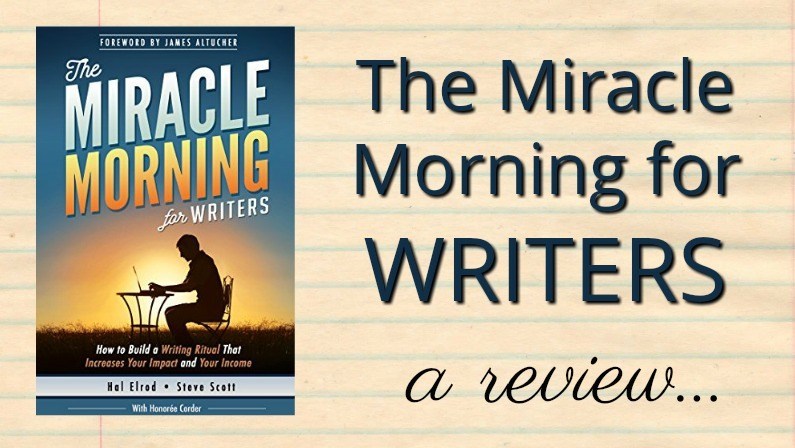
The Miracle Morning for Writers (Hal Elrod, Steve Scott, Honoree Corder) is a spin off of The Miracle Morning. I downloaded both books after hearing author Hal Elrod’s interview on my client’s personal development podcast.
I read The Miracle Morning first, implemented its routines, and noticed results immediately. It helped me take action on plans that I had been stalling on for years and gave me the clarity to focus on tasks that really matter to my future. I credit the Miracle Morning for getting me the point point where I am brave enough to start the Writers’ Online Mastermind!
I was eager to see what The Miracle Morning for Writers was all about, especially because the blurb mentioned step-by-step formulas to the business side of writing for both fiction and non-fiction books.
Selling books is the big mystery for most writers. Who doesn’t want to sell more books?
The Miracle Morning for Writers Review
The first 25%-30% of The Miracle Morning for Writers outlines the S.A.V.E.R.S. [Silence (as in Meditation), Affirmations, Visualization, Exercise, Reading, Scribing (as in Journaling)]. If you’ve read The Miracle Morning first, this will be a rehash of what you’ve already learned with added insights as how these habits can be retooled for writing goals.
These 6 habits done everyday lead to greater wellbeing, better productivity, and help you to take steps every single day to meet your writing goals. I can vouch for this. I have written more in the past few weeks than in the previous months combined.
The focus is on specificity, routine, and commitment. A writer has to make a specific goal, design a routine for writing every day, and stick to that routine to achieve the goal. Then they will learn how to publish and market all the writing they’ve accomplished.
The Miracle Morning for Writers is an easy read with a good mix of science and practical knowledge. It includes plenty of tips for overcoming self-doubt, writers’ block, and procrastination. It’s about treating writing like a job. If you wait for inspiration, free time, or extra energy, you might wait forever.
The last part of the book is the business side. For someone who’s worked in the book world for over 6 years, I was already familiar with most of the information on choosing publishing options, networking, and building an author platform. There won’t be anything earth-shattering for experienced published authors and marketers. However, excellent resources are listed within and it’s a great handbook to keep all the information handy.
The power of The Miracle Morning for Writers is in showing you how to grow into the person you need to be to become the writer you want to be.
This is the perfect book for someone who is thinking about becoming a serious writer and wants a comprehensive overview of what being a writer today entails.
It’s also a good book for the seasoned writer who wants to foster their creativity, discipline themselves, and write more than they’ve ever written before.
I used to think that the best way to get the most writing done was to sit and go on a non-stop writing binge until my eyeballs popped out and I collapsed.
Sometimes, when the muses are with us, this is how it must be done. However, this is not sustainable if we want to create a long-term daily writing routine.
I’ve been reading a book called Fast Focus by Damon
Zahariades. It’s a quick and painfully simple guide to avoid distraction. One
of the best things you can do is take breaks. Believe it or not, getting away
from your draft at intervals will increase your concentration, not break it.
Some people use the Pomodoro technique, which uses 25-minute intervals. For me, this is too often. Instead, I use 1-2 hour intervals, with a 20 minute to 30-minute break in between.
12 break time ideas for writers:
Do chores like laundry or dishes (yes, it’s actually relaxing and gives you time to daydream)
Meditate
Spend time with a pet
Make a meal or indulge in a beverage or chocolate
Exercise – burpees, yoga, a run around the block
Power nap
Listen to your favorite music or a podcast
Scroll through Pinterest to create an idea board for your WIP
Call a friend or family member for a chat (writers need to talk to real people too)
Watch a TED talk or other video
Journal or doodle
Go outside for a walk
Play a video game
I used to wake up, go straight for coffee without washing my face, and force myself to sit for at least 4 hours straight. By the time I was done, my brain was foggy, my back ached, and I was a grouch.
Since changing my routine, I’ve discovered that taking more breaks didn’t just make me feel more focused and productive, I also didn’t feel so mentally and physically drained at the end of the day.
My husband and I just spent a few days in the city for his birthday. There was food and drink and revelry. Unfortunately, I contracted some sort of bacteria that had me writhing on the floor in agony.
I’m facing several deadlines and rarely allow myself any fun lately because of them. Not only that, I’m working very hard to develop the Writers’ Mastermind Group and push the final month of our Short Story Contest.
I had planned to work on my drafts in the hotel and during the long car ride home, but all I could do was lie very still and hope nothing would erupt from my innards.
Sometimes we just can’t do it.
Then we feel guilty.
We think:
Maybe I can’t handle the pressure.
It might be better to just drop it all.
Oh, gods. Why have you forsaken me!*gnashes teeth*
In this case I tell myself:
Dear Writer,
Stop being such a drama queen. The world is not going to end if you take a few days off. You are not superhuman. This is your body telling you to take a rest.
Sit back, enjoy the scenery, and day dream. Your drafts will be waiting for you tomorrow, and you will be that much happier to see each other after a break.
Yes, we need to commit to our writing, but we also need to remember that not every day is going to be productive, and that’s okay.