My article about author platform mistakes was featured in The Writing Cooperative, a writing community and publication focused on helping each other write better.
I develop author platforms for a living and have worked with all kinds of writers — from paranormal romance, to literary fiction, to children’s picture books. No matter the genre, the same basic rule applies.
The goal is to be found by your readers, and your author platform must make it easy for fans to engage with and share your content.
The issues I’m going to share with you might seem obvious, but I come across them daily, even with established writers. The smallest holes in your author platform cost you big time. The worst part is, you won’t even realize the connections, opportunities, and sales you’re missing out on.
Go through this checklist and make sure your author platform is working for you…
A professional Facebook Author page is a must-have for all writers. Though Facebook doesn’t offer the same organic results as they did in the past, they’ve created one of the greatest advertising platforms that is excellent for selling books.
You’ll want to make sure your page is complete before running any ad campaigns. Set up or optimize your Facebook Author Page with this tutorial.
1. Facebook Cover
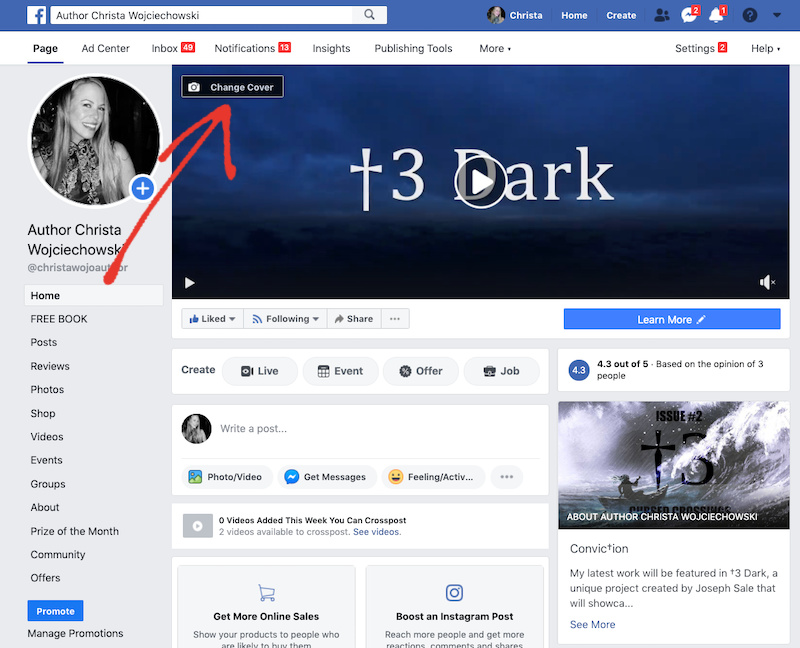
Your Facebook cover is a billboard where you can create a cover that promotes you and your books.
Design your own cover image according to the Facebook page cover dimensions. You can use a mobile app or web-based graphic designer like PicMonkey or Canva. Make it even easier by hiring someone on Fiverr to do it for you.
Otherwise, browse freelance sites for a video production specialist.
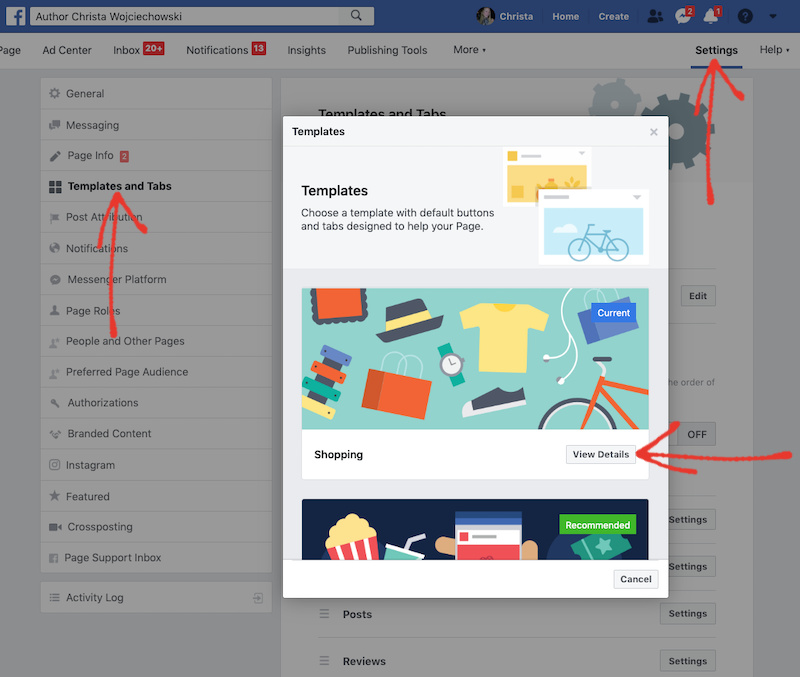
2. Use the Shopping Template
Facebook’s Shopping template will allow you to host a store on your author page. It’s the perfect place to showcase your books.
If you’re setting up your author fan page for the first time, you will be prompted to select a template.
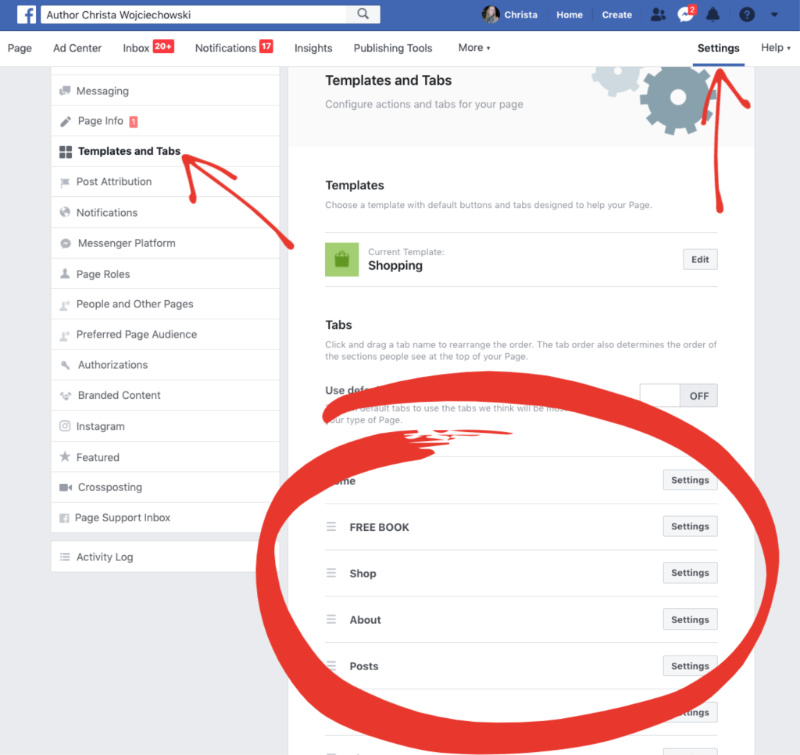
If you already have an author Facebook page, you can change to the shopping template in Settings under Templates and Tabs.
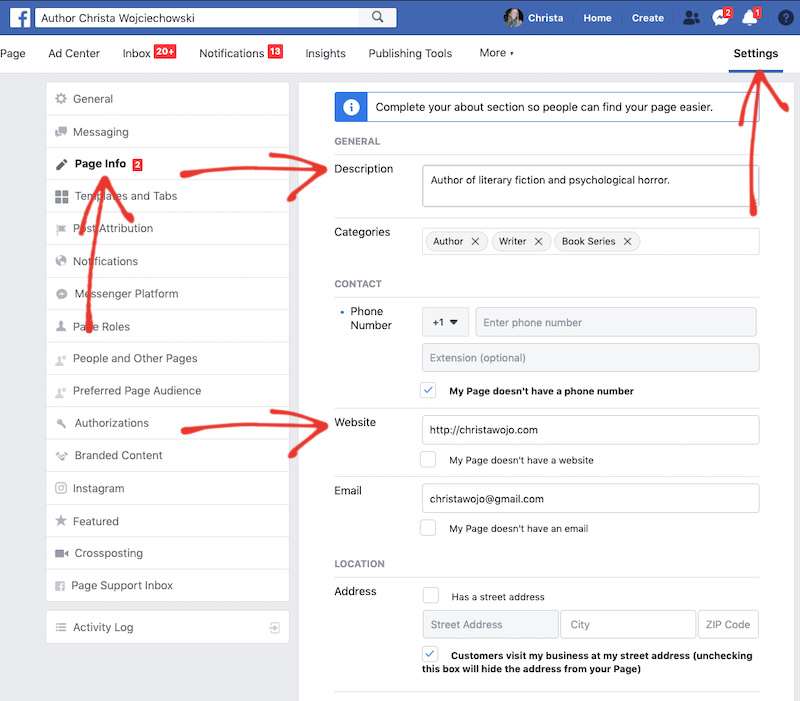
3. Fill out Your Page Info and Story Sections
I can’t tell you how many authors pages fail to include vital information, like bio and website. Fans are going to want to visit your blog, website, or Amazon page so be sure to add as much information as you can.
Page info settings
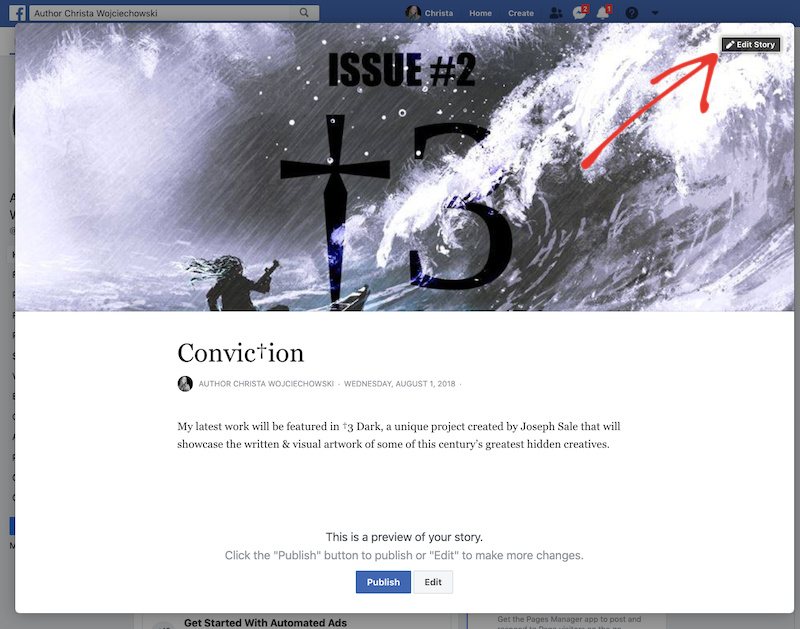
More free promotional real estate is offered in the Story section located in the right sidebar of your Facebook author page. This area features another image and a text area where you can include a live link.
Edit your Story Section
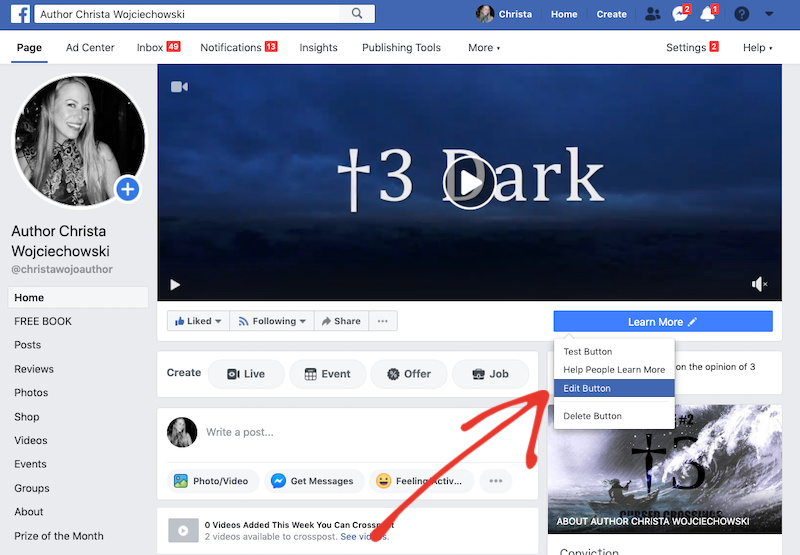
4. Activate Call to Action Button
This call to action button can be used to encourage fans to contact you, watch a video, shop for your books, and more. Click edit button and a box will pop-up with button options and settings.
5. Add Your Books to the Shop
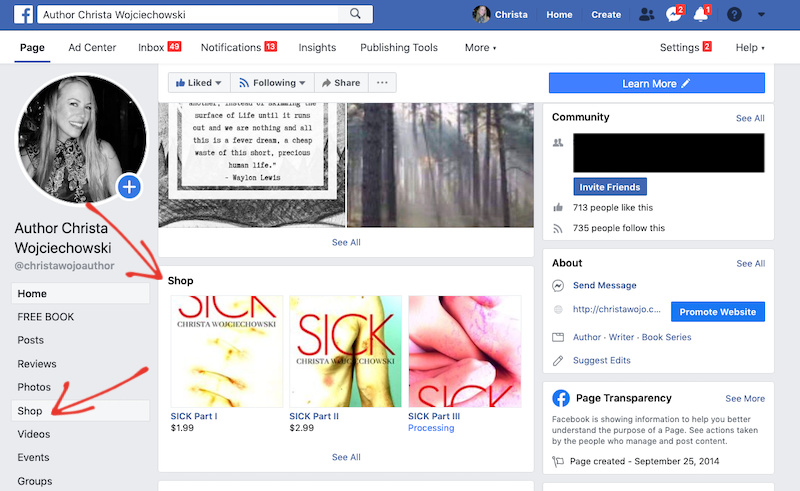
The Facebook shopping template is perfect for authors because you can feature a little bookshop right on your page.
What your shop area will look like.
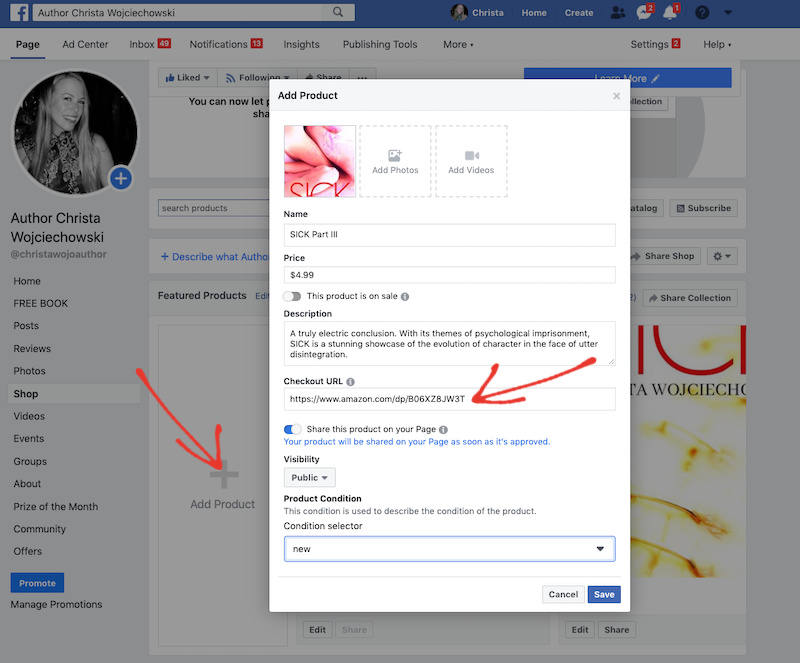
Click Shop in the left sidebar menu. You will see a box where you can Add Product. Click that area to add your book cover, buy link, and toggle the Share this product to your page if you’d like your book to be posted to your timeline.
Adding books to shopping template.
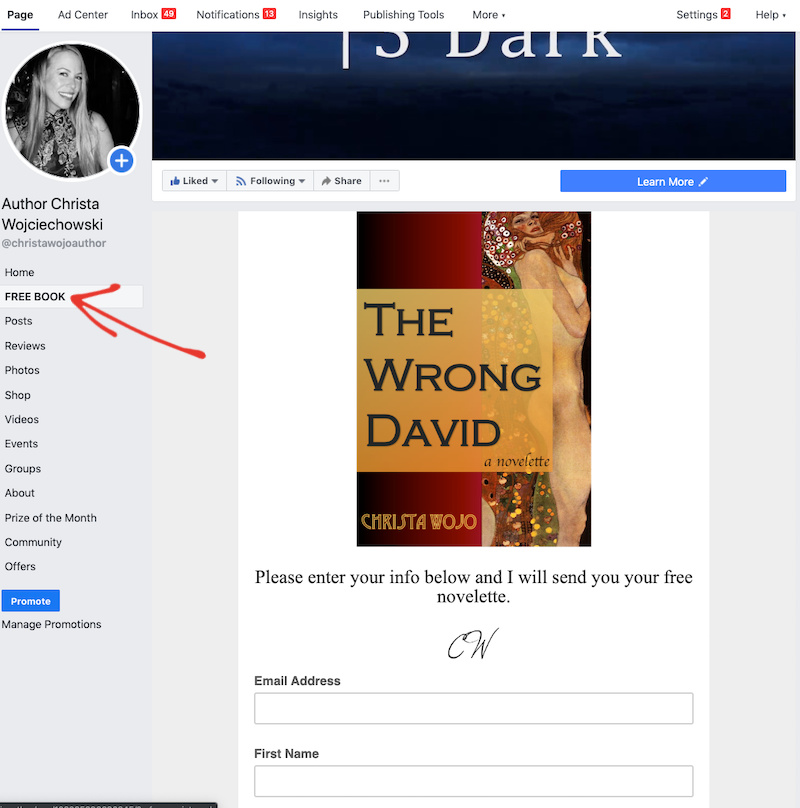
6. Embed a Mailchimp form
If you’re a Mailchimp user, you can grow your email list straight from your Facebook page. However, this must be done through your Mailchimp account.
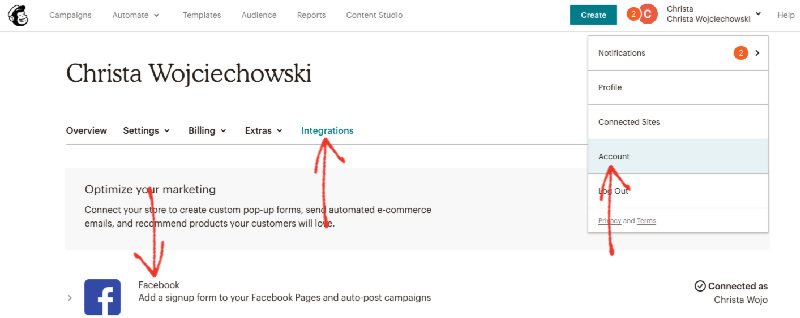
Log in to Mailchimp, click your username in the top menu bar to activate the dropdown menu. Click account and then click integrations. This is where you will find the option to add a tab with a Mailchimp form to your Facebook Author page.
Locate the Facebook signup for option in your Mailchimp dashboard.Offer a free download with a Mailchimp form in a Facebook page tab.
You can reorder your tabs by returning to the Templates and Tabs section under Settings. Click and drag them to the desired spot.
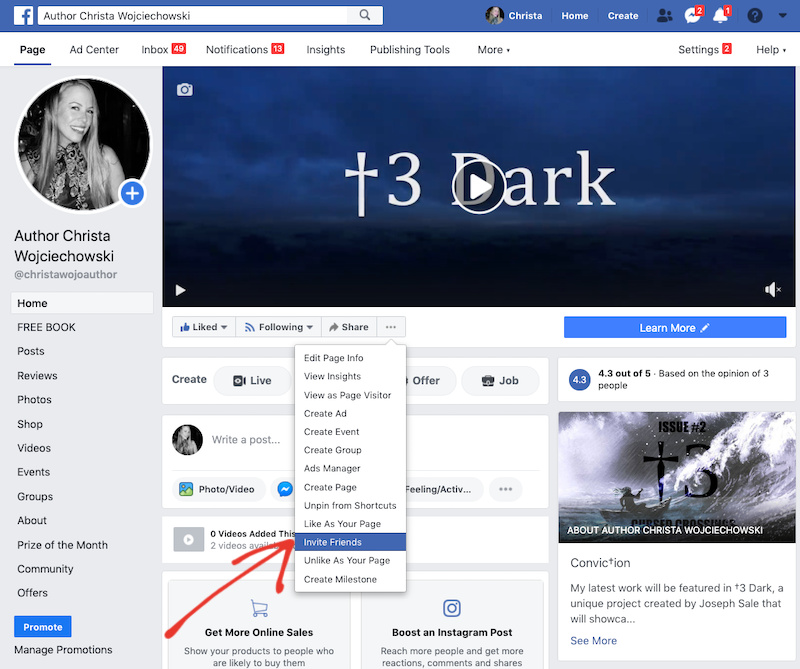
7. Invite Your Friends
Use the handy Invite Friends button to get the first likes for you page. Click this button ever few months as you add new friends to your personal profile.
Invite friends!
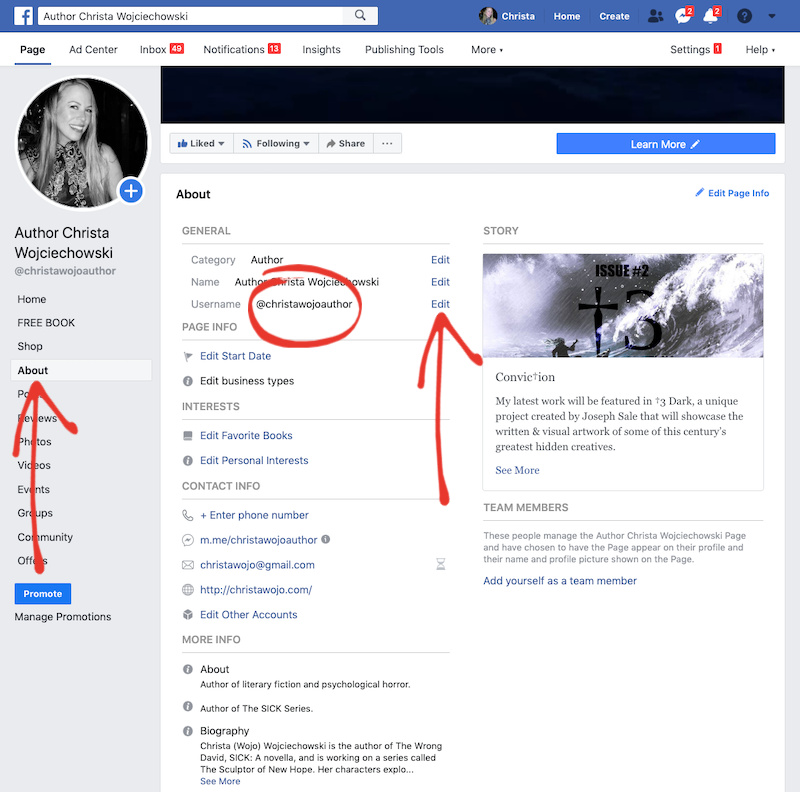
8. Claim Your Facebook Username
Once you get 25 likes on your Facebook author page, you can choose a username.
Try to find a username that is closest to your writing name or the same as your social media handles.
Choosing a username will also set the URL for your page, making a nice, neat address instead of the default jumble of words with numbers.
Check your username in the About tab.
9. Connect to Your Instagram
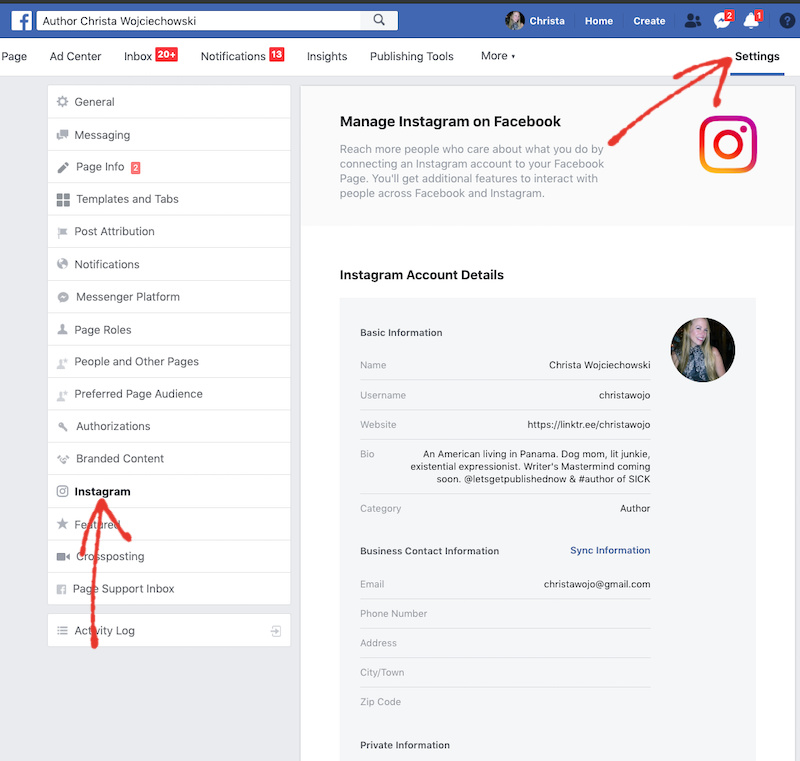
Connecting your Instagram account allows you to share Instagram posts to your Facebook Author Page. It also makes it possible to configure Instagram ads via Facebook in your browser, which is easier than doing it from a mobile phone.
Make sure your Instagram is connected by visiting the Instagram tab in Settings.
10. Use Offers
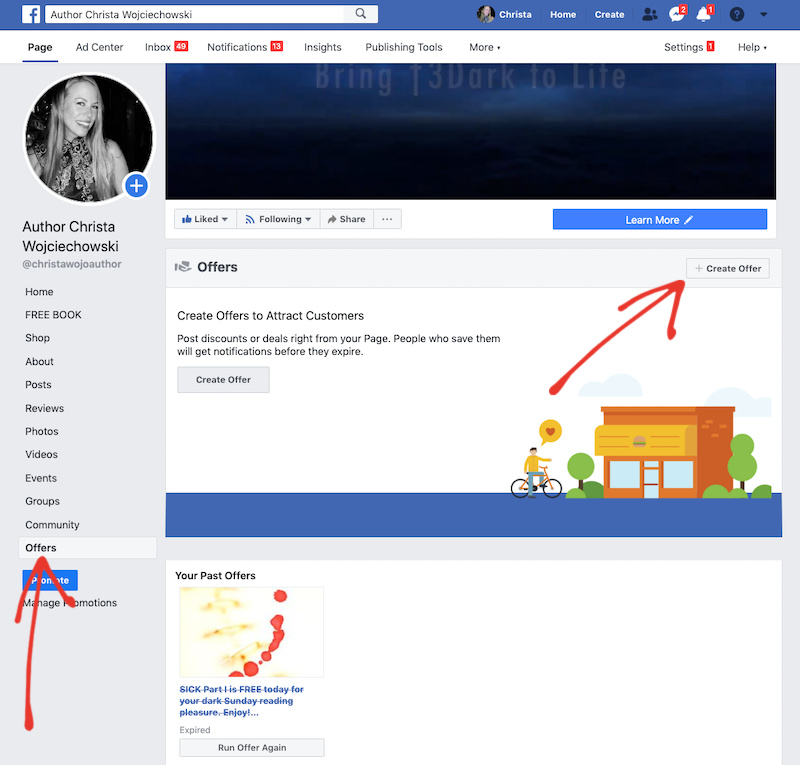
Whenever you want to promote your book, you can use Facebook Offers to stir up interest and urgency. Click offers in the left sidebar menu or in the posting options on your timeline.
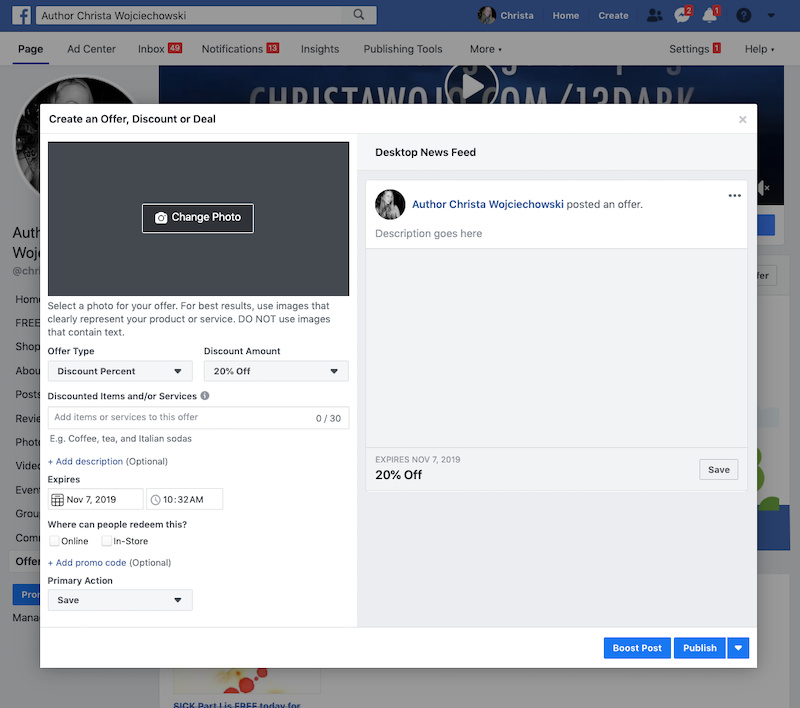
You can then add a photo, choose what kind of offer you want to post (coupon, discount, promocode, or other), and set the expiration date.
Offers tabCreating your offer
11. Create a Group That’s Connected to Your Page or Link Your Existing Group
Groups are an extremely effective way to stay engaged with your readers. Each time you post to a group, your members will get a notification, so unlike page fans, group members are more likely to see your posts.
A private group can also be a way to give members exclusive access to you. Just make sure you are prepared to invest time and thought into your group to make it a worthwhile endeavor.
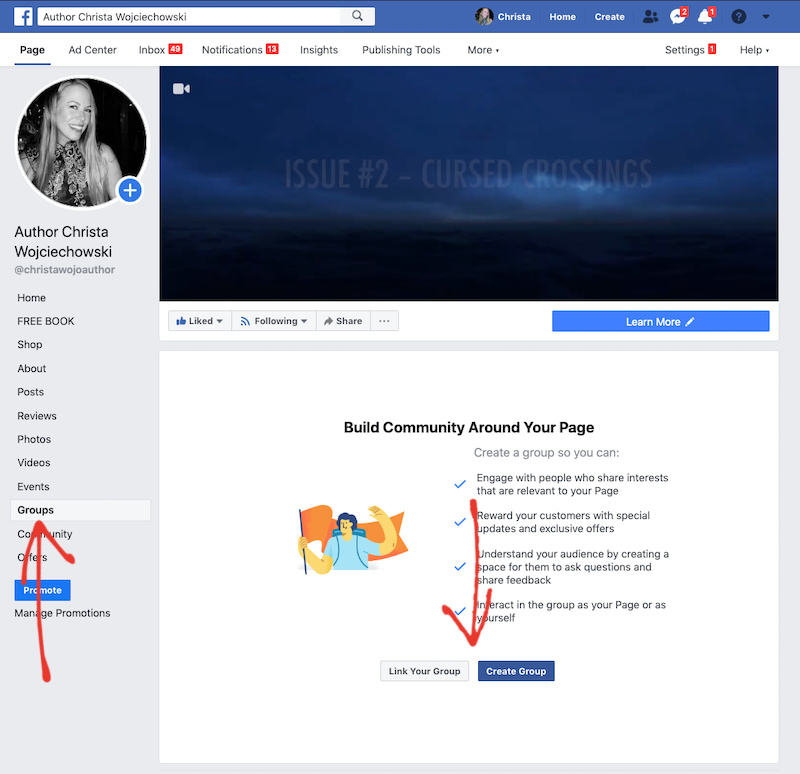
If you already have a group, link it to your page so your brand is connected.
Link groups in the Groups tab.
Now You’re Ready to Go!
Your page is ready for using, sharing, and advertising.
Subscribe to Dear Writer for future posts on Social Media Optimization for authors, including Facebook Advertising for books. CLICK HERE.
Have you ever asked yourself this question and truly answered it?
This is important to define for yourself, the quality of your work. 2020 was a year of chaos, fear, and upheaval. As we begin the new year, it’s the perfect time to let the dust settle and get laser-like focus on why you write and how you’re going to get your words into the world.
It’s not easy to be an aspiring writer. Just tell someone you want to become a successful fiction author and their reaction will be something like:
Laughs awkwardly until they realize you’re serious.
Shows concern about your mental health
Says, “Really? Uhhh… Good luck with that.”
It’s the same look adults gave you when you were six years old and you told them you wanted to be an a pegasus when you grew up.
That’s because writing fiction is a time and energy-intensive pursuit that never guarantees a big material reward.
As a marketing strategist for authors, I see many writers approaching their writing career with a “lottery mindset.” They scribble out a book, feverishly upload it to Amazon, and wait for overnight success.
When they don’t wake up on the bestsellers list, they give up.
This the paradox:
Only by NOT writing for money or fame will you possibly become a successful author because once you begin writing for sales, your words will lose heart.
You must have a bigger reason than to become wealthy and famous. You need to think about who you’re writing for and how you want them to think and feel after reading your work. Either that, or writing must be so satisfying for you that it is its own reward.
Maybe you write because it’s therapeutic, allowing you to express yourself and make meaning of your experiences. Maybe you want to make people laugh and forget their worries. Maybe you just want to scare the hell out of them.
Not only will a writing manifesto help you on the hard days when nothing is working, keeping your mission in mind will inspire you to produce stories that will impact your readers and the world.
You got this!
Create your Writing Manifesto!
Join us for the Ultimate Author Planning Workshop in the Writers’ Mastermind.
Develop your own powerful Writer Manifesto.
Crystalize your vision of what it means to be a successful author.
Reverse engineer a step-by-step plan to your career as a fiction writer.
Avoid wasting time, overwhelm, procrastination, and paralysis.
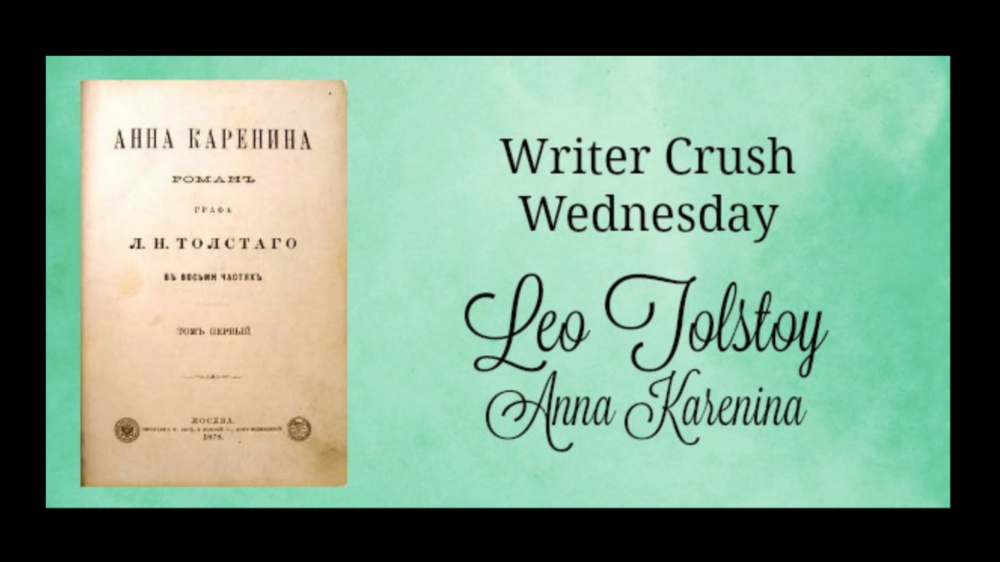
I’m going to begin sharing some excerpts of the most astonishing writing I’ve ever come across.
There are writers who entertain, and there are writers who drill to the core of the human heart.
Leo Tolstoy is one of these legends that inspire me to go beyond storytelling to create something deeper.
This passage is from Anna Karenina just after she and Count Vronsky commit adultery.
He felt what a murderer must feel, when he sees the body he has robbed of life. That body, robbed by him of life, was their love, the first stage of their love. There was something awful and revolting in the memory of what had been bought at this fearful price of shame. Shame at their spiritual nakedness crushed her and infected him. But in spite of all the murderer’s horror before the body of his victim, he must hack it to pieces, hide the body, must use what he has gained by his murder.
And with fury, as it were with passion, the murderer falls on the body, and drags it and hacks at it; so he covered her face and shoulders with kisses. She held his hand, and did not stir. “Yes, these kisses–that is what has been bought by this shame. Yes, and one hand, which will always be mine–the hand of my accomplice.” She lifted up that hand and kissed it. He sank on his knees and tried to see her face; but she hid it, and said nothing. At last, as though making an effort over herself, she got up and pushed him away. Her face was still as beautiful, but it was only the more pitiful for that.
“All is over,” she said; “I have nothing but you. Remember that.”
Do you ever get depressed without knowing what exactly is bothering you? Do you sometimes feel tired, restless, and not sure what to do with yourself? Maybe you find yourself spending too much time talking to your dog and checking your social media. You’re sick of your story and your characters and you don’t know why.
Now think about the last time you had a good chat or laugh
with someone. How long has it been?
Writers have a tendency to isolate themselves. We live inside our heads, but it’s medically proven that loneliness bad for us physically and mentally. It’s also bad for our craft. Staying isolated prevents us from being connected to the world and the people we write about.
Meet someone for coffee or a beer. Plan a dinner party. Call a close family member or friend. See how you feel afterward.