Have you ever asked yourself this question and truly answered it?
This is important to define for yourself, the quality of your work. The past few years have been filled with chaos, fear, and upheaval. As things normalize, it’s the perfect time to let the dust settle and get laser-like focus on why you write and how you’re going to get your words into the world.
It’s not easy to be an aspiring writer. Just tell someone you want to become a successful fiction author and their reaction will be something like:
Laughs awkwardly until they realize you’re serious.Shows concern about your mental healthSays, “Really? Uhhh… Good luck with that.”
It’s the same look adults gave you when you were six years old and you told them you wanted to grow up to be a pegasus.
That’s because writing fiction is a time and energy-intensive pursuit that never guarantees a big material reward.
As a marketing strategist for authors, I see many writers approaching their writing career with a “lottery mindset.” They scribble out a book, feverishly upload it to Amazon, and wait for overnight success.
When they don’t wake up on the bestsellers list, they give up.
This the paradox:
Only by NOT writing for money or fame will you possibly become a successful author because once you begin writing for sales, your words will lose their magic.
You must have a deeper reason than to become wealthy and famous. You need to think about who you’re writing for and how you want them to think and feel after reading your work. Either that, or writing must be so satisfying for you that it is its own reward.
Maybe you write because it’s therapeutic, allowing you to express yourself and make meaning of your experiences. Maybe you want to make people laugh and forget their worries. Maybe you just want to scare the hell out of them.
Whatever the reason, I suggest you create your own writing manifesto that states your big-picture reason for writing. Rewrite it till it’s powerful and succinct. Read it each day before you begin working on your stories. Click here for an example of how powerful a writing manifesto can be.
Not only will a writing manifesto help you on the hard days when nothing is working, keeping your mission in mind will inspire you to produce stories that will impact your readers and the world.
“The Writers Mastermind has been the leaping stone in my writing. Each month offers a new theme and focus towards the Writers’ Dream. I have found my voice, structure, and have gotten immeasurable feedback on my works.”
Charlotta Amato, Short Story Writer
“Ever since I joined Writers’ Mastermind, I have felt more like a writer and part of a writing family than I ever have before. I have gained confidence in my writing, learned who I am and how I want to be as a writer.”
Clennell Anthony, The Circle
“An empowering mastermind group, definitely the best I have ever been a part of. The warmhearted community is genuinely a reason to get excited and I learn as much from my peers as I do from the exceptional courses.”
Joseph Sale, The Black Gate Series, Save Game
“The classes are awesome. They offer perspective, as well as tips and tricks that many may not have thought of when it comes to not only creating their books, but promoting them. It’s worth much more than what we pay, and that is a total win-win situation.”
Sandra Hould, Future Novelist
“It’s been a boon for me to work and interact with this diverse range of authors. I’ve received fantastic constructive feedback, friendly motivation and support through the struggles in my writing process, and accountability to keep me focused on critical tasks.”
S.M. Fedor, Band-Aid for a Bullet Wound, Better People
As a writer, I know the submissions process can be a huge mental and emotional drain. Not only is it time-consuming and tedious, there are the nail-biting weeks or months afterward waiting for an answer.
If the answer is no, a writer must go through a period of grief and summon the strength to get back out and submit again.
But being rejected often has nothing to do with the quality of the writing.
As the contest creator, I was the gatekeeper and was forced to disqualify stories for the silliest of reasons. In many cases, the writing was great, and it was frustrating because the issues that prevented the story from being in the competition were completely avoidable.
It pains me to see talented writers sabotaging themselves
when it comes to submissions, writers who are racking up needless rejections
that are killing their self-confidence.
So, as a person who not only has suffered rejections, but has also had to read through hundreds of submissions, this is my advice.
1. Not following directions – Read the submission guidelines and contest rules until they’re branded into your brain. Then read them again. Before you send in your manuscript, read them again. Each magazine, agent, or publisher will have slightly different guidelines. Pay attention to requirements for formatting, cover letters, submission length, blurbs, bios, and more. Be especially wary of the next items I discuss in this list.
2. Word count – During our Spring Writing Contest, many submissions were below or above the 1K to 5K word count. I couldn’t understand why. I could only think the writer ignored suggestion #1—carefully read the submission guidelines. There is no excuse to ignore the word count requirement.
If your story is too short, fill it in. Find areas where you can expand. Add some more to detail to the setting. Incorporate a new scene to reveal character.
Likewise, if your story or book is too long, trim some fat. Skim
off anything that is not crucial to the plot. Remove unnecessary description.
Kill darlings without mercy.
If the word count is too far off to feasibly adjust, move on.
2. Mistakes – No matter how interesting a story is, typos and grammatical errors are sure to turn off any reader, especially literary professionals. It says to the organization that you don’t care enough to send your best work—either that, or you’re an incompetent writer who didn’t even realize you made any mistakes.
Being a good writer means you know how to write. This includes grammar and punctuation. If you’re struggling with the technical aspects of writing, take a class so you can execute with confidence.
Then find an editor. Even if you’re an English major, everyone makes mistakes and it’s hard to see them in your own work. Send your work to a professional first.
3. Submitting the totally wrong thing – The contest here at Let’s Get Published was for short stories in any genre of fiction. Short stories are a standalone art form with a very specific structure, yet I received many of what very obviously were chapters of a book. Some authors left the chapter heading in the document! Even the incomplete entries that didn’t have chapter headings were very noticeably just chapters, scenes, or excerpts. I was also puzzled to receive poetry and non-fiction (again, see #1)!
Don’t risk annoying agents and publishers hoping that by some cosmic chance that they’ll be so captivated by your work they’ll ignore the fact that you broke their guidelines. Make sure you’re sending them the material they work with or you’re wasting both their time, and more importantly, yours.
4. Not familiarizing yourself with the agent or publisher – From my personal experience as a writer, I know it’s tempting to jump after every submission call you see. I’ve submitted without ever having read anything from the publishing house, agent, or magazine and ended up rejected. I would have saved everyone time if I had sampled from their stable of writers first.
Read up on the writers your desired publisher works with to see how you compare. Beyond the genre, ask yourself if your style, theme, and subject matter are good fit. What is the publisher known for? Do they have any non-negotiables when it comes to sex, violence, or other graphic material? Do they stick to certain tropes or subvert them? This will help you avoid sending your work into places where it’s not likely to be accepted.
In closing
It’s a shame to think that some talented writers become discouraged or give up entirely because of rejections when they’re only crime is failing to submit properly.
Remember that agents, publishers, and writing contest judges are people too. Respect them and your work enough to be professional. Stop wasting your time and energy chasing after calls that don’t suit your story. Don’t rush to submit or send in sloppy drafts. Take your time. Do your homework.
You might submit less, but you’ll be submitting effectively. This will exponentially increase your chances of getting more acceptance letters and contest wins. It’s definitely a quality not quantity game here. Treat your writing like the one-of-a-kind art that it is.
We’re getting ready to launch the Writers’ Mastermind, and as part of connecting our writing community, we’ll be sharing the latest accomplishments of our members.
Today, we share groundbreaking book releases and stunning art from our cadre of creatives.
***Do you have a book coming out? A cover reveal? Has a magazine published your short story? Have you landed and agent? What’s new with your other creative pursuits? Send your news to christa@letsgetpublished.com.
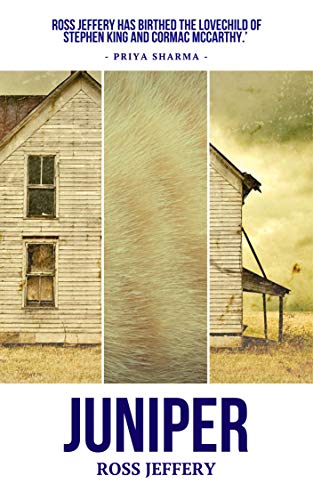
Juniper, the debut novel by Ross Jeffery
After a 7-year writing hiatus, Ross Jeffery is claiming his place on the weird fiction scene with his first book, Juniper. Truly weird and wild, Juniper will keep you rapt in morbid curiosity, even through the moments you want to recoil.
Ross Jeffery
Ross Jeffery is a Bristol based writer and Executive Director of Books for STORGY Magazine.
Ross has been published in print with STORGY Books, Ellipsis Zine 6, The Bath Flash Fiction Festival 2019, Project 13 Dark and Shlock Magazine. His work has also appeared in various online journals such as STORGY Magazine, About Magazine TX, Elephants Never, 101 Fiction, Ellipsis Zine, Soft Cartel and Idle Ink.
Ross lives in Bristol with his wife (Anna) and two children (Eva and Sophie). You can follow him on Twitter here @Ross1982
Juniper
Juniper is the first book in Ross Jeffery’s proposed trilogy: a post-apocalyptic horror about an insane American town seemingly at the edge of reality. As Juniper suffers from scorching drought and medieval famine, the townsfolk are forced to rely on the ‘new cattle’ for food: monstrous interbred cats kept by the oppressed Janet Lehey.
But there’s a problem: Janet’s prized ginger tom, Bucky, has gone missing, flown the coop. As Janet and her deranged ex-con husband Klein intensify their search for the hulking mongrel, Betty Davis, an old woman clinging to survival on the outskirts of Juniper, discovers something large and ginger and lying half-dead by the side of the road.
She decides to take it home…
Juniper is surreal, dark, funny, and at times: excruciatingly grotesque. Buckle up for a wild ride through the dust-ridden roads of a tiny, half-forgotten American town…
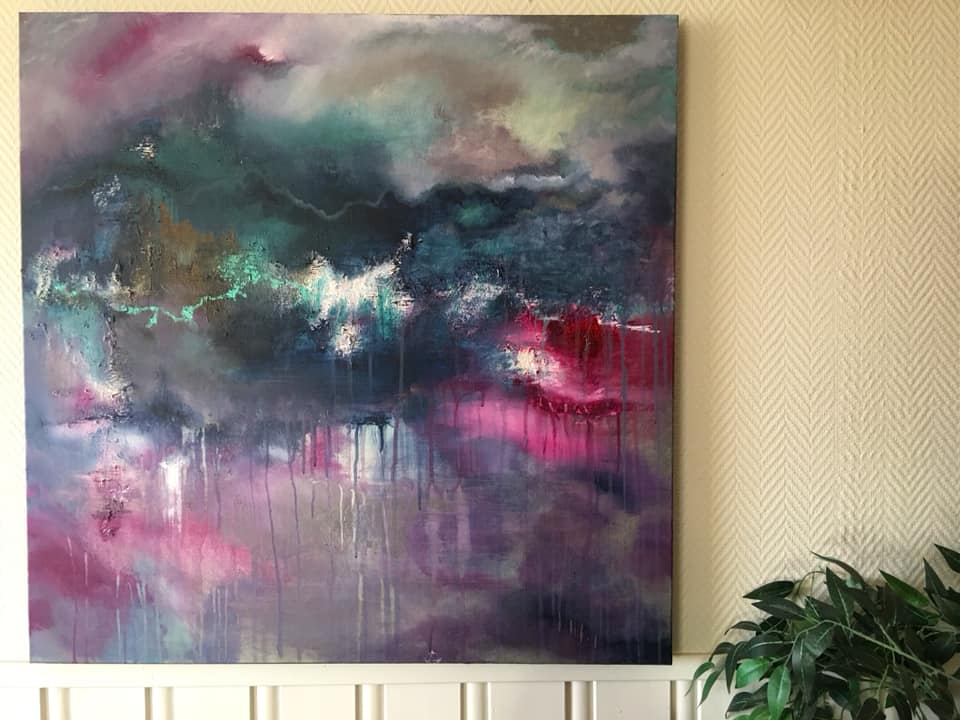
Charlotta Amato is not only a talented aspiring writer, but she also paints mesmerizing artwork—one of a kind, layers of color, life and livity all combined onto a canvas.
Her exclusive works are for sale. Learn more on her Facebook Page.
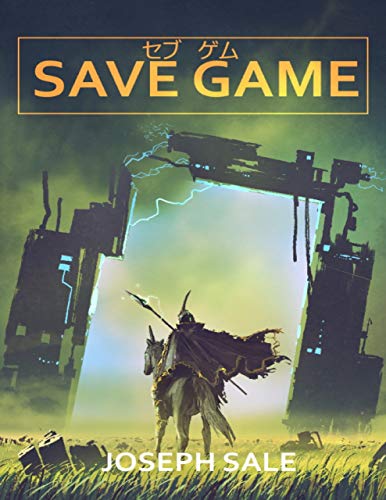
Save Game by Joseph Sale
Save Game is the latest novel from brilliant author, Joseph Sale. This book is a fully immersive page-turner, just like it’s subject matter. Most writers will relate to wanting to escape into an exciting imaginary world, never to return.
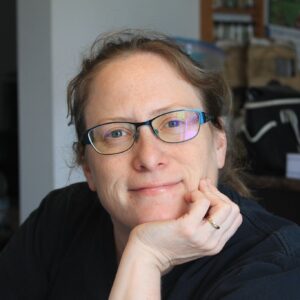
Joseph Sale
Joseph Sale is an editor, novelist, writing coach and co-host of Monaghan & The Mindflayer. He currently writes and is published with The Writing Collective. He has authored more than ten novels, including his Black Gate trilogy, and his love-letter to fantasy: Save Game. He grew up in the Lovecraftian seaside town of Bournemouth. He edits non-fiction and fiction, helping fledgling authors to realise their potential.
Save Game
Levi Jensen is, by all accounts, a loser. He failed sixth-form, never got to university, and works at a no-future fast-food restaurant. The only thing he’s good at is gaming. When his father starts dying of a new type of cancer, only treatable privately and at impossible expense, Levi’s one hope of saving him becomes the million-dollar cash-prize for winning the dark-fantasy video-game Fate of Ellaria. But Levi isn’t the only one with motivations beyond money for winning. And the price of success in Fate of Ellaria might mean the destruction of what little he has left in the real world.
Save Game is a heart-breaking story of an underdog against all odds, as well as a love-letter to the beauty of video-games. Inspired by the amazing and eclectic everyday people who inhabit the gaming world, and the pain of their real-world lives, Save Game aims to show the courage of those who feel they’ve got no place in reality.
Sandra Hould is a stay at home mom, environmentalist, karateka, artist, book addict and future writer. She is always exploring new ways to express herself creatively, no matter how difficult the quest may be.
My art will be raw, imperfect, unapologetic and real, just like life.—Sandra Hould
***Do you have a book coming out? A cover reveal? Has a magazine published your short story? Have you landed and agent? What’s new with your other creative pursuits? Send your news to christa@letsgetpublished.com.
My article about author platform mistakes was featured in The Writing Cooperative, a writing community and publication focused on helping each other write better.
I develop author platforms for a living and have worked with all kinds of writers — from paranormal romance, to literary fiction, to children’s picture books. No matter the genre, the same basic rule applies.
The goal is to be found by your readers, and your author platform must make it easy for fans to engage with and share your content.
The issues I’m going to share with you might seem obvious, but I come across them daily, even with established writers. The smallest holes in your author platform cost you big time. The worst part is, you won’t even realize the connections, opportunities, and sales you’re missing out on.
Go through this checklist and make sure your author platform is working for you…