Last month, we announced our Writers Mastermind Short Story Contest winners. In this series, we interview each of them to discover the soul behind their story.
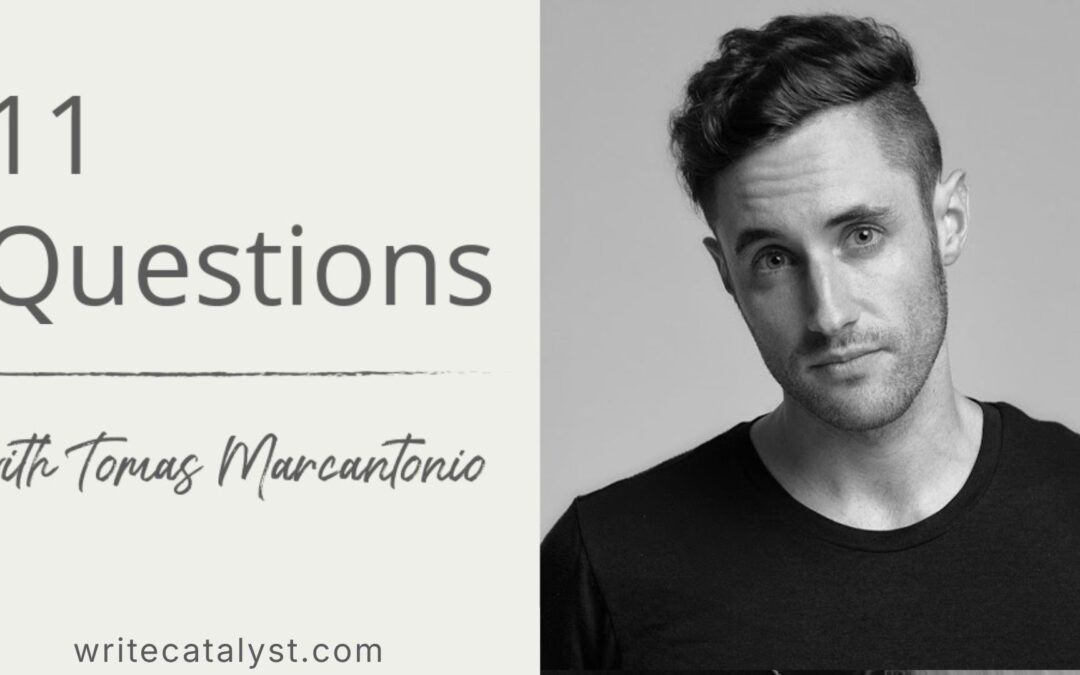
Today we talk to Tomas Marcantonio, who won third place with his story, Feathers. He taught English in South Korea for most of the past decade, and is now settling in England to finish his dystopian noir series. Learn about his experience abroad and what drives his writing.
Meet Tomas Marcantonio, author of Feathers (3rd Place Winner)
Tomas Marcantonio is a writer from Brighton, England. He graduated from the University of Sussex with a BA in English Language and Film, and he spent most of his twenties teaching English while travelling and writing.
Tomas is the author of two travelogues, Gift of the Gap and How Not To Live Your Twenties, as well as the coming-of-age novel The Leap of Grebes. His dystopian trilogy Sonaya Nights is being published by Storgy Books, with first installment This Ragged, Wastrel Thing released on August 1st, 2020.
Tomas is also the author of numerous short stories, many of which have appeared in literary journals and speculative fiction magazines online and in print. He has placed in several short story and flash fiction competitions, and was the winner of the‘Just Back’ travel writing competition in The Telegraph in 2017. In 2020, Tomas was also nominated for the Pushcart Prize and Best of the Net.
When not scribbling about future worlds or his two beloved seaside cities, Brighton and Busan, Tomas is often writing obscure articles about Korean football. Otherwise, he is most likely getting lost in neon-lit backstreets somewhere, searching for new brands of makgeolli.
1. Tell us a little bit about yourself. Where are you from? Where are you now? What has your life been like?
I’m from Brighton on the south coast of the UK, but I spent most of the past ten years in South Korea, where in addition to writing I was teaching English. I recently moved back to Brighton to be closer to family and friends. It’s great being back, but I do miss the thrill of being abroad. I did a lot of travelling in my twenties, but now that I’m in my mid-thirties I’m trying my best to settle!
2. What kind of stories do you like to write?
I love exploring alternate worlds, especially dystopian or futuristic societies. I also frequently write about anxiety, and coming of age through travel. I rarely write about mundane life – I love travel and adventure and diverse peoples and places.
3. What sets you apart from other writers in your space?
I suppose my dream as a writer is to combine genre writing with literary fiction. As a reader I adore both, but I haven’t come across too many writers who write genre fiction with the poetic prose I enjoy. That’s the little corner I aim for.
4. What drives your writing? What do you mean to accomplish with your stories?
I recently wrote a Writer’s Manifesto as part of my Creative Writing Master’s degree – I called it the Soul Tattooist’s Manifesto. The idea is to ‘tattoo’ your soul into history, to make a permanent record of your thoughts, fears, feelings, and inspirations. I love the idea of trying to capture your true self in your writing, and the possibility that future generations will be able to read it and have an insight into your identity.
5. Who are you favorite writers and books? What are your other creative influences?
It’s hard to narrow this down to a few! I adore the writing of James Lee Burke, one of the few crime writers I’ve read whose beautiful descriptions of places and people can take my breath away. In terms of prose I’m hugely inspired by the writing styles of the likes of Laurie Lee, Virginia Woolf, and Annie Proulx, but I also love the big ideas and imagination of fantasy and speculative fiction novels. Haruki Murakami is my go-to writer if I’m in need of a definite pleaser.
6. Tell us about your writing space. When and where do you write? Do you work in silence? Or music?
I tend to write better in cafés, so a little background music is welcome. In Korea my ideal writing routine was to get up early and head to a quiet café with sea views and spend the whole morning there. I haven’t found my perfect writing café since moving back to Brighton, so I’m still searching!
7. What is your favorite thing to do when you are not writing?
Apart from curling up with a good book, my favourite hobby these days is beach volleyball. There’s nothing better than jumping around in the sand on a sunny day – especially if there’s a cold pale ale waiting afterwards.
8. Who is your current artistic muse?
My biggest artistic muse of the past decade has been Busan, my favourite city in Korea. Sandy beaches, sprawling mountains, labyrinths of neon-lit backstreets, and don’t get me started on the food. A huge city bursting with personality, and inspiration in every little nook.
9. Why do you think it’s important to write fiction?
I want to avoid trying to give a deep, profound answer here, so I’ll just answer this from my personal point of view as a writer – it’s a release, a calling, a joy.
10. Who would be the best writer, alive or dead, to tell the story of your life?
I’d love to read a Murakami novel of my life – he’d be able to side-step the boring parts by having me stumble upon a parallel world.
11. What are you working on right now?
I’m tidying up Book 3 of my dystopian noir trilogy, Sonaya Nights, from Storgy Books. I’m also working on a fantasy novel, which is something I’ve always wanted to do. I love world building and letting my imagination run riot, so it’s been a joy so far.
*****
Thanks to Tomas Marcantonio for letting us into his world.
Last month, we announced our Writers Mastermind Short Story Contest winners. In this series, I interview each of them to discover the soul behind their story.
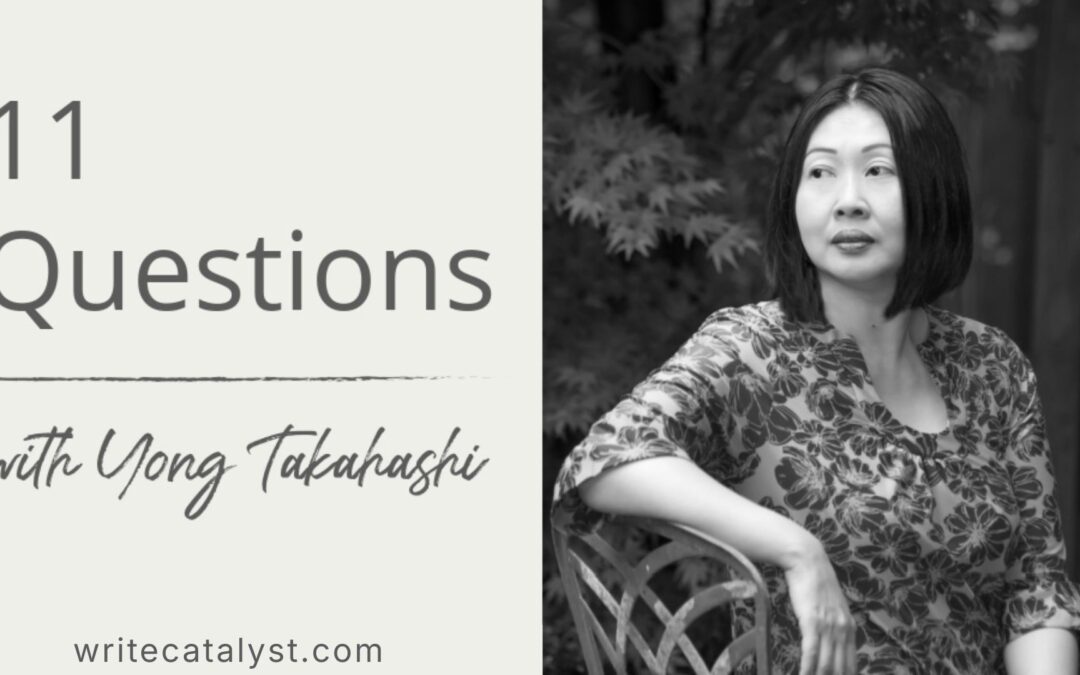
Today we talk to Yong Takahashi, author of The Elements. You’ll learn about her struggles as a Korean immigrant and how she writes all her drafts in longhand on pink legal pads.
Meet Yong Takahashi – The Elements (FINALIST)
Yong Takahashi is the author of Observations Through Yellow Glasses: A Memoir Through Poems, Rising, Sometimes We Fall, and The Escape to Candyland. She was a finalist in The Restless Books Prize for New Immigrant Writing, Southern Fried Karma Novel Contest, Gemini Magazine Short Story Contest, The Writers’ Mastermind Short Story Contest, and The Sexton Prize for Poetry.
Yong’s YA novel, Camp Detroit, will be published in 2023. To learn more about Yong, visit: linktr.ee/yongtakahashi
OBSERVATIONS THROUGH YELLOW GLASSES
Yong Takahashi moved to The United States with her parents when she was three years old. She grew up in a traditional household where her Korean and American worlds pulled her in opposite directions. Shortlisted for The Sexton Prize for Poetry, OBSERVATIONS THROUGH YELLOW GLASSES invites you to follow her journey as she learns life’s bitter lessons, longs for love, and attempts to heal the wounds she collects along the way.
1. Tell us a little bit about yourself. Where are you from? Where are you now? What has your life been like?
I was born in Seoul, South Korea and grew up in Detroit, Michigan. Currently, I live in Atlanta, Georgia. I was the only Asian student in a newly desegregated school. The white students lived on one side of the highway and the black students lived on the other. I remember the landlord telling my parents we could choose which side because we were yellow. Trying to fit in was difficult and a lot of the pain in my writing comes from surviving childhood. Some of my experiences are in my memoir, Observations Through Yellow Glasses: A Memoir Through Poems.
2. What kind of stories do you like to write? I write poetry, songs, short stories, and novels.
I tend to lean towards darker storytelling. Many of my protagonists don’t have happy endings or struggle to find them. I find this is more realistic as life is not wrapped up in a bow.
3. What sets you apart from other writers in your space?
I blend my Korean and American experiences into my work. It tends to be a tightrope walk between the two cultures.
4. What drives your writing? What do you mean to accomplish with your stories?
I want the reader to see a perspective other than their own. I want them to say: Could that really happen? Well, maybe it could. Let me read it again.
5. Who are you favorite writers and books? What are your other creative influences?
My favorite book is The Metamorphosis by Franz Kafka. It is the only book I’ve read more than twice. The Inspector Gamache books by Louise Penny are the only ones I wait for each year. I don’t really read mystery but her words are just magical.
6. Tell us about your writing space. When and where do you write? Do you work in silence? Or music?
I usually listen to music while I make my to do lists and drink coffee. Then, I start writing or editing. It needs to be completely silent for my editing or writing sessions. If I’m at a coffee shop, I wear noise cancellation headphones. Prior to the pandemic, I wrote at Starbucks for three to five hours a day. Then, I’d come home to type my notes. Now, I write in my backyard or in bed.
7. What is your favorite thing to do when you are not writing?
I binge watch all my recorded shows. I just finished the 23rd season of Law & Order: SVU. I’m on season eight of the original Law & Order.
8. Who is your current artistic muse?
I study songwriters. I also watch cover artists on YouTube before my writing sessions.
9. Why do you think it’s important to write fiction?
I think every form of writing is important: poetry, fiction, nonfiction. However, fiction allows me to create worlds I could never live in. It lets me insert myself into situations that would never happen in real life.
10. Who would be the best writer, alive or dead, to tell the story of your life?
I absolutely love Louise Penny’s way of drawing the reader into her stories. It would be an honor if she’d write about me or just join me for coffee.
11. What are you working on right now?
I’m editing a YA novel. I hope to complete it next month. It will be published in 2023.
Add these contest deadlines to your calendar and get your stories ready! This article also provides tips on how to submit and increase your chances of winning.
You live to write and have numerous short stories to prove it. Best of all, people other than your mother love and praise them! But because your name doesn’t happen to be Danielle Steel, no publisher is currently knocking down your front door to rip manuscripts from your printer before the pages even cool. So what is an aspiring writer to do? Apply to a writing contest, perhaps?
If you were a singer, you could try out for American Idol; if a dancer, you could apply to So You Think You Can Dance. But let’s face it, a television show where you typed at your keyboard is not must-see TV.
Even so, there are numerous (non-televised) writing contests where you can display your skills and improve your writing. Plus, if you win, you might receive some well-deserved critical acclaim—not to mention a cash award and potential future writing contracts.
In this article, you will learn:
How to enter a writing contest and increase your chances of placing or even winning
Which contests are reputable
Which contests are currently accepting submissions
After reading amazing fiction, I always ask, who writes like this? What drives them? Where do they get their ideas?
Last month, we announced our Writers Mastermind Short Story Contest winners. In this series, I interview each of them to discover the soul behind the story.
Sam is a writer from North-West Leicestershire, in countryside man-made and wild. He is fascinated with the mundane fantastic of the day-to-day, and writes about these in the breathing spaces of his life. He was first published with his story ‘Undertow’ in 13Dark, and after a writing break now has short stories upcoming in Metaphorosis, Pridebook Café, & SpaceCat press’s ‘Aliens and Otherness’ anthology.
He barely goes on social media and has no website, but you can always receive a warm welcome from him by reaching out at samjamesparr at gmail dot com.
1. Tell us a little bit about yourself. Where are you from? Where are you now? What has your life been like?
I’m Sam, and I’m from Leicestershire, UK. I grew up in a world cross-hatched between nature and industry; think pockets of rigorously planned forest squeezed between motorways, warehouses, and industrial estates. I spent my childhood exploring these spaces alongside hundreds of fantasy worlds in fiction and haven’t stopped as an adult. I wrote my first story ten years ago and have been writing on and off since then (though never as much as I’d like)!
My life has been great overall. Not without a few challenges like all of us, but they’ve been so worth it for everything I have experienced.
2. What kind of stories do you like to write?
I absolutely adore reading fantasy, and I can’t help writing mostly fantasy too. In the last six years I have written one story without an overt fantastical element. Why? I don’t really know, but I do know I’m interested in fiction that evokes a sense of otherness in time and place, grounded by relatable characters. So, I try to evoke this in my stories.
3. What sets you apart from other writers in your space?
To be honest, I’m still figuring this out. I’m still trying to find my ‘voice.’ That said, my friends feedback that I often build unique, interesting fantasy worlds. My partner also tells me I have a recurring ‘Sam’ character in most of my fiction: a middle-aged man, usually a little overweight, isolated and uncertain. He has a subterranean anger decades in the building, but also feels things deeply, and can be exceptionally kind. Who is this man? Why does he keep popping into my fiction? I don’t know! But maybe he’s one of my unique selling points…
4. What drives your writing? What do you mean to accomplish with your stories?
I’m not sure I have an answer for this! I’m driven to write perhaps to give back something to the rich world of fantasy and fiction I have drank from all my life. And to get the colours out of my head, for at least a while. But honestly (like many of us I suspect), I don’t know. I just know that, if I haven’t written for a couple of months, I start getting the urge to create again.
I’m a careers advisor as a day job, and with that head on, I wonder if part of the reason a lot of us write is because the role becomes embedded in our imaginations from a young age. Writing as an occupation is very visible to us even as toddlers (who isn’t read stories as children?). When you’re seven, you also find it far easier to imagine what a writer’s life is like compared to, say, an accountant’s. It’s also far more appealing, especially as, when we’re children, creativity often comes so easily to us (was it Ursula Le Guin who said the ‘the artist is the child who survived?’).
So, perhaps what drives my writing deep down is that childhood identification with this fascinating occupation.
I don’t have any specific defined goals for what I hope to accomplish in my writing, but I always want to build cool worlds, and ultimately entertain the reader and myself. I also want to create characters that are complex, mysterious, and emotive.
5. Who are your favorite writers and books? What are your other creative influences?
Ah Christa, so many good ones! Recently my top three favourites from the past year’s reading would be Piranesi by Susanna Clarke, Annihilation by Jeff Vandermeer, and the Wolf Hall trilogy by Hilary Mantel. They all have a majestic sense of time and place, grounded through a unique character. Each work is something you feel could only be the product of a playful, deeply introspective imagination, paired with some major writing skill.
In terms of wider influences, I am fed by everything: TV, video games, art, history. However, I particularly find myself influenced by locations. For example, I have always been a little captivated by the idea of transitory spaces like service stations, or the middle of a road. Something about their nature appeals to me; they are nondescript, unremarkable, powerfully mundane, and uniquely of this modern moment (I find them quite relatable). The feelings they evoked in me is what I channeled while writing The Knowable Failures.
6. Tell us about your writing space. When and where do you write? Do you work in silence? Or music?
I’m a sucker for a nice café. I particularly like big cafes, where I can feel anonymous, a little like ShorelessSea in the story.
Apart from that, my most popular writing spot is likely at my desk in our spare room. It overlooks our garden, and a host of magnificent birds.
I sometimes write with classical music, but anything with words distracts me too much!
7. What is your favorite thing to do when you are not writing?
I love lots of activities, but I think the crown would have to go to a pleasure that is wonderfully simple: reading/watching something cool, while eating good food. It’s a simple pleasure, but we all have access to it every day, and that’s awesome.
8. Who is your current artistic muse?
I don’t really have a ‘muse’ in the general sense. But right now I’m enjoying reading various texts on history and mythology, particularly from religious traditions like Buddhism. The worlds they reveal are so grand, rich with meaning and image, in a way that feels fresh and exciting to me.
9. Why do you think it’s important to write fiction?
To go back to Ursula Le Guin, in her essays she writes about how the purpose of art should fundamentally be to ‘entertain and delight you’. I think there’s a lot more reasons that fiction is important, but this one is enough for me. I am entertained and delighted by writing (though that’s not to say I find it easy) and I hope my readers can be too.
10. Who would be the best writer, alive or dead, to tell the story of your life?
Hmmm. I think I’ll nominate my good friend and writer Joseph Sale. He’s a stunning writer of fantasy, horror, and epic poetry, and I enjoy the idea of him turning my life into an epic tale in 33 cantos.
11. What are you working on right now?
I’m currently editing the only non-fantasy story I have written for six years; a short story about grief and pigeons. Alongside that, I’m also slowly working my way through a high fantasy novella set in a world loosely inspired by feudal Japan, where a warrior’s reputation gives them literal magic powers. Progress is slow as my mental/physical health hasn’t been as tip-top as normal over the past few months, but the world is starting to take weight now. It’s the longest thing I’ve written (if I finish it) and I’m excited to see where it goes.
*****
Thanks to Samuel Parr for letting us into his world. Look forward to interviews with other winners in the coming weeks.
Barbara Weitzner is the grand prize winner of the Writers Mastermind 2021/2022 Short Story Contest with Away from the World and All the Horrific Things That Happen In It. Poignant and heartfelt, it explores the reflections of a remorseful man as he lives out the rest of his days in a nursing home during COVID. Barbara Weitzner has written and published various short stories and novels and placed third in the 2015 Writers’ Digest Short Story Contest. She tells us when and how writing took over her life.
*****
Why We Write
By Barbara Weitzner
The reason I started to write was because I had retired from working. After the first few months of hanging around the house, a funny thing happened on the way to the kitchen for a snack. I changed direction and sat down at my computer and began to write a short story.
At first, my husband was thrilled. I was spending less time at the mall snatching up have-to-have bargains.
Sequestered in the den, smart phone turned off, I began to type my story.
In every story is the soul of the person who wrote it. I let the spell of each character, their words and thoughts take over until my characters seemed as real as family.
Soon, my characters were wearing me down. I did everything to raise them right, and as soon as they hit the page, they did anything they damned please.
Before I began to write my story, I was unable to button my jeans. With each hour spent mulling and deleting they began to hang pleasantly loose. While friends mulled over good restaurants and hairdressers, I worried about my protagonist’s unsavory personalities. Would my readers hate them, pity them, identify with them? Wish them well or hell? Would I have any readers?
Family noticed my less than perfect manicure, my rounded shoulders, the slight squint I’d developed in my eyes, a growing tendency for my mind to wander away from conversations.
My husband warned me my lack of returning e-mail and telephone messages was beginning to alienate a lot of folks. “And forget about sex, I’ll settle for a good home-cooked meal. You never have time to cook. Shut down the computer and read the directions on the oven,” he grumbled.
Hubby peered over my shoulder to read a sexy paragraph. He cleared his throat. He squinted. I noticed his eyes watering, was he reading lines too shocking to be kept in focus? He began to show the first signs of his age.
My canasta partners got annoyed when I lay my cards in my lap to jot down an idea. Friends got annoyed when their phone calls went unanswered. Hubby got annoyed when I’d jump out of bed to rewrite a paragraph. I stuck to my guns with the sangfroid of John Grisham, and when I completed my story, I e-mailed my submission to Writer’s Digest Short Story Competition. (November/December 2015) and waited months for an e-mail from the Writer’s Digest Editors my nails chewed down to my cuticles. (This is not an exercise for the faint-hearted). I wanted to be published before I dropped dead of anxiety or old age. I made promises to myself; if I only win a mention I’ll give money to charity, I’ll donate blood, help at our local soup kitchen. I’d give up ice cream. Give up chocolate.
Recently, my husband, my best friend, the love of my life, has passed away. I am still grieving.
My books, THE MOST GLORIOUS THING EVER, THE BOUGAINVILLEA CLUB, and THE PARRADINE ALLURE were published by Solstice Horizons (I do not have those editions I’d given them all to family). My short story, AN AMERICAN CHRISTMAS received honorable mention in the 2006 LA BELLE LETTRES short story contest. My article, IT’S NEVER TOO LATE, appeared in the September 2014 issue of SOUTHERN WRITING. My short story, FIRST LOVE was accepted for the 2014 fall issue of GEMINI MAGAZINE 2015. My short story HARRIETT S FATHER was accepted for TELL US A STORY December 2016 quarterly issue. I received an e-mail on 10/19/15 from The WRITER’S DIGEST Editors. My story won third place! And I am proud to have won first place in WRITERS MASTERMIND, for AWAY FROM THE WORLD AND THE HORRENDOUS THINGS THAT HAPPEN IN IT.
It’s time for the second annual Writers’ Mastermind Read Your Story Mash-Up Challenge!
What is it?
Each attending writer will read up to 5 minutes of their work on video. It can be a published work or an excerpt of a work-in-progress. Flash fiction, short stories, chapters of novels of any genre are all welcome (please nothing extremely graphic).
Recorded readings will be done on the live Mastermind Mash-Up Zoom call or can be pre-recorded by the author and sent in to be added to the Mash-Up video.
Why do it?
Video is the best way to connect with your audience. They can both see and hear you and get to know your work on an intimate level.
Learning to read to your audience will prepare you for future publicity events (social media lives, book signings, etc.)
We know many authors feel uncomfortable putting themselves out there—not just on video, but in any form. By accepting this challenge with us, you will break through resistance when it comes to promoting and sharing your work.
The mash-up will shared on our website, social media, and mailing list. It will also be advertised, giving you and your writing free exposure and opening you up to new readers, friends, and followers.
This is a great opportunity to have some fun, maybe step out of your comfort zone, and become part of a collaborative project with all the writers in the community.
When is it?
There are two options:
Wednesday April 13th 11:00 AM EST
Saturday April 23rd 11:00 AM EST
Tips On Choosing Your Excerpt
5 minutes of reading is approximately 1,000 words
Do a practice reading beforehand to time yourself
Your excerpt can be slightly under or over 5 minutes so you can end the reading in a good spot