Writing is a creative activity—an art—and art is largely an intuitive process. We rarely get down to the bones of planning our writing lives. But if you don’t create a map to your vision as a successful author, you’ll be easily distracted.
I know this happens to me. If I have free time (if that ever happens) it usually gets filled with anything besides writing—even laundry or dishes or my dog’s insistence of going in and out every five minutes. There’s always something.
Furthermore, books are a product. We must think about actually selling the books we write. I, for one, have published books and then just let them sit there. We don’t like to approach writing like a business. It almost takes the magic out of it, crushing the romantic idea that intuitive creative geniuses cannot be bothered with all the drudgery. Don’t readers magically appear? If you write it, they will come. Right?
It rarely works like that. If you read my post on the lottery mindset, you will know it’s extremely rare that a book “goes viral” on its own.
So, you must not only have a clear vision of your best life as a writer, but also outline a detailed plan. Otherwise, you’ll find yourself drifting without making any actual progress toward that vision. An Author Plan is going to be your best weapon against distraction, procrastination, and those days when you’re just feeling “meh.”
First, grab the Author Planning workbook. You can either print it out or grab a sheet of paper. I recommended writing by hand as opposed to typing or dictating into a device. There’s something about pressing pen to paper that activates your creativity, especially when casting intentions into the future.
What we’ll do:
Sketch out a map for five years into the future. This is wide in scope. Dare yourself to push the limits of what you think you can do (but remember to be realistic).
Next, dial down to one year in the future. What do you want to accomplish in the next 12 months?
After that, you will break these tasks down into quarterly goals, monthly goals, weekly goals, and determine what you will do daily.
What’s included in your author plan?
Everything. You will include your writing time and place, your word count or time limit. You will want to set aside time for rewrites and edits, for submissions and deadlines for the magazines, publishers, agents, and even contests you want to submit to.
You must schedule your marketing, blogging, publicity, and social media time. I always “squeezed” marketing and publicity in when “I had free time,” and I got lousy, sporadic results (of course, because I never had free time). You need to keep up with content, social media, email, and publicity consistently to get anywhere.
You will also desperately need time that’s unstructured to browse the internet for research, collect story ideas, and fill your creative well. For me, this includes reading others’ books or exploring other artists’ music. Maybe you want to go to the movies alone or try something weird. Plan an artist date, connect to the source, summon the muses, figure out a way to nourish the mysterious subconscious part that we write from.
Here are 10 areas to consider as you map out your year:
1. Define your writing schedule. Choose your time and place to plan. Stick to it. Set your time window or your word count. Systemize the routine so it become as automatic as brushing your teeth. This will train your brain to turn on for writing at that time of day.
2. Think about your reader and genre. Consult your manifesto from the Author Planning workbook. This is going to as be crucial to marketing efforts as developing your story. Who is your reader? What are you hoping to accomplish with your work? Why do you want to do this? You might even want to develop a reader persona. It’s like creating a character for a book. Who is this person or people, and how are you going to reach them?
3. Design and audit your author platform according to your reader. Where are they on the internet? Where are they on social media? What are they talking about? What are they doing? What causes do they care about? If you haven’t started seriously building your author platform, which is your website, your social media, your email list, and lead capture, you need to incorporate that into your plans for the year. Even if you’re not published yet, at least get the base established so that it’s there when you want to pitch to agents. If you already have an author platform, is what you’re doing bringing results? Audit periodically and make sure you’re still on track. (Download the Author Platform checklist here).
4. Make a list of your blog and newsletter topics for the next quarter. Brainstorm a list or make a mind map of topics you could possibly cover.
5. Think about your social media strategy. How many times a day or week will you post to Facebook, Instagram, or Twitter? I recommend not spreading yourself too thin. Pick one or two networks to be present on and just make sure you’re there consistently.
6. Plan book publicity.This is something you should be actively doing if you have books out. In my personal experience, my sales always go up when I’m doing guest posts, author interviews, pitching for reviews, and actively promoting the book.
7. Build a backlog of short stories. Even if you’re a novelist, writing short stories is an effective way to build your credibility. Not only does it expose you to readers in your genre, but it also gives you some cred so that when you pitch to a big publisher or agent, you’ve got published work to show. Find magazines, fanzines that cater to your reader, and seek out anthologies to submit to. Think about how many short stories you want to write this year. Realistically, how long will it take to complete them? For instance, I can write a short story quickly, but by the time I rewrite and edit, it can be months. On the other hand, I know people who write short stories every week. Then look, where can you write or fit your short story writing into your writing schedule? That little slot of time that we had already designated earlier.
9. Work on your novels if you’re a novelist. Think about the novel/novels you want to write in the next 12 months. What novel ideas are keeping you awake at night? Those are the ones that just spill out and the ones that you obsess over are usually more intense and impactful than ones you’re writing for profit. Having a mission with a story will make it flow easier, you’ll be more productive, and your writing will be better. Set a finish date. You might not keep it, but it will be there in the back of your mind when you’re writing. You need to have an editor to work closely with. If you don’t have one yet, you might want to try a few out with your short stories and see which one does the best job, making your writing better, cleaner, and more concise without taking away from your voice. Then polish your manuscript to perfection and get ready for the self-publishing or submission process.
10. Commit to an ongoing publicity strategy. While you’re waiting for responses on your submissions or for your self-published book, you are going to want to think about how you’re going to promote the new release. As I just said, are you going to pitch to podcasts, do guest posts, blog tours, book reviews, local news, and radio?
In the next post, we will discuss analyzing your results and retooling for the best outcomes.
The objective here is to make sure you always have something planned to do to avoid wasting time, becoming overwhelmed, becoming paralyzed. At the same time, hold your plan loosely. Adjustments will need to be made. Don’t be too hard on yourself if you fall off schedule. You have your writer’s manifesto, your vision. You have your plan. Nothing can hold you back …. except yourself.
“OMG. What if this all works out?”
Now that you’ve crystalized this vision and the path to it, it seems possible, even inevitable that you will achieve what you’ve written here. You might wonder if you will be able to rise up to meet it.
All the planning in the world won’t help if you have blocks against success.
Before executing your plan, ask yourself how you feel when you think of success?
What do you want your life as a writer to look like? Have you ever even thought about this? It’s funny because I never really thought about it at first. I just wanted to get that next submission accepted or get some more sales for my self-published books. I didn’t consider the big picture or the possibility of making a living as a writer. But as I drifted along, I realized that if I didn’t define my desired future, outside forces would shape it for me.
Rarely do we give ourselves a chance to think about extraordinary possibilities. We always play ourselves down and forget to focus on what’s important to us. Worst of all, we often define success by other people’s terms. We have an author planning workshop in the Writers’ Mastermind where we take this foggy goal and give ourselves permission to dream big – like, huge!
So, what would your best-case scenario in the future if your writing became successful?
Think about these things:
Is your idea of being a writer isolating yourself in a cabin in the woods, or do you want a more cosmopolitan, cultural life in a big city?
Do you love your current home, but fantasize about being able to build a writing shed in the backyard so you can be alone in the quiet?
Think about where your future is going to be. Exactly what country? What city? Who will be there – your family, your spouse? Or maybe you’re single and you’ll be surrounded by exciting people. How much income will you need to support this lifestyle? What kind of writing will you be producing? What will you be doing in your downtime, right down to the meals you’re going to enjoy?
Do you crave to travel the world? Take your kids on epic vacations?
Do you imagine going to an award screening of a movie based on your book, winning a prestigious book award, or collaborating with writers you admire?
The reason why we often falter and struggle is we don’t have a clear idea of what we want or why we’re working so hard to be a success.
You’re a writer—use all five senses. Daydream about what your successful life as an author looks, tastes, feels, and smells like. Make sure you are planning this according to what’s important to you. Don’t default to the typical “I want fancy cars and a mansion” idea. Although, if that is your dream (I wouldn’t mind that either) – then cool! But also be honest about what you value most in life. What will make you fulfilled—not rich and famous, but happy, which I think are two different things.
Transcend your reality. Picture everything in the finest detail. Do not limit or sensor your fantasies and deepest desires.
This vision is going to be used as the endpoint as you draw your map to becoming a successful author. In this blog series, we’re going to reverse engineer from there.
Get a nice cup of tea, a beer, G&T, or a coffee. Sit down, put your favorite music on, and close your eyes. Think, “If I could have anything I want, truly and deeply in my soul, what would it look like? What would it feel like?”
I’m not promising your wishes will magically come true without any effort. But you must have some vision of your destination. At the very least, this exercise keeps the whole business of writing fun.
EXERCISE: Download the free Author Planning Guide or get out a journal. Let your writer’s imagination run loose, and comment/reply about what you discovered.
EXTRA CREDIT: Go further and create a Pinterest board or a collage in Canva with all you dream of achieving, having, and experiencing in the future. Share it on social media and tag us (Facebook, Twitter,Instagram, TikTok).
I’m sure I’ve said this too many times in meetings, videos, blogs, and newsletters—once we stop having fun with writing, our reader stops having fun too.
Sure, we sometimes have to command ourselves to sit down and work on our stories, batting away distractions as if they were flaming Molotov cocktails.
But once we close the door and sit to write, are we enjoying it? Or are we grinding it out? Have we become so mechanical and rigid in our process, we’ve forgotten the wild enthusiasm that flooded us when we first felt the thrill of creating our own worlds and characters?
We must remember how it started. For must of us, writing fiction wasn’t a strategic decision. It was a compulsion.
For now, stop worrying about what the world will think or if your book will be a success.
Strap onto the sheer joy of creating and ride it till the end. If you’re tired and empty, look around you. The universe is bussing with enthusiasm. It surrounds us, and we can reach out for a hit whenever we need it. We can piggyback on the artistic boundlessness of others.
Artist dates are wonderful for reawakening creative enthusiasm. So is consuming others’ writing or other forms of art. For example …
Have you seen Everything Everywhere All at Once? It’s an A24 movie that is SO WILD, it will make your brain explode. There is no doubt they had a riotous good time while writing and filming it.
And it won 7 Oscars.
I am not ambitious enough to try to create anything like that yet (the screenplay must have been an insane amount of work!), but it opened me up to thinking beyond the limitations of what’s been done before.
Ask yourself:
Where can I surprise people?
How do I make their jaws drop?
Can I pass on the same enthusiasm my favorite writers and artists invoked in me?
We’ve talked about perfectionism, rejection, and the mysterious phenomenon of self-sabotage when it comes to committing to developing our creative potential.
But if we dig down to the core of most issues that keep us stuck, the culprit is fear.
Fear is insidious. It disguises itself. We will tell ourselves we are many things, but not afraid.
We might resort to drill sergeant tactics to force us to do what we need to do for our writing career. But ignoring or fighting fear costs more energy, and winning is unlikely.
Let us start with this fact—we will never get rid of fear. Don’t wait until you’ve mastered it to do what you’ve always wanted to do. You will wait forever. Feel the fear and move forward anyway.
Another trick is to transform fear into excitement. Do you feel sweaty, anxious, shaky, and unsure of what’s going to happen? Physical feelings of excitement are very close to those of fear. Reframe them and realize this is you taking risks and living your life fully, not hiding away and playing it safe.
Nothing paralyzes the mind like fear. So whenever you feel resistance or procrastination to putting yourself out there as an artist, look for the unconscious fear first. Unpack it, acknowledge it, and calmly move forward.
“I must not fear. Fear is the mind-killer. Fear is the little-death that brings total obliteration. I will face my fear. I will permit it to pass over me and through me. And when it has gone past I will turn the inner eye to see its path. Where the fear has gone there will be nothing. Only I will remain.”
What are the chances you’ll become a successful fiction writer?
In our last post, we talked about Turning Rejections into Success and surviving artistic losses by benefiting from what they force us to learn.
Today, we will talk about becoming mentally and emotionally strong enough to push through moments where the prospect of going for the writing dream is too much to contemplate.
WHAT ARE THE ODDS THAT I’LL BECOME A SUCCESSFUL WRITER?
This question is paralyzing.
We think:
How many writers are out there with the very same dream I have?
What makes me think I will be the one to break through?
I don’t have the time, energy, confidence, or freedom to go for it.
So many are more talented than me. This is a waste of time.
On the other side of the spectrum, sometimes the thought of success is scarier than failure.
What if this becomes a big deal?
Will my marriage survive it?
What will my parents think of what I wrote?
I’m terrified of public speaking. What if they ask me to make appearances?
Either outcome is enough to keep our wheels spinning until the end of our days.
The key to stop sabotaging yourself with thoughts is to practice self-awareness. When you feel resistance to moving forward on your project, ask yourself …
What is it exactly that I’m feeling? (fear, hopelessness, unworthiness, imposter syndrome)
Why do I feel this way? (my partner criticized my work. My savings is dwindling, I’m intimidated by another writer)
Is this true? (Not really. My partner’s criticism is unfounded. They don’t even like my genre. I can earn enough money to make this work. My writing is just as good as other writers for my audience.)
What is the next right thing to do to bring me closer to completion? (Check your author plan, do the next thing on your list. If you don’t have a plan, make one. Or just sit down and write as much as you can, whenever you can, until it’s done.)
You do the work.
The future will take care of itself!
*******
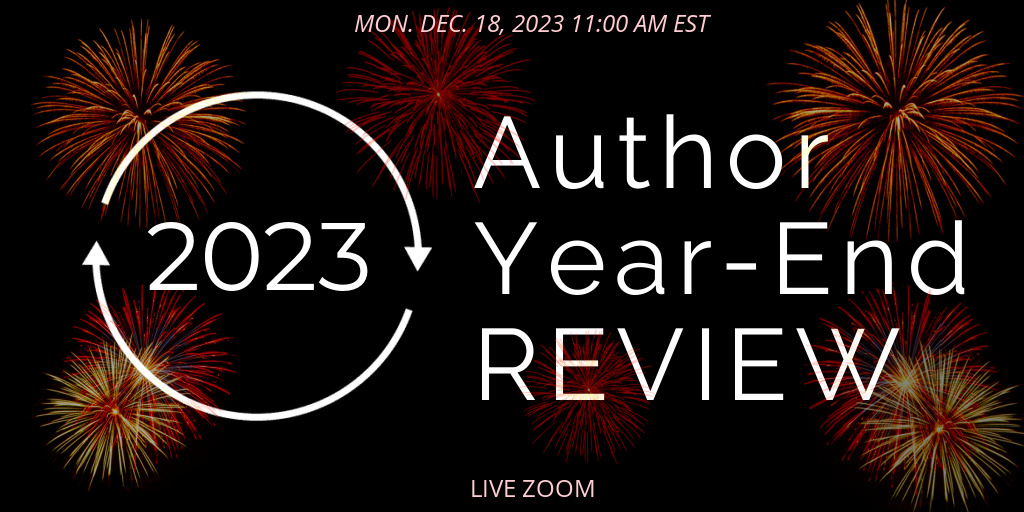
We are pleased to invite all fiction authors (published or unpublished) to our annual Author Year End Review for 2023.
Now that we’re about to close out 2023, it’s important to process all that happened (or didn’t happen) for us as writers this year.
We need to find out what worked and what didn’t, so that we can double down on the things that brought us results and eliminate whatever is draining our time, energy, and creativity.
How Authors Can Harness the Power of Collaboration & Collective Promotion was originally published on DanSoule.com.
In the competitive world of publishing, authors often face numerous challenges when it comes to marketing and promoting their work. It’s hard to get heard. There are so many new books coming out every week. Then there are the old classics on a TBR list a mile high. Ads can be expensive for indie authors, and traditional authors don’t control their marketing budget. Social media cliques seem random and hard to become a part of. However, there is something we can do, and do together. By fostering a supportive network among fellow authors, both self-published and traditionally published authors can harness the power of collaboration and collective promotion.
In this blog post, we will explore various ideas and strategies to genuinely support and uplift other authors, with the ultimate goal of building a strong marketing network.
1. Recommending fellow authors to your mailing list
One powerful way to support fellow authors is by recommending them to your mailing list. Sharing their work with your dedicated fanbase can introduce new readers to their books and create a mutually beneficial relationship. By showcasing authors whose work you admire, you not only strengthen their visibility but also position yourself as a trusted source of recommendations.
2. Recommending fellow authors to podcasts
Podcasts have become a popular medium for book discussions, author interviews, and literary conversations. A meaningful gesture of support is reaching out to podcast hosts and suggesting fellow authors as potential guests. Through direct messages or introductions, you can help expand their reach and provide them with an opportunity to share their stories, insights, and expertise with a new audience.
3. Interviewing fellow authors for your platform
Extend a helping hand by interviewing fellow authors on your blog, website, or social media platforms. By giving them a platform to share their experiences and ideas, you not only provide valuable exposure but also foster a sense of camaraderie among authors. These interviews can generate engaging content for your readers and allow them to discover new voices within the writing community.
4. Writing reviews for popular blogs
Another way to support authors is by writing reviews for popular blogs or literary websites. By sharing your thoughts on their books, you contribute to their visibility and help potential readers make informed choices. Positive reviews can lead to increased sales and exposure, benefiting the authors’ careers. Additionally, your participation in the wider literary conversation enhances the overall credibility of the writing community.
5. Writing reviews on platforms like Amazon
Beyond blog reviews, consider leaving honest and thoughtful reviews on platforms such as Amazon, Goodreads, or other online bookstores. Positive reviews help boost authors’ visibility and encourage potential readers to explore their work. Remember, your words have the power to influence readers’ purchasing decisions, so provide genuine feedback and highlight the strengths of their books.
6. Reading manuscripts and offering feedback
Offering to read and provide constructive feedback on manuscripts can be an invaluable contribution to fellow authors. This gesture not only helps them refine their work but also shows that you genuinely care about their success. Constructive criticism and thoughtful suggestions can lead to improvements and further development of their writing skills. By actively engaging with their work, you build strong connections and foster a culture of support within the writing community. This is time consuming but the potential reward in terms of fostering trusted relationships with a handful of authors could prove invaluable in the long run.
7. Blurb books
When you come across exceptional books that resonate with you, consider offering to provide a blurb for the author. Blurb endorsements from respected authors can significantly impact readers’ perception and generate interest in a book. However, it is essential to be honest and only offer a blurb when you genuinely believe in the quality of the work. Authentic blurbs create trust among readers and maintain the integrity of the writing community. Traditional authors also consider doing this for indie authors. You won’t catch the plague and indies often tap into audiences neglected by big publishing houses. Plus, they have some of the best books going. On the flip side don’t blurb books with high praise that don’t deserve it just for the back scratch. You sully the pool for everyone and undermine the trust of readers.
8. Zoom meetings to share advice and experiences
Connecting with fellow authors through Zoom meetings or online forums allows for valuable discussions, idea sharing, and mutual support. These interactions create a sense of community and enable authors to exchange marketing strategies, promotion ideas, and writing tips. By openly sharing experiences, successes, and challenges, authors can learn from one another and collectively navigate the ever-evolving publishing landscape.
9. Genuinely celebrate fellow authors on social media
Beyond the usual likes and retweets, take the time to genuinely celebrate fellow authors on your social media platforms. Share their achievements, book releases, and accolades with your audience. By amplifying their successes, you not only show your support but also introduce your followers to new authors and their work. Remember, a rising tide lifts all boats, and celebrating the achievements of others creates a positive and supportive environment within the writing community.
10. Create connections between authors
Act as a bridge between authors by introducing them to one another. Connect authors with complementary writing styles or genres, fostering potential collaborations, joint marketing efforts, or even mentorship relationships. By facilitating these connections, you contribute to a stronger network and a culture of collaboration rather than competition. Sharing resources, advice, and experiences can empower authors and foster a sense of camaraderie that benefits all involved.
11. Purchase fellow authors’ books
Support fellow authors by purchasing their books. This not only provides direct financial support but also helps boost their sales rankings, visibility, and overall success. Actively engage with their work, leave reviews, and recommend their books to friends, family, and book clubs. Your genuine support and endorsement can lead to increased exposure and a wider reader base for fellow authors.
12. Collaborate on creative projects
Consider collaborating with fellow authorson creative projects such as short stories, anthologies, or even co-writing a novel. Collaborations provide a platform for cross-promotion, where each author can tap into the other’s audience and expand their reach. Moreover, collaborative projects foster creativity, spark new ideas, and allow authors to learn from one another’s writing styles and perspectives. The combined efforts of multiple authors can create unique and captivating works that resonate with a broader audience.
13. Cross-promote releases across platforms
When you or a fellow author have a new book release, seize the opportunity to cross-promote across platforms. Share information about the release on your website, social media channels, and newsletter, giving a proper mention rather than just sharing a link. By leveraging your established audience, you help generate buzz and increase visibility for both yourself and fellow authors. Remember to approach cross-promotion with a spirit of collaboration and reciprocity, as mutually beneficial partnerships can lead to wider exposure and increased success for everyone involved.
14. Recommend fellow author’s books to local bookstores
Reach out to local bookstores and recommend books written by fellow authors. Many independent bookstores value recommendations from members of the writing community and are often open to showcasing local talent. By advocating for your peers, you not only support their sales but also contribute to a thriving literary ecosystem within your community.
15. Recommend fellow author’s books to local libraries
Libraries are vital hubs for book lovers and readers of all ages. Suggesting books by fellow authors to your local library can help increase their circulation and introduce new readers to their work. Libraries often welcome recommendations and appreciate community involvement. By promoting fellow authors in this way, you contribute to their visibility and enable more people to discover their writing.
16. Recommend fellow author’s books to book clubs
Book clubs provide a unique platform for discussion and discovery. Recommend books by fellow authors to book clubs, either in your local community or online. Sharing titles and authors that have resonated with you can spark engaging conversations and expand the readership for your peers. Book club recommendations also have the potential to generate word-of-mouth buzz and lead to increased sales and exposure.
Conclusion Building a supportive marketing network among authors is an investment in both individual success and the collective growth of the writing community. By genuinely supporting and promoting fellow authors, we create a culture of collaboration, encouragement, and mutual empowerment. Through actions such as recommending authors to our mailing lists, sharing their work on podcasts, and writing reviews, we expand their reach and introduce their talent to new audiences. Engaging in activities like manuscript readings, collaborations, and cross-promotion allows us to forge meaningful connections and strengthen our ties within the writing community. Celebrating fellow authors on social media, connecting them with one another, and advocating for their books in local bookstores, libraries, and book clubs further amplify their voices and contributions. By investing our time, resources, and expertise in the success of others, we foster an environment where all authors can thrive. Together, we can create a vibrant and supportive ecosystem that benefits each member and showcases the power of unity in the world of literature.
So, if you are looking to try out some of these ideas, this post is sponsored by my novel Witchopper. Maybe you could show it some love?
If you see her, then you’re dead…
All Rob wanted to do was fit in at his new school after being torn from London so his parents could fix their marriage. But when Rob’s journalist father dragged him along to investigate the legend of the Witchopper for the local paper, her curse became their reality.
She was priestess to the pagan god of the wild wood, hanged by a rabid mob for her unspeakable crimes. Now, something far worse than the hell of high school is after Rob and his dad…