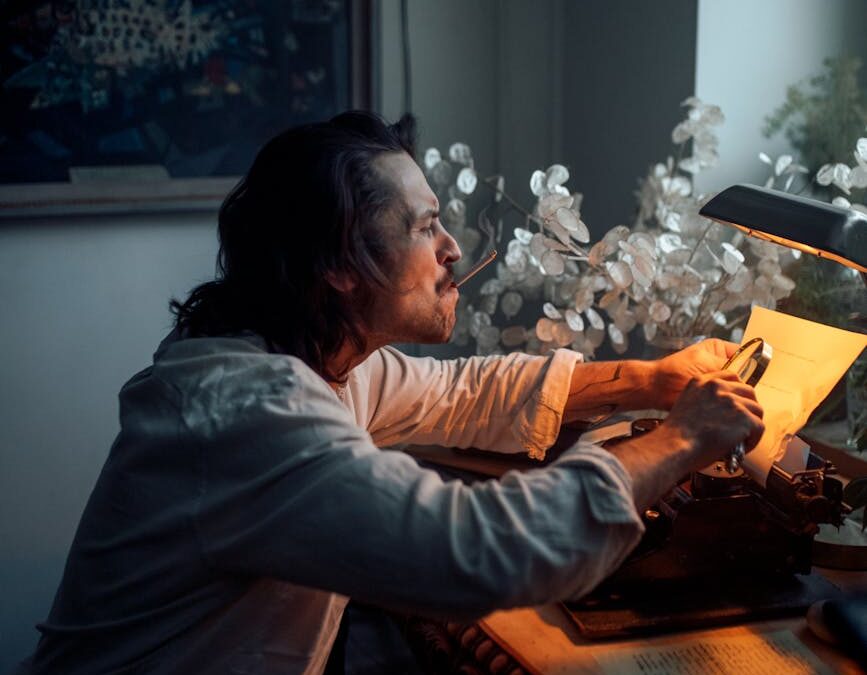
After deciding to become an author, I was frustrated by how hard it was to make things happen.
I knew I could learn to do anything if I worked hard enough—how to structure a novel, to write effective sentences, to publish on Amazon, and to market myself. And I did teach myself to do all those things.
While I was proud of what I achieved, I still felt like I was not writing to my full potential. More than that, I wasn’t doing enough to sell the books I worked so hard to write.
So I tried all the courses and the methods. I read all the articles and listened to all the podcasts about writing fiction, self-publishing, and book marketing.
I could not get any momentum going, and I felt hopeless about my future as an author.
Worst of all, I was the founder of an online writing group, attempting to lead a group of writers to their dreams, and I couldn’t walk the talk. I felt like a fraud.
The REAL reason writers fail
It wasn’t just me. The same issues surfaced again and again for the members in the Writer’s Mastermind group. They were frustrated with themselves for not being able to quite get it together.
They couldn’t build momentum with their email lists or social media. Book rankings and sales made them wonder why they bothered to publish books at all.
I knew the problem very well because I was living it.
All the practical tools in the world did not help me make progress. I watched myself and other writers struggling to fulfill their dreams, I had to face an uncomfortable truth.
The problem was not family, not the job, not “I’m too busy,” “too tired,” “too introverted,” or “not talented enough.”
When I was honest with myself, and audited my habits objectively, I observed that somehow I had time for scrolling Instagram, binging streaming series, folding laundry, and other people’s problems.
Really … I could make time for writing and promoting if I wanted to.
But I didn’t. Deep inside, part of me wanted to stay safe and hide, to not give it my all, because if I failed, I would get confirmation that I sucked.
There was also another voice, one that would not leave me alone, that said: If you feel compelled to write, you need to follow that urge or you will die!!!!
Ok, not that serious, but a huge part of me would die, and it might be the most important part.
This cognitive dissonance made me depressed and frustrated.
How could I be doing all the right things, yet going nowhere?
It was a disease, one hidden beneath the logical brain, in the unconscious.
Arming myself with information patched things temporarily. It only eased the symptoms.
It didn’t actually help because:
All the classes in the world will not help if you don’t act on the information.
All the marketing strategies cannot sell your books if you shrink from being seen.
All the accountability measures you put in place won’t help you write more or better if you have doubts about why you’re writing or if it is any good.
The disease is mindset.
Yeah, I know mindset is a buzzword for personal development and entrepreneurs. But creatives, like fiction writers, need to cultivate a mindset as much as anyone, if not more.
Being a creative means having to believe in yourself on a deeper level. You have to expose yourself to create art that moves people. You have to be willing to be seen in ways that most people will never be brave enough to share.
How to shift your mindset
Why are you fawning instead of fighting for what you want?
Why are you shrinking instead of shining?
Why do you prioritize things that do not bring you closer to your goals?
Do a personal audit
You have to look at your habits objectively, mercilessly face what you’re protecting yourself from, and arm yourself with the practical tools as well as optimize your daily world to give yourself the best chance to write to your full potential.
It might be some of the most difficult work you’ll ever do. But you’ll not only become a better, more prolific writer, you’ll also grow as a person.
Dive into inner work. Investigate who you are and why you are that way. Be curious. Try everything. Books, affirmations, meditation, visualization, therapy, NLP, EFT, shadow work, journaling, peer support groups—do whatever it takes to dig deep and discover why you’re not following through.
Reorient to your true direction
Once you analyze what you’ve been doing and why, it’s time to articulate what you really need to be doing. Becoming a writer means devoting time and energy to something that doesn’t pay off in the ways that a job or business does. You won’t see a regular paycheck, a 401K, or medical insurance. People don’t take writing seriously unless you’re already a huge name.
You need a reason that transcends the approval and validation of others and goes beyond material rewards or praise and status.
What is the real impetus behind your writing? Embody it. Own it. If you don’t take yourself seriously, no one will.
Use tools like the Writer Archetype Quizto gain deep insight into what drives you and how to use your gifts to your advantage.
Choose your companions wisely
Lastly, ask yourself, who do you spend the most time with? Not just the real people in your life— who are you surrounded by on the internet, TV, and social media?
Sure, we all need to indulge in pure entertainment once in a while, but how much of what you are consuming is enriching you in some way?
Follow authors who have what you want. Analyze what they are doing and how they are doing it. Join a writing group that includes other writers who can mentor you.
Read the kind of stories you want to write. Learn about the people you admire. Reduce the time you spend with the crowd that diminishes your energy. Choose people, places, and things that inspire you.
Catalyze Your Writing
It’s not selfish to invest in yourself and your passion. Playing small and going with the status quo will make you depressed and resentful. Living in your truth as a creative will make you expansive and magnetic. Ultimately, your happiness and self-realization will enrich the lives of those around you.
What are the chances you’ll become a successful fiction writer?
In our last post, we talked about Turning Rejections into Success and surviving artistic losses by benefiting from what they force us to learn.
Today, we will talk about becoming mentally and emotionally strong enough to push through moments where the prospect of going for the writing dream is too much to contemplate.
WHAT ARE THE ODDS THAT I’LL BECOME A SUCCESSFUL WRITER?
This question is paralyzing.
We think:
How many writers are out there with the very same dream I have?
What makes me think I will be the one to break through?
I don’t have the time, energy, confidence, or freedom to go for it.
So many are more talented than me. This is a waste of time.
On the other side of the spectrum, sometimes the thought of success is scarier than failure.
What if this becomes a big deal?
Will my marriage survive it?
What will my parents think of what I wrote?
I’m terrified of public speaking. What if they ask me to make appearances?
Either outcome is enough to keep our wheels spinning until the end of our days.
The key to stop sabotaging yourself with thoughts is to practice self-awareness. When you feel resistance to moving forward on your project, ask yourself …
What is it exactly that I’m feeling? (fear, hopelessness, unworthiness, imposter syndrome)
Why do I feel this way? (my partner criticized my work. My savings is dwindling, I’m intimidated by another writer)
Is this true? (Not really. My partner’s criticism is unfounded. They don’t even like my genre. I can earn enough money to make this work. My writing is just as good as other writers for my audience.)
What is the next right thing to do to bring me closer to completion? (Check your author plan, do the next thing on your list. If you don’t have a plan, make one. Or just sit down and write as much as you can, whenever you can, until it’s done.)
You do the work.
The future will take care of itself!
*******
We are pleased to invite all fiction authors (published or unpublished) to our annual Author Year End Review for 2023.
Now that we’re about to close out 2023, it’s important to process all that happened (or didn’t happen) for us as writers this year.
We need to find out what worked and what didn’t, so that we can double down on the things that brought us results and eliminate whatever is draining our time, energy, and creativity.
Writers are notorious for suffering from Imposter Syndrome, writers’ block, and chronic procrastination. I, myself, struggle with these neuroses every day. They never completely go away, but I have discovered how to become a more confident writer.
I started writing ten years ago, having virtually no idea what I was doing. Although I managed to finish a few novels and novellas, I knew there were issues with my writing. The problem was, I couldn’t tell what they were.
In 2019, I finally decided to take my writing seriously and signed up for my first writing class—Contemporary Dark Fiction with Richard Thomas. He’s the award-winning author of three novels, three short story collections, two novellas, and over 150 short stories.
Required reading for the class was four novels, sixteen articles, and sixteen short stories. The work included weekly writing assignments, four complete short stories (one per month), four analyses of the assigned novels, and critiques of the eight other student’s monthly stories. We also met once a week on video conference to discuss the week’s material.
I do not have a college degree. What little I knew about fiction I learned from reading my favorite authors and Google. To say this class was intimidating was an understatement!
But I dove into it and was amazed at my output. There was something about putting up my hard-earned money and being forced to deadlines that made me push myself beyond my perceived limits. The analysis of the stories, the exploration of what other writers were doing, and the giving and receiving of feedback from the students, especially from Richard Thomas himself, advanced me more in four months than all I’d learned on my own the seven years prior. I went into that class a bumbling novice and came out the other side feeling like, hey, I think I can do this!
Since working with Richard Thomas, I have fast-tracked my writing career and have accumulated a body of quality work. Four of the short stories I wrote in his classes have been accepted by notable anthologies. Now that I’ve earned professional rates for my stories, I was able to become an active member of the Horror Writers Association.
My writing style has gelled. I know what I can do, how I want to do it, and where my work belongs. I no longer look at other authors getting acceptances and being published, wondering what the secret is. When I think about how lost and unsure I was three years ago, I could kick myself for not investing in a serious writing class sooner. I’m now in my third class with Richard Thomas, his Advanced Creative Writing Workshop.
So, my advice to any new writers out there, or any writers who’ve been struggling for a long time, is to find a writing group, course, critique circle, or workshop. Do not keep doing the same things over and over again, wondering why you’re not getting anywhere.
Knowledge equals confidence. The more you know, the better you can wield your creative powers. Give your writing the chance it deserves. Keep learning, keep growing.
The beautiful thing about writing fiction is you’ll always be evolving, but it’s up to you to invest in yourself!
“All too often, it is audacity and not talent that moves an artist to center stage.“
Julia Cameron – The Artist’s Way
After running the Writers Mastermind for a year and a half, the biggest problem I see with struggling authors is not that they don’t have talent or that they can’t learn what it takes to be successful. It’s not believing in themselves, not giving themselves a chance to get good, and not thinking they’re worth wild success—thereby not committing fully to their creative life.
If you always put writing last, if you feel like no one takes you seriously, if you are hiding in the shadows watching others achieve the dream that you know in your heart you are capable of and are meant to live, I am in the same position as you.
That is why this year we are going to go through The Artist’s Way process by Julia Cameron. It is a 12 Week path to higher creativity. Many artists, writers, actors, and other creatives credit Julia Cameron’s method to helping them break through to become their fully realized creative selves. I am a huge fan of her work and her mission.
I’ve started The Artist’s Way process several times and never followed through. Obviously, that was my lack of commitment showing again. Also, I was trying to do it alone.
Julia Cameron generously encourages creatives to form peer-run groups for a collective process, so I’m inviting you to join our virtual circle. Going through it with a group will help others empower themselves creatively while ensuring that I don’t flake out!
How to take part?
With today’s jam-packed schedules, a 12-week crash course will be intense. Instead, we will focus on one of the 12 parts each month. That way, we can deeply invest ourselves in the process and enjoy the journey as well.
If you don’t buy the book, you can still follow along. I will send thoughts and exercises each week (and in the private Facebook group) and we will discuss what we discovered and experienced each week during the Monday Zoom meeting.
You decide your level of participation. If your short on time, just reading and meditating on the weekly thoughts will do you a world of good. If you want to go deeper, then you can complete the exercises in their entirety.
I suggest you give it all you got. Why waste one more year not living to your fullest creative potential?
The Artist’s Way – Online Group
January – Recovering a Sense of Safety
February – Recovering a Sense of Identity
March – Recovering a Sense of Power
April – Recovering a Sense of Integrity
May – Recovering a Sense of Possibility
June – Recovering a Sense of Abundance
July – Recovering a Sense of Connection
August – Recovering a Sense of Strength
September – Recovering a Sense of Compassion
October – Recovering a Sense of Self-Protection
November – Recovering a Sense of Autonomy
December – Recovering a Sens of Faith
Why is it all about “recovering?”
When we are born, we all have the fearless compulsion to create. We don’t think about why, or if anyone likes it, or if it earns money, or if it’s not as good as anyone else’s. Then, as we grow older, people, society, and responsibility stifle our enthusiasm and make our creative selves shrink inward.
In 2022, we recover that boundless, bold, and joyous sense of creativity we possessed as children. I believe once we tap into that, we become limitless and lit with a constant fire that ignites all other areas of our lives.
Note: I am not in any way affiliated with Julia Cameron, The Artist’s Way, or her publisher, nor to I claim to be any kind of certified practitioner/teacher.
As stated on her website: “Anyone can teach the course or begin a cluster by following the book and the guidelines below. It is my belief that creative recovery at its best is a nonhierarchical, peer-run, collective process.
There are no ‘accredited’ Artist’s Way teachers. Avoid anyone who offers to ‘certify’ you as a teacher– there is no such thing.”
What happens when 15 authors from 8 countries who write in various genres get together to create one short story?
We are proud to share our first ever Story Relay in the Writers Mastermind! The mission of the Story Relay is to create a fun collaboration in which each author has the freedom to take the story wherever they want it to go.
Nothing showcases our authors’ unique voices better than to have them contrasted against one another. The story took delightful and suspenseful turns. You will see how the characters developed and how the theme—a writer fighting against the naysayers and his own self-doubt—deepened, resulting in an inspiring, transcendental ending.
And now, we are pleased to present, From the Ashes, the story of Windles the writer and his pet chinchilla, Spanks. It’s a story most writers can relate to. We hope you enjoy it!
Windles was a horrible poet, the worst ever. The town even presented him a plaque that officially named him as such. Somehow, he couldn’t throw it away. It was the only award he’d ever gotten. He kept in covered with a red rain jacket in the back of his armoire. Sometimes he slipped his hand underneath to trace the etching of his name with his fingertips and imagine the title said that he was the greatest.
Even though people fled at the mention of his writing, he wouldn’t stop. He couldn’t, and compulsively scribbled poetry in a little, worn notebook several times a day. This he did in secret. It would be a scandal—a crime, some neighbors said— for The Worst Poet ever to keep bringing his ghastly verse into the world. So Windles kept this source of shame hidden in his sock drawer, like a landmine that was still active long after the enemy was defeated, one that might explode an innocent passerby decades later.
As if someone might ever find and read it, he told his pet chinchilla, Spanks. No one had visited him since his mom died.
Soon, his sock drawer became too small to deal with all his writings, its small space soon vomiting countless pages of small, scribbled lines of verbal diarrhea. Windles was not only writing his poetry on his alone time, he soon found himself writing more and more in the day to the point his diatribe on the page became his obsession. From morning till night, all he could think of were the words he would put on the page.
One night, he dreamed that ink was in his veins and his fingers had turned into pen and pencil, while he spat paper left and right. The more he wrote, the more he needed to write and the more he did so. Eventually, his little notebooks not only filled his sock drawer, but they also filled every surface in his bedroom. From the top of his nightstand to his wardrobe, to any surface he could find, and piles of small notebooks started to stack up even on the floor. As time went on, the smell of paper and ink-filled his nose and became a smell that would bring him comfort and joy. Soon, even the very noise in his bedroom had changed, the sounds being absorbed by the mounting stacks of paper that were all over the place. But soon, the comforting smell of paper and ink became a source of anxiety for poor Windles. Soon, his cozy dreams of creative writing started to take a hold of his very soul and created nightmares that would start to choke him in his sleep. It all started when…
The fire alarm went off. Windles awoke coughing. The thin light of the streetlamp outside was nothing more than a smudge of across his stinging eyes. His senses seemed to be floating around his head like the thick smoke, diffused and insensible. More raking coughs brought him to his knees and to air. There was a siren outside coming closer and banging at his front door, and suddenly it hit him. His house was on fire. He struggled to his feet and almost faltered back to a knee as his head swooned.
The fire was licking through the jamb of his bedroom door, crawling up the ceiling, across the walls and feeding on the piles of paper staked there. The flames swelled, devouring every word he’d ever written. As he flung open his desk draw, it came free in his hand, throwing him on his backside and showering the room in pages of floating stanzas.
The heat was unbearable. He could smell the hairs on his arms singing. Consciousness was leaving him as his words fell about him. He would die among them, a poet immolated by his own art. It would be perhaps the most artistic thing he’d ever done.
But then an axe smashed through the glass of his window.
Windles kept his eyes barely open. The axe landed near his head, cutting the wooden floor. The flames behind Windles reflected on its smooth surface.
He made an effort to focus on the window when a black shape jumped into his bedroom, surrounded by a halo of smoke and death. It crept towards him and crouched by his side.
Windles fell back to the floor, his eyes wide open as he suppressed his urge to cough.
“Who…who are you?” He tried to guess the face behind the black hood. However, only a dark hole seemed to pull him into unconsciousness.
The next thing he sensed was something lifting his whole body and floating out of the thick, hopeless ambience. That was all he needed to fall into the veils of slumber.
**********
A cool chill ran through his body. Windles opened his eyes and met the starry night sky above him. The crackle of burning wood and the scent of cedar filled the space. Windles sat straight, massaging his neck. A cough came out of his chest, making him spit dark mucus.
“Rest again. You need it.”
Windles looked for the voice which had just spoken when he saw the dark shape behind the campfire flames.
It lingered to him, and Windles tried to stand up, but his knees gave him away. The shape sat beside him and stretched a gloved hand to his head, but Windles jerked back, raising his arm.
“Don’t touch me!”
“No need to fear, Windles. We found you, finally.”
The voice rang softly in Windles head. Suddenly, a pair of stars shone in the faceless being.
“Who are you?” He asked in a whispered.
He watched the shape freeing its hands from the gloves and was shocked at the glowing skin. Then, it took off the hood, unleashing a long silver hair. And the face… Windles was sure that face had robbed the moonlight from the skies. It was ageless and filled with wisdom, innocence, beauty, and something else.
“Your poems contain immense power. Your creative energy has the clarity and strength of the purest diamonds.”
Windles couldn’t take his eyes off the starman’s face. He was sure he saw galaxies swirling just below the skin. The words ignited the dying embers of ego within him that longed for praise, and he realized that he had always known that he was a genius waiting to be discovered. That was why he hadn’t quit. Brilliance was never recognized by the filth it emerged from.
“You are so important, Windles, which is why we’ve searched for you. Unfortunately, we’re not the only ones. There are others who wish you harm, who want to abuse your gift for their own twisted purposes or, like the ones who set fire to your home, who wish you dead.”
Fear threatened to overwhelm Windles, but anger rushed in and propped up his quivering spirit. He always knew he had enemies. How dare they try to kill him and deprive the world of his greatness? He bared his teeth.
“Who are they?”
The starman shook his head, the long tendrils of his silver hair floating around him as if wafted by an ocean swell.
“They’re not important. All that matters is that we’ve found you and you’re safe. I’ll explain everything when we’re back with my people.”
“Step away from the poet.”
The starman whipped his head in the direction of the growly voice, and for a moment his eyes changed from stars to black holes. Dark shapes crept out of the night, eyes glinting in the firelight from multiple creatures, and Windles covered his nose to block the strong animal odor that assailed him.
A tiny figure scampered into the ambit of the campfire, its soot blackened fur not hiding its identity.
They came uttering a nonsense of syllables from mouths more akin to wounds. They had no features to speak of, only a semblance of human form, a vague echo of pride reduced to simian crawling. Whereas Windles’ strange silver-haired saviour had flesh of starlight, theirs was of night itself, though only an unobservant poet would think of the night as purely black. Within the void there were many colours, an etheric consortium of shades, each fractionally different from the last: midnight azures, abyssal purples, and deepest reds the hue of hearts-blood. Gazing too long could disturb the mind. Windles already felt them pulling his brain apart.
Spanks barked and whined, alternating between ferocious courage and abject dread. The starman regarded the intruders with cold focus.
“Begone,” the starman said. “He is mine.”
“Step away,” they hissed as one. Their meaning was hard to grasp, drowned out by other discordant noise: chittering, jabbering, sounds like pincers snipping. It was as though sense and form did not come easily to them. Chaos was their natural state. “We will free him, for we are without limitations…”
Windles knew, then, the choice he faced. It was all about the poetry, and perhaps it always had been. Hadn’t the starman said as much? But now, the appearance of this antithesis confirmed it. Windles stood upon a precipice, but unlike a suicidally inclined man at the end of their tether, it was not so clear as to whether falling would lead to death or transformation.
He thought he was content to go with the starman, the clear choice. But at the last moment, something within him changed his mind.
What proof did he really have that the starman was good and the other creatures were bad? He liked that the starman seemed more relatable, more human, but that wasn’t a reason to assume he was good.
All his life, Windles had been producing poetry he was rather fond of, but the rest of the world judged the worst. Maybe his instincts weren’t the best judge of character.
After a moment of shock, he looked at the starman and then the leaders of the other group. He saw both sides were as surprised as he was by the question. No one seemed to know what to say.
“What do you want of me?” Windles asked of the new arrivals.
He already knew what the starman thought. At least a little of it.
“We want to set you free,” the creatures said in their weird, synchronized voice. “You can bring sense to our existence.”
“They want to use you,” the starman interrupted.
“Don’t you?” Windles countered. “You said my poems contained power. What do you mean? What kind of power and why do you want it?”
“You will help my people build new worlds,” the starman said.
That feeling of power and strength flowed through Windles again as the starman stared him.
It was odd how his emotions were suddenly all over the place. Windles knew he was a poet and generally more emotional than other men, but even he wasn’t usually this unsettled.
Maybe the starman had some means of controlling his emotions. Windles had noticed his emotions going wild just before the other creatures arrived.
Which side should he trust? Did he have any other options?
Was this even real? Maybe this was all some twisted nightmare. The fire, the axe, this strange place, these strange creatures and . . . the Starman. His chest heaved and fell slowly, the rise and fall of his belly negligible to the eye. He closed his eyes and froze. Perhaps when they opened this illusion would shatter like some wicked spell cast upon him by those who have disdained his life’s work. Those wretched wastes of flesh who knew no better than to slander his life’s work. Years of blood sweat, and tears were infused into every word. Each scribbled character birthed with the anguish, torment, and fear of being read or heard.
One…. Two…. he counted slowly, his lips not parting, his body trembling like a leaf in a mild breeze. No matter what, this delusion must shatter when he opens his eyes, none of this can be real. His flesh prickled as all the hairs across his body bristled. It was quiet but he could feel the silent gazes probing him. They were penetrating eyes that bore into his flesh, burrowing into his soul like a worm in soil, digging for an answer to the spectacle before them.
Nineteen, twenty… his count became hurried and his breathing rapid. With the rise and subsequent fall of his chest was the visible bulge of his belly slamming against his shirt as if it would burst through. His fists clenched and nostrils flared. Large beads of perspiration dotted his brow. Once he reached fifty, he would open his eyes, and all of this would be over.
His eyelids smashed against his pupils as the foul stench of the beasts crinkled his nose as they slowly approached perplexed by this scene before them. To his side the soft pitter patter of the Starman’s feet could be heard. His head began to slowly wag.
Windle’s hands continued to tremble, the sweat dripping from his bony fingers as he tried to push away from the energy of the entities approaching him. His senses magnified with each beating of his heart. How was the sound so loud? He had never heard his own heartbeat like that before. Still, he could not open his eyes or finish the counting. Not only did he fear the entities, but he had forgotten about the pain in his body, the aftermath of the fire. Did he get out in time? What really happened? A wave of heat consumed him as if some invisible flame was held there against his skin. Was this death? Was he dying?
“Just finish counting. This would all be over soon,” he said to himself, forcing harsh breaths through clenched teeth. His entire body was shaking now.
“Stop!” he shouted.
It was becoming harder to keep his eyes shut. The sound of his heartbeat got louder.
“Windles! Windles, are you alright?”
The pleasantness of the voice startled his eyes open as bright lights shone down and burned his skin. Someone whistled as thunderous applause filled his ears. The room spun as he lay there, wherever there was, drowning in his own sweat.
“Windles?”
The room was a blur, but he would recognize that voice anywhere. His secret crush and host of the poetry contest towered over him. The warmth of her smile, a conduit for happiness, as if the universe chose her to channel its positivity through to him. She looked down at him, her silver curls dangled as if reaching out for him. That glowing skin of hers and that beautiful face, the one that robbed the moonlight from the skies.
Windles could smell lavender, like the fields behind his home with their vivid purple hues and tall, slender stems peeking through the grass exuding a fine fragrance in early summer. The scent was hampered now by the relentless stench of smoke that wouldn’t leave his nostrils. He opened his eyes to expect a bunch of flowers, a mistake in room number he was sure, as he had no one to send him anything. He caught his breath as he glanced at the chair next to his bed. It was none other than Lilith, the most beautiful woman he ever set eyes one. Her silver hair framing perfect features, her signature lavender essential oil perfuming his room. The neighbor he had spied on countless times but was too self-conscious to speak with was seated right next to him. Her gaze was down into her hands. Windles tried to sit up to see what she held.
Her gaze met his, “you’re awake. I have something for you.”
She rose from the chair and placed a small bundle into his lap adding, “Your chinchilla was roaming about in the street. I managed to collect him. I thought he might help you get better.”
Windle felt a knot form in his throat. He couldn’t remember the last time someone said a kind word to him let alone perform a gracious gesture.
“Spanks! Thank you, he’s alive. He’s all I have left. My writings, my poems are all gone.”
She looked at him with pity, “I’m sure you can write some more. The firemen said your flat was overflowing. Take care of yourself.”
With that, she left. Windle reached for the cabinet beside his bed. For once, luck was with him as he found a pencil and paper. He wrote with a fervor. Words flowed. When exhaustion hit, he put the pencil down, adjusted Spanks in the cradle of his arm and fell fast asleep.
As he slept, a nurse came in to check his vitals. Glancing down at his note pad, she read his words with abandon. Her husband, an editor of a prestigious literary magazine, would find his poetry unique, eloquent, inspired. She took a quick photo of the pages and sent a text …
Windles was rudely awakened by a sharp pain in his hand. His eyes popped open, and he discovered Spanks had chomped down on his flesh.
“Ouch! Some friend you are,” he said bitterly and shoved his chinchilla away.
He glanced out the window and saw night had fallen. He must have been asleep for hours, but he was still tired and decided to close his eyes once more. No sooner had he done that, Spanks bit him again. He yelped and shook his hand. “Why you-”
“Hello Windles.”
He looked up in alarm and saw a large figure in the doorway, blotting out the light from the hallway. “Wh-who are you?”
“I apologize if I startled you. My name is Smith, and I’m the editor of Wowie! Magazine. We publish short stories, poetry, and cooking recipes. My wife is a nurse here and she sent me a picture of your work. I had to meet you as soon as possible! Your words, Windles, they sent shivers down my spine and made my liver quiver!”
“What?” Windles stared at him with a blank expression.
“What I’m trying to say is, I want to publish your work. Such brilliance only comes along once in a generation! What do you say?” Smith held out a meaty hand and waited.
Windles hesitated. This is what he always wanted, but it was happening so fast. “This sounds amazing, but I need to clear my head a bit first.” He slowly stood and shuffled to the window and lifted it. A cool, refreshing breeze wafted in. But then the hairs on the back of his neck stood up. The breeze carried a familiar animal odor, and it was getting stronger by the second.
Windles stumbled away from the window. “No, it couldn’t be. That wasn’t real…”
The room fell away. The window now a gaping hole into the abyss. He grasped towards a non-existent windowsill to regain his balance. His nostrils contracting at the corrosive strength of the alien scent. This had to be death.
All around him words spun in tornados of text. The nightmare played out; he was glued to a floor that no longer existed. His clothes, his bed, the building all slid into a tsunami of flames and ash.
Something brushed against his ankle. The floor fell away as Spanks, his only friend, clawed at his naked thigh. He felt no pain as Spanks scraped away the flesh, his ivory frame exposed to the light.
He looked down at his hands, the flesh peeled, leaving bone scorched to black. They morphed into sticks of charcoal, the tools of his art. The irony. His mouth sighed unheard words into the dark skies beyond the abyss.
A light in the distance. The light. His mother had spoken of white light, was she beyond its source? Or was this the abduction he had spoken on in his poetry. They had called him a fool in a foil hat. Been ashamed of his obsession with UFOs.
Was this another world calling him, willing to embrace his art as no other?
As words fell from the screen, as letters faded from notepaper over time, his body was failing him. Disintegrating before his own eyes. His frame falling away, one bone at a time.
He was an observer to his resurrection. His fingers reached up to the stars, the light now a beam of heat and white noise. He felt nothing and was overcome with agony. He could think of no words and couldn’t stop the rolodex of metaphor and haiku washing through his absent mind. But …
But the beam of heat and white noise reached down and took him away. Just like that, Windles felt his heart swelling with regret because he hadn’t believed in a higher power like his mother once had. He knew his time was short, and if he were to be a poet, he would be a poet for the right reasons. That’s what the glimmering man was trying to tell him the first time they met. However, it wasn’t up to Windles to decide anymore.
“Validation,” the white noise said. “This was your heart’s desire.”
Windles had been blinded by his years of languishing, alone, with nothing but his chinchilla to keep him company. He realized how crazy it had driven him. Seeking validation brought him to the edge. Windles had gone to unthinkable lengths just to be told, “I see you.”
Then the beam of heat showed him his life story. It felt like an eternity. Windles was at a loss for words when he saw himself that fateful night in his office, holding the lighter in his hands. Then he heard the voice of a woman he couldn’t see. “Please help my son. Don’t let him ruin his gift. Save him.”
At that moment, nothing else mattered. Windles was sorry. The memories of his mother flooded his mind, and he felt a sharp burn in his chest, like electricity. Only it was electricity …
Windles woke up on the hospital room floor with sheets on his chest and a woman holding a defibrillator above his face saying, “We got you back, at last. You collapsed because of a cardiac arrest, sir.”
Why the second chance? Was he really forgiven for what he tried to do? Windles pondered the questions repeatedly. He knew what he had to do.
Windles knew exactly what he had to do. He must write. Mrs. Smith, the kind nurse who sent his poetry to her magazine-publisher husband, also dropped off a few new notebooks and a package of pens. As soon as he broke the plastic, he began to write and quickly filled its pages.
On the third day of his stay in hospital, the doctor advised Windles that his health had improved, and he could now return home. He was thrilled with the news, but he had no home to return to. Where would he go?
Just as he was ready to leave, the Starman entered his room and said, “We are sorry for your loss and have arranged a hotel for you and Spanks until you can get back on your feet. The firemen will allow you now to check the grounds in case you can recover something.”
Excited, Windles grabbed Spanks, who would be good at detecting any of his belongings. But when they arrived at his house, his heart fell at seeing the structure on the ground. He decided to check the area in case he could find something to salvage.
While shuffling around the place, his foot knocked against what he believed was his armoire. He kicked the burnt wooden pieces and parts of the red rain jacket appeared. Windles tried to catch his breath when he considered what might have survived the fire.
Putting down his hand, he brushed away the red rain jacket, and lo and behold, the plaque naming him the worst poet ever had survived. However, his world had changed since that devastating fire where he lost all his poems. He was now a published poet, and the plaque no longer held any value, but he would keep it to remind him of the past.
Holding a piece of his past in his hands, Windles looked to the east where the sky held rain clouds a deep gray, a darkening of the horizon, threatening rain, but in his hands, he held a kind of sun with which his world could revolve if only he’d allow it. He had a future despite his reckless endangerment of himself and his pet. He once cared what the naysayers spoke into existence for him. No more. His words had power. He no longer needed others to tell him that.
Feeling as if the fire he’d wrought released the truth from its ashes, he understood he was always somebody. Validation need no longer be given and his worth relied solely upon his own counsel.
He turned to face the Starman, understanding that this figure of poise and his most recent object of fear, was no dream, the creatures from what he once thought of as a nightmare were also real. He had a choice to make, he thought, as he let go of the past, allowing the plaque to fall at his feet. In that moment, he wished he could ground the plaque into ashes as so much of his world had turned into, but it had survived for a reason.
“I know who I am now,” Windles said, staring into the Starman’s luminous eyes. “You and the monsters of my soul are no longer needed on this plain of existence. I release you. I have chosen to live. I have chosen to become, and I will fare well in this decision.”
“We will watch and see if you fare so well,” the Starman said, and it sounded like a threat, but Windles wasn’t concerned. He had seen the abyss and knew now where he belonged. He would take the room because he needed it, but he would not falter this time around. He would write as if he had no other choice, because he didn’t.
He hadn’t imagined the smell of lavender either, he thought, as he looked to the western corner of the land and saw the house of his neighbor in the distance. She had come to me, he thought, bringing me Spanks. As he walked to the waiting car, where a living part of his psyche stood holding the door open for him, he vowed to send her flowers. Maybe there was promise there too, he thought. Maybe like his poetry held power, so did his care for Lilith. Life was good, he thought, as he took another look across the landscape of his yesterdays and climbed into the car to head into his future as a true writer, and finally, an author.