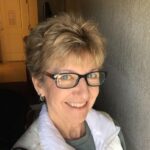
Each week, we are going to introduce you to a writer from the Writers’ Mastermind. Today, we have Bia Bella Baker, author of YA Sci-fi Fantasy Hecctrossipy, which is FREE on Amazon for the next 3 days!
Meet Bia Bella Baker
1. Tell us a little bit about yourself. Where are you from? Where are you now? What has your life been like?
I was born in Rahway New Jersey, and ended up clear across the country in St. Cloud Florida. As for what my life has been like, I’ve been around for 41 years, so I wouldn’t be sure where to begin. Rest assured, I’m not about to ramble. So here goes the condensed version—attending a boarding school for misfit kids, adventures in experiencing a hodge-podge of volunteer jobs, a ridiculous love-life, and several self reincarnations—but all the while, I always aspired to write.
2. What kind of stories do you write?
For now, I’m a young adult sci-fi & fantasy writer, but I have a pretty loaded multi-genre backlist.
3. What sets you apart from other writers in your space?
With two million or so books being released every year, I honestly didn’t count on my HECCTROSSIPY series being all that original, but others told me how unique it really is. I realized this too, when I searched the digital bookstores for other books in the YA sci-fi & fantasy genre like mine. The others I found, where the story takes place on a different planet, still have the expected science fiction or fantasy tropes, like political conflict, battles, and magic. The first novel in my series has neither of these things. The people of Velva Leena have a hive mentality. There are problems on their world, but they don’t involve war and politics. Strange and unexplainable things do happen on this planet, but there’s an organic explanation for everything.
My series is more like a teen drama that happens on a different planet. It could still be counted as sci-fi because it’s all about extraterrestrials and their very non-Earth-like culture, beliefs, their way of life, and their physical abilities that us humans don’t have, but it’s no Star Wars or Hitchhiker’s Guide to the Galaxy. It could be counted as fantasy, because there’s mythology involved, and folklore, but you’re not going to find any sprites and unicorns, and stuff like that. There’s also a bit of paranormal. Before the first book was published, I wasn’t even sure what genre to put it in.
The second book is going to be even more of a cross-genre mutant hybrid. There’s still the soap opera type stuff going on, but with more of a pre apocalyptic theme to it. Then add in a flare of murder mystery. The second book will also focus more on my characters’ personal and spiritual growth, especially with my main character, Artheena. Her psychic ability is getting sharper, which adds more of the paranormal element. There is also a new thing going on, what would seem to us Earthlings, like religious fanaticism. Yeah, you get the point. So far, at the time of this interview, my series is still very original.
4. What drives your writing? What do you mean to accomplish with your stories?
I just love it. Simple as that. I love the escapism. I love being other characters and experiencing what they experience. It’s so much fun to come up with dramas and new worlds, and just let my imagination go berserk. Writing about made-up planets is one of my favorites.
What I mean to accomplish with my writing is, to entertain people with compelling stories that are life-like enough to make them feel like they’re part of the experience, and that they feel they know the characters personally. The goal is to make my stories immersive enough to hit an emotional nerve, or stimulate the senses and imagination, and most of all, I love to take readers on a plot twist roller coaster. I would love for readers to get the same escapism enjoyment out of reading my books as I get with writing them.
And of course, of course, my dream is to make a good living off of this.
5. Who are you favorite writers and books? What are your other creative influences?
Sorry, but I’m going to be vague and generic with this one. I read so many different authors of books of all kinds of genres, I can’t point out a favorite. My creative influence is sugar. If I’m not watching my sugar intake, it has a weird imagination trip, hallucinogenic effect on my brain.
6. Do you write in silence? Background noise? Or music? What kind?
I have to cancel out the world around me, when I write, and make my work area as under stimulating to the senses as possible. My room has to be dark, and with the door closed, and I have to have an oscillating fan on for white noise. My sense of concentration is that flimsy.
7. What is your favorite thing to do when you are not writing?
I love pole-vaulting and cross-country skiing and scuba diving. I design clothes and accessories for pets. And I love to experiment with making new and unique flavors of marmalade and fruit compote, which I give to the poor children. Seriously, for real, I’m so freaking boring with hobbies. When I’m not writing, I love to read, explore Apple Music, browse on-line stores, and watch crime investigation shows.
8. Who is your current celebrity crush?
Hahahaha! How did this question end up in an interview about writing? I haven’t had a silly, dreamy, real celebrity crush in so long. Since I lost most of my vision, I only had fleeting feelings of just “kind of having a thing” for this or that guy, and they were all singers. But I didn’t consider them actual crushes. They were a voice that sounded hot, for a song or two. Or they had a passionate way of delivering a song, that gave me the chills in hidden places. Once I heard their song that got to me, enough times, the feeling would fade away.
Real celebrity crushes, for me, were visual. If I knew what he looked like, the crush was just more there, because I could fantasize about him, and ogle at pictures of him. Unlike my fleeting crushes on a singer’s voice, the visual crushes lasted for months. I used to even feel giddy and jittery when one of my celebrity crushes came on TV.
9. Why do you think it’s important to write fiction?
It’s important to write fiction, because it’s my favorite thing to do in the world, and it gives me a greater sense of purpose. If life started really getting sucky. Like, if my parents died, and I got bogged down by elephantitis in the left leg, or something. As long as I have my computer, and an overactive imagination, I’ll get along just fine.
10. Who would be the best writer, alive or dead, to tell the story of your life?
That would have to be me, because I’m such a loner who stays kind of hidden away a lot. If anyone wanted to write about my life, it would turn out a book that was based on a true story, because they would have to make up a bunch of stuff to fill in the blanks.
11. What are you working on right now?
Right now, I’m working on the second book in my HECCTROSSIPY series. It’s going to be called The Will of the Dark Creator, which I’m hoping to get released before the end of the year.
HECCTROSSIPY: BOOK ONE THE LEGEND OF THE LAND (VELVA LEENA 1)
The alignment of the three moons is a sign of positive changes to come… But the moons never promised that such changes will happen to everybody… On the pre-industrial planet of Velva Leena, two sisters eagerly anticipate the Hecctrossipy Festival, Continent 15’s yearly tradition that celebrates the victory over a legendary evil monster, who had the power to manipulate the elements, and create chaos.
Artheena is smart, talented, beautiful, and blessed with multiple gifted abilities. Mell May, on the other hand, is simple and average. Both are in love with Leeandro Paul, a celebrity heart-throb who has an intriguing way of turning the leaders of the land into his followers.
Artheena has a premonition of marrying him, during the alignment of the three moons. While on her quest for true love, she gets caught up in unexpected adventures, embarrassing situations, and experiences beyond her wildest dreams, including an outrageous contest that challenges Continent 15’s strict, conservative social standards.
Through it all, Artheena and Mell May’s close bond is also challenged. When the festival comes, the sisters have the time of their lives… Until Leeandro Paul makes an announcement that shocks his fans. An unimaginable secret is revealed, that might tear the two sisters apart for good.
Last month, we enjoyed an insightful webinar with coach, podcaster, and author Christie Adams on Time Management for Writers. And in this post, I bring you a glimpse of the most valuable tips we learned from her.
At the Writers’ Mastermind Group, a new masterclass from experts and award-winning authors rolls out every month, bringing value and motivation to writers. So get ready to make the best of your time and energy as a writer.
A Writer’s Wellbeing
Although some of us have a primary job that helps us pay the bills, we consider writing our genuine work. We do all it takes to squeeze our writing into our busy schedule, even if it means writing late at night after finishing our house chores, helping our children with their studies, etc., or at dawn before the world wakes up.
However, we forget to nourish the most important part of this tapestry with all this hustle: ourselves, and we get lost among our responsibilities.
Firstly, we are so active with the many things we have to do that we take our physical and mental health for granted, expecting to be always resilient. But, if we don’t take care of ourselves and our precious minds, we can get burned out quickly and waste our creativity.
Secondly, our time is unproductive if we don’t organize our schedule by prioritizing our most urgent tasks. We must give our work a defined time because life is worth enjoying, and writing is a huge part of that.
Time Management Tips
Here are the 13 tips Christie Adams that we discussed in that mastermind session. I hope they will bring you the motivation to look after yourself as the creative jewel that you are and help you to manage your time more effectively.
Look after yourself. You guessed it. This is paramount since we are the main piece of this creative puzzle. Adopt healthy habits that will help you feel energized and strong enough to carry with your to-do list.
Don’t forget your fair amounts of veggies, proteins, fruits, and carbohydrates.
Exercise every day for a minimum of 20 minutes, or take short walks.
Listening to music while you take your daily showers will revitalize you.
Pay attention to your mental health as well, especially if you are passing through a difficult time. Instead of lamenting and questioning your luck, ask what this experience teaches you, what you need to see, and how you can solve this problem. When we shift our questions, we will see different perspectives of the same situation and choose the best solution.
Find the time when you can commit to writing. Perhaps you are a morning person, and you have no trouble waking up early when your mind is the most creative. Or you love writing at night with your coffee or a glass of wine while your muse visits you. Keep in mind that blogging, writing emails, and posting on social media are also writing work, so make space for these tasks in your schedule.
Prepare a schedule and stick to it. Organize each activity (like work, blogging, creative writing, household duties, family time, exercise) by giving each task a defined time. Start your day early and finish what’s most important first. Prioritizing tasks and being disciplined are paramount to productivity.
Set daily achievable goals. Choose three to four goals max so you can commit to them. Once you achieve your daily aims, you will feel empowered and motivated.
Close the door when you write. Set a “no disturb” time and let your friends and family know that. Don’t think of anything else other than writing when you enter this space of time. When others see how serious you are about your writing, they will respect it as well.
Create your personal writing space. Whether it is your study or a corner in your parlor or bedroom, prepare a particular environment that will inspire you every time you come to write.
Save the information you find which can help you with your writing. Write down any idea or tip you read or hear as a writing prompt. This will allow you to remember what to look for next time and the subjects you need to learn and consider.
Schedule time every week for studying and learning new writing skills or topics. Modern writers must know about marketing, networking, and personal branding. You can also learn by listening to podcasts and reading the latest literary articles that shed light on these subjects. It is never too late to learn new stuff.
Set boundaries for your sake! By organizing your time and setting a limited time for each activity, you avoid burning out. Otherwise, you will resent losing your creativity.
Don’t overwork. If you are a workaholic, set the alarm in your phone or a timer to take several breaks during your day. Give yourself time to stretch, exercise, go for a walk, or do some yoga. Even dancing can help you boost your metabolism, drop some stress, and strengthen your muscles, bones, and brain. It is also okay to give yourself a day off if you feel overwhelmed with work.
Celebrate every goal achieved. You deserve a reward after meeting a deadline. Mini presents to yourself are genuinely motivating, like a book you always wanted to buy, a new colorful notebook, a day out, favorite ice cream, etc. Enjoy because you deserve it!
Delegate some tasks and share responsibilities. The state of your mental and emotional health will allow you to write your best. Divide the house chores and other tasks between you and your partner or grown kids. If you have younger children, ask a relative to babysit them for a few hours each week. Outsource tasks that someone else can do.
Keep a positive environment around you. Don’t listen to negative news or gossip, stop watching violent or depressing stuff, and don’t get involved in other peoples’ drama. These are sources of an unhealthy mind and soul. Instead, listen to music or motivational podcasts. Spend time with people that inspire and encourage you. Read inspirational quotes. Do things that make you happy. Invest time in nourishing and enhancing your wellbeing.
These tips will help you improve your time management and your emotional, physical, and mental wellbeing. When you feel well, you will write well!
Connect with Cristia HJ
I write what I write to bring hope to the brokenhearted and ignite the passion for life in the sleeping soul. I want my readers to connect with my characters and free their imagination while the world is still spinning. Because no matter what we do or from where we come, we are all made of dreams and stardust.
Watch the replay of this mastermind session! Start Your Free-Trial at the Writers’ Mastermind Group and get access to our library of masterclasses and recordings.
An appositive is a modifier. It’s a noun or noun phrase that immediately follows another noun or noun phrase to further define it. You probably use appositives all the time without even realizing it. But are you punctuating them correctly?
Why am I devoting a blog to appositives? I’m so glad you asked!
Learning how to punctuate appositives—most often done with commas but sometimes with parentheses—isn’t difficult, but I see incorrect examples almost every day. The sad thing is that so many of this common appositive punctuation mistakes show up in Amazon book descriptions, websites, book reviews, and pretty much anywhere you find the written word.
So let’s review definitions, and then I’ll show you how easy it is to correctly punctuate whenever you use an appositive in your writing.
What Is an Appositive?
As a reminder, an appositive is a noun or noun phrase that provides additional information. Like other types of modifiers, an appositive can be essential (restrictive) or nonessential (nonrestrictive) to the sentence. Removing an essential modifier may cause confusion, but removing a nonessential one still leaves most of the meaning intact.
Essential: My cockatoo Snowflake attacked my computer.
Nonessential: My cockatoo, Snowflake, attacked my computer.
Snowflake’s handiwork the day she decided I was working too much.Snowflake the Cockatoo
What’s the difference, and why does it matter?
If I had more than one cockatoo, I wouldn’t use a comma—I’d want to make it clear that I’m discussing Snowflake and not another bird. I’m specifically throwing “Snowflake” under the bus (she deserves it, don’t you think?). If I delete her name (the essential modifier), I remove the clue that tells you which bird was the culprit, so I could be referring to one of several birds.
The second example is the one I personally would use because I only have one cockatoo, and her name is Snowflake. If I delete the appositive (her name), which is a nonessential modifier, you still know my only pet cockatoo created some trouble.
A good test is to use names of people you know. In this example, the writer has two daughters, so which example is correct?
My daughter Mary is ten years old
My daughter, Mary, is ten years old.
Answer: the first. The writer has another daughter, so removing the essential phrase in the second example creates confusion: “My daughter is ten years old” … but which daughter?
Appositives and Titles
The same principle applies when a proper name follows a descriptive title.
“Freelance editor, Candace Johnson, is writing this blog” is incorrect. Why? Remove my name and the sentence is confusing. No commas needed here: “Freelance editor Candace Johnson” is the noun phrase that is the subject of this sentence.
“Candace Johnson, freelance editor, is writing this blog” is correctly punctuated because “freelance editor” is not essential to the sentence’s meaning.
Here’s another example taken from something I read recently:
“The science fiction author, Philip Dick, may have said it best.”
You see the problem, right? By removing what the writer thought was an appositive (Philip Dick’s name), the sentence makes no sense. Correctly punctuated, this sentence should read,
“The science fiction author Philip Dick may have said it best.”
How to Avoid Appositive Confusion
When you’re writing an appositive noun or phrase, always ask yourself if removing the information between the commas creates confusion.
Remember: if a word or phrase is essential or restrictive, meaning that it provides essential information about the noun or noun phrase it refers to, don’t use commas.
QUIZ
Now it’s your turn: which of the following sentences are correctly punctuated?
Thanks to my fiancé Mark Jones for his support while I wrote this book. (She has not been previously engaged.)
Actress Kate Hudson recalled one of her favorite memories from giving birth to her son, Bingham. (She has two sons.)
Speaker, author, and consultant, Mary Smith, is revolutionizing hair care.
My favorite pie, cherry, is out of stock.
Answers:
Mark Jones is the writers only fiancé, so use commas before and after his name.
Kate Hudson has two sons, so no comma.
Mary Smith is a speaker, author, and consultant, so no commas before or after her name (but the Oxford commas after “speaker” and “author” are correct).
My favorite pie is out of stock whether I name it or not, so use commas.
Do you have questions about the correct way to punctuate an appositive, perhaps in your book’s acknowledgments or in a blog? Please post them in the comments, and let’s work together to make your writing shine.
Happy Writing, Candace
Candace Johnson is a professional freelance editor, proofreader, writer, and writing coach for fiction and nonfiction. She works with traditional publishers, self-published authors, and independent book packagers. As an editorial specialist, Candace is passionate about offering her clients the opportunity to take their work to the next level. Learn more at her website https://changeitupediting.com, and follow her on Facebook, Twitter, and LinkedIn.
Look forward to Candace Johnson’s upcoming class in the Writers’ Mastermind
I know how you’re feeling. You’re afraid to look at it. You’re afraid you won’t know how to fix it.
That draft. Yep, it’s a mess.
Plot holes, limp dialogue, caricatures instead of characters, and a shallow theme that plays like a bad soundtrack throughout the story.
This is impossible to fix, you think. You avoid it like it’s your snide mother-in-law, a Jehovah’s Witness at the door, or that colonoscopy you’re supposed to schedule.
Yes, your story could be bad. Maybe it sucks.
But is it beyond redemption?
No story is beyond redemption. “Drafts” (notice the word is plural) are called drafts for a reason. You will have multiple iterations of the same story. Accept it as part of the process. No one writes a perfect book the first time.
Instead of dreading your crude first draft, get excited about watching its evolution. Dig through your words and find the little pockets of goodness inside. Expand on them.
Stay curious. Ask your characters questions. Write down the millions of possibilities for them.
Read your draft over and over again (no matter how much it hurts) until something sparks against the flint of your mind. Sit quietly. Clear the inner badgering and follow your gut instincts.