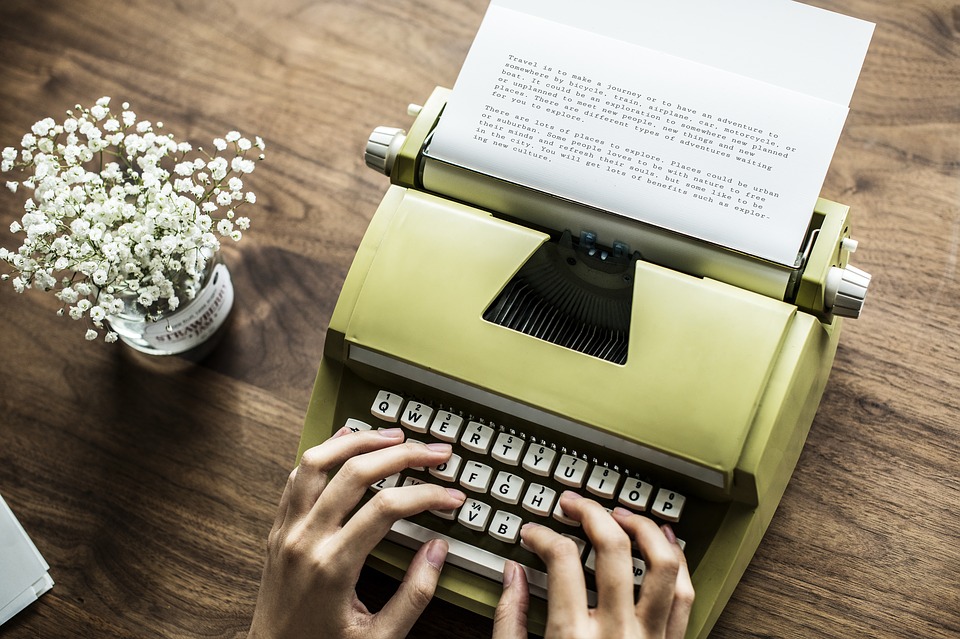
Last month, we enjoyed an insightful webinar with coach, podcaster, and author Christie Adams on Time Management for Writers. And in this post, I bring you a glimpse of the most valuable tips we learned from her.
At the Writers’ Mastermind Group, a new masterclass from experts and award-winning authors rolls out every month, bringing value and motivation to writers. So get ready to make the best of your time and energy as a writer.
A Writer’s Wellbeing
Although some of us have a primary job that helps us pay the bills, we consider writing our genuine work. We do all it takes to squeeze our writing into our busy schedule, even if it means writing late at night after finishing our house chores, helping our children with their studies, etc., or at dawn before the world wakes up.
However, we forget to nourish the most important part of this tapestry with all this hustle: ourselves, and we get lost among our responsibilities.
Firstly, we are so active with the many things we have to do that we take our physical and mental health for granted, expecting to be always resilient. But, if we don’t take care of ourselves and our precious minds, we can get burned out quickly and waste our creativity.
Secondly, our time is unproductive if we don’t organize our schedule by prioritizing our most urgent tasks. We must give our work a defined time because life is worth enjoying, and writing is a huge part of that.
Time Management Tips
Here are the 13 tips Christie Adams that we discussed in that mastermind session. I hope they will bring you the motivation to look after yourself as the creative jewel that you are and help you to manage your time more effectively.
Look after yourself. You guessed it. This is paramount since we are the main piece of this creative puzzle. Adopt healthy habits that will help you feel energized and strong enough to carry with your to-do list.
Don’t forget your fair amounts of veggies, proteins, fruits, and carbohydrates.
Exercise every day for a minimum of 20 minutes, or take short walks.
Listening to music while you take your daily showers will revitalize you.
Pay attention to your mental health as well, especially if you are passing through a difficult time. Instead of lamenting and questioning your luck, ask what this experience teaches you, what you need to see, and how you can solve this problem. When we shift our questions, we will see different perspectives of the same situation and choose the best solution.
Find the time when you can commit to writing. Perhaps you are a morning person, and you have no trouble waking up early when your mind is the most creative. Or you love writing at night with your coffee or a glass of wine while your muse visits you. Keep in mind that blogging, writing emails, and posting on social media are also writing work, so make space for these tasks in your schedule.
Prepare a schedule and stick to it. Organize each activity (like work, blogging, creative writing, household duties, family time, exercise) by giving each task a defined time. Start your day early and finish what’s most important first. Prioritizing tasks and being disciplined are paramount to productivity.
Set daily achievable goals. Choose three to four goals max so you can commit to them. Once you achieve your daily aims, you will feel empowered and motivated.
Close the door when you write. Set a “no disturb” time and let your friends and family know that. Don’t think of anything else other than writing when you enter this space of time. When others see how serious you are about your writing, they will respect it as well.
Create your personal writing space. Whether it is your study or a corner in your parlor or bedroom, prepare a particular environment that will inspire you every time you come to write.
Save the information you find which can help you with your writing. Write down any idea or tip you read or hear as a writing prompt. This will allow you to remember what to look for next time and the subjects you need to learn and consider.
Schedule time every week for studying and learning new writing skills or topics. Modern writers must know about marketing, networking, and personal branding. You can also learn by listening to podcasts and reading the latest literary articles that shed light on these subjects. It is never too late to learn new stuff.
Set boundaries for your sake! By organizing your time and setting a limited time for each activity, you avoid burning out. Otherwise, you will resent losing your creativity.
Don’t overwork. If you are a workaholic, set the alarm in your phone or a timer to take several breaks during your day. Give yourself time to stretch, exercise, go for a walk, or do some yoga. Even dancing can help you boost your metabolism, drop some stress, and strengthen your muscles, bones, and brain. It is also okay to give yourself a day off if you feel overwhelmed with work.
Celebrate every goal achieved. You deserve a reward after meeting a deadline. Mini presents to yourself are genuinely motivating, like a book you always wanted to buy, a new colorful notebook, a day out, favorite ice cream, etc. Enjoy because you deserve it!
Delegate some tasks and share responsibilities. The state of your mental and emotional health will allow you to write your best. Divide the house chores and other tasks between you and your partner or grown kids. If you have younger children, ask a relative to babysit them for a few hours each week. Outsource tasks that someone else can do.
Keep a positive environment around you. Don’t listen to negative news or gossip, stop watching violent or depressing stuff, and don’t get involved in other peoples’ drama. These are sources of an unhealthy mind and soul. Instead, listen to music or motivational podcasts. Spend time with people that inspire and encourage you. Read inspirational quotes. Do things that make you happy. Invest time in nourishing and enhancing your wellbeing.
These tips will help you improve your time management and your emotional, physical, and mental wellbeing. When you feel well, you will write well!
Connect with Cristia HJ
I write what I write to bring hope to the brokenhearted and ignite the passion for life in the sleeping soul. I want my readers to connect with my characters and free their imagination while the world is still spinning. Because no matter what we do or from where we come, we are all made of dreams and stardust.
Watch the replay of this mastermind session! Start Your Free-Trial at the Writers’ Mastermind Group and get access to our library of masterclasses and recordings.
An appositive is a modifier. It’s a noun or noun phrase that immediately follows another noun or noun phrase to further define it. You probably use appositives all the time without even realizing it. But are you punctuating them correctly?
Why am I devoting a blog to appositives? I’m so glad you asked!
Learning how to punctuate appositives—most often done with commas but sometimes with parentheses—isn’t difficult, but I see incorrect examples almost every day. The sad thing is that so many of this common appositive punctuation mistakes show up in Amazon book descriptions, websites, book reviews, and pretty much anywhere you find the written word.
So let’s review definitions, and then I’ll show you how easy it is to correctly punctuate whenever you use an appositive in your writing.
What Is an Appositive?
As a reminder, an appositive is a noun or noun phrase that provides additional information. Like other types of modifiers, an appositive can be essential (restrictive) or nonessential (nonrestrictive) to the sentence. Removing an essential modifier may cause confusion, but removing a nonessential one still leaves most of the meaning intact.
Essential: My cockatoo Snowflake attacked my computer.
Nonessential: My cockatoo, Snowflake, attacked my computer.
Snowflake’s handiwork the day she decided I was working too much.Snowflake the Cockatoo
What’s the difference, and why does it matter?
If I had more than one cockatoo, I wouldn’t use a comma—I’d want to make it clear that I’m discussing Snowflake and not another bird. I’m specifically throwing “Snowflake” under the bus (she deserves it, don’t you think?). If I delete her name (the essential modifier), I remove the clue that tells you which bird was the culprit, so I could be referring to one of several birds.
The second example is the one I personally would use because I only have one cockatoo, and her name is Snowflake. If I delete the appositive (her name), which is a nonessential modifier, you still know my only pet cockatoo created some trouble.
A good test is to use names of people you know. In this example, the writer has two daughters, so which example is correct?
My daughter Mary is ten years old
My daughter, Mary, is ten years old.
Answer: the first. The writer has another daughter, so removing the essential phrase in the second example creates confusion: “My daughter is ten years old” … but which daughter?
Appositives and Titles
The same principle applies when a proper name follows a descriptive title.
“Freelance editor, Candace Johnson, is writing this blog” is incorrect. Why? Remove my name and the sentence is confusing. No commas needed here: “Freelance editor Candace Johnson” is the noun phrase that is the subject of this sentence.
“Candace Johnson, freelance editor, is writing this blog” is correctly punctuated because “freelance editor” is not essential to the sentence’s meaning.
Here’s another example taken from something I read recently:
“The science fiction author, Philip Dick, may have said it best.”
You see the problem, right? By removing what the writer thought was an appositive (Philip Dick’s name), the sentence makes no sense. Correctly punctuated, this sentence should read,
“The science fiction author Philip Dick may have said it best.”
How to Avoid Appositive Confusion
When you’re writing an appositive noun or phrase, always ask yourself if removing the information between the commas creates confusion.
Remember: if a word or phrase is essential or restrictive, meaning that it provides essential information about the noun or noun phrase it refers to, don’t use commas.
QUIZ
Now it’s your turn: which of the following sentences are correctly punctuated?
Thanks to my fiancé Mark Jones for his support while I wrote this book. (She has not been previously engaged.)
Actress Kate Hudson recalled one of her favorite memories from giving birth to her son, Bingham. (She has two sons.)
Speaker, author, and consultant, Mary Smith, is revolutionizing hair care.
My favorite pie, cherry, is out of stock.
Answers:
Mark Jones is the writers only fiancé, so use commas before and after his name.
Kate Hudson has two sons, so no comma.
Mary Smith is a speaker, author, and consultant, so no commas before or after her name (but the Oxford commas after “speaker” and “author” are correct).
My favorite pie is out of stock whether I name it or not, so use commas.
Do you have questions about the correct way to punctuate an appositive, perhaps in your book’s acknowledgments or in a blog? Please post them in the comments, and let’s work together to make your writing shine.
Happy Writing, Candace
Candace Johnson is a professional freelance editor, proofreader, writer, and writing coach for fiction and nonfiction. She works with traditional publishers, self-published authors, and independent book packagers. As an editorial specialist, Candace is passionate about offering her clients the opportunity to take their work to the next level. Learn more at her website https://changeitupediting.com, and follow her on Facebook, Twitter, and LinkedIn.
Look forward to Candace Johnson’s upcoming class in the Writers’ Mastermind
I know how you’re feeling. You’re afraid to look at it. You’re afraid you won’t know how to fix it.
That draft. Yep, it’s a mess.
Plot holes, limp dialogue, caricatures instead of characters, and a shallow theme that plays like a bad soundtrack throughout the story.
This is impossible to fix, you think. You avoid it like it’s your snide mother-in-law, a Jehovah’s Witness at the door, or that colonoscopy you’re supposed to schedule.
Yes, your story could be bad. Maybe it sucks.
But is it beyond redemption?
No story is beyond redemption. “Drafts” (notice the word is plural) are called drafts for a reason. You will have multiple iterations of the same story. Accept it as part of the process. No one writes a perfect book the first time.
Instead of dreading your crude first draft, get excited about watching its evolution. Dig through your words and find the little pockets of goodness inside. Expand on them.
Stay curious. Ask your characters questions. Write down the millions of possibilities for them.
Read your draft over and over again (no matter how much it hurts) until something sparks against the flint of your mind. Sit quietly. Clear the inner badgering and follow your gut instincts.
Not only is intermittent fasting an effective way to burn fat, but the latest science also says it turns on latent genes, reverses aging, detoxes the body, and most importantly for writers, improves cognitive function.
So does intermittent fasting really work, or is it all just hype? I will tell you my personal experience so far.
My Intermittent Fasting Routine
3-4 times a week, I fast for 18-hour periods.
I drink black coffee and water until 2pm.
Tip: I combined the fasting routine with a goal to drink 1 gallon of water a day. It keeps the hunger at bay, so I highly recommend keeping water with you at all times. Herbal teas also help greatly when the stomach is growling.
I break my fast with a late lunch and eat a normal dinner.
Tip: the word “fasting” makes it sound extreme. In reality, you’re only skipping breakfast and possibly delaying your lunch. I have dinner at 8-9pm, so I must wait till 2-3pm to complete an 18-hour fast. If you eat dinner earlier, then you can break your fast earlier the next day. There are also many combinations of fasting routines that you can experiment with.
The results
I lost 5 pounds in 2 weeks–I expected to lose some weight, but not so much so effortlessly. This was a pleasant surprise.
More energy and alertness—When beginning intermittent fasting, I was a bit foggy. My brain was accustomed to having calories in the morning. But after the first week, my body knew that it would not get breakfast and learned to switch to fat-burning mode quickly. In this mode I noticed better concentration and focus.
More mental and physical endurance—I can work at the computer longer, and I recover from physical workouts more quickly too.
Better sleep and digestion—This is an unexpected bonus. I sleep more deeply, and I digest my food more quickly (no doubt because I’m so hungry by the time I eat).
Increased Productivity—The increased productivity is not only because I am more alert and energetic, but also because I do not have to prepare (or order), eat, and clean up after a meal. It saves time, removes the interruption, and is one less thing on my to do list.
Bonus–There is a food cost savings as well!
How does intermittent fasting work?
According to logic, our bodies evolved to expect long periods without food. As hunter gatherers, there could be days between our last meal and when the next food was found or caught. During this period, our senses were heightened because we needed to be alert and ingenious to locate food sources and track down animals.
During periods of fasting, the body switches to burning its fat stores. It also uses this time to perform autophagy (which actually means eating oneself), a process in which the body cleans out damaged cells and other residue that accumulates from day-to-day processes.
Once we eat, we rest and digest. Our bodies relax. They know they will live to see another day and our systems are busy metabolizing the food. This is a necessary process, but if we are constantly fed, then we are constantly in this low gear. There is no need for us to be in alert mode. We are not as mentally sharp. Fat and metabolites accumulate.
How intermittent fasting has improved my writing
I was surprised at how much of distraction meals are. Simply removing them opened up time and gave me space to focus. And I don’t get hangry because fasting trains the system to operate without the frequent ingestion of calories. Hunger and blood fluctuations can put the brain on a roller coaster. Fasting puts me in a steady hum that allows me to focus for hours.
Of course, you must get up and stretch your legs (and run to the loo if you’re doing the gallon of water challenge). But in my experience, at least, I am able to get into the flow state and stay there long enough to make major leaps in my writing.
This is why I thing fasting is especially good for novelists. We need to hold so much of the story in our heads to make sure all the moving parts work together, and getting back in the right head space after an interruption is a huge challenge.
Is intermittent fasting right for your writing life?
Fasting is definitely not for everyone, and you should consult your doctor before thinking about it, but as a writer, I will tell you it’s worth a try. I don’t think I’ll be going back to breakfast anytime soon!